Thyroid Support and Metabolism Guide 2026
A comprehensive, evidence-based guide to the nutrients, botanicals, and lifestyle protocols that support healthy thyroid hormone production, conversion, and metabolic rate
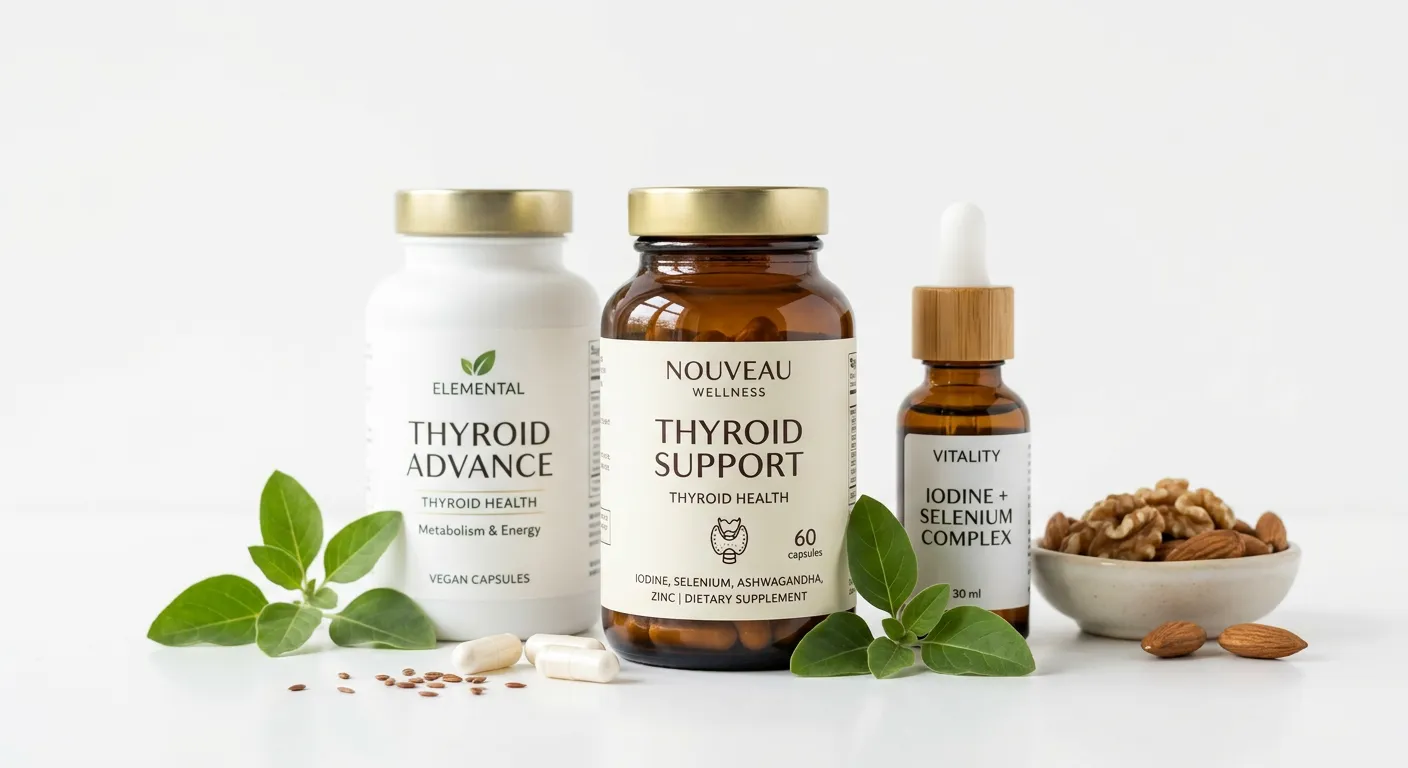
Why the Thyroid Is Your Metabolic Command Center
The thyroid gland produces hormones — primarily thyroxine (T4) and triiodothyronine (T3) — that regulate the metabolic rate of nearly every cell in the body. When thyroid function is suboptimal, the downstream effects ripple everywhere: fatigue, weight gain, cold intolerance, hair thinning, brain fog, and mood disturbances are all classic signs of an underperforming thyroid. Yet standard bloodwork (TSH alone) often misses subclinical dysfunction, and the nutritional building blocks the thyroid depends on — selenium, iodine, zinc, and tyrosine — are frequently under-consumed in modern diets.
The thyroid is unusual among endocrine glands in that hormone synthesis and activation are entirely dependent on trace mineral status. Iodine is the literal building block incorporated into the hormone molecule. Selenium-dependent enzymes both activate T4 into the far more potent T3 and protect the gland from the oxidative byproducts of hormone synthesis. Zinc is required for hormone receptor sensitivity and pituitary signaling. Without adequate intake of these three minerals, even a structurally healthy thyroid cannot produce or utilize hormone effectively.
This guide covers the six most evidence-backed thyroid and metabolism nutrients — their precise mechanisms, dosing, and research support — along with the dietary patterns (goitrogens, gluten sensitivity, soy) and lifestyle factors (endocrine disruptors, stress, sleep) that determine whether your thyroid operates at full capacity or limps along under-supported.
The Four Pillars of Thyroid & Metabolic Support:
- Core Synthesis Minerals — Selenium, Iodine, Zinc
- Adaptogenic & Precursor Support — Ashwagandha, L-Tyrosine
- Commonly Deficient Cofactors — Vitamin D3, Vitamin B12
- Dietary & Lifestyle Optimization — Goitrogens, Endocrine Disruptors, Stress, Sleep
Estimated monthly cost for a foundational thyroid support stack: $35–65 depending on brands and priorities.
Pillar 1: Core Synthesis Minerals
These three trace minerals are non-negotiable inputs for thyroid hormone production, conversion, and cellular utilization. Deficiency in any one of them can bottleneck the entire hormone cascade — regardless of how well the gland itself is functioning.
Selenium — The T4-to-T3 Conversion Catalyst
The thyroid contains the highest concentration of selenium per gram of tissue of any organ in the body — a strong biological signal of how essential this mineral is to thyroid physiology. Selenium is a required cofactor for the deiodinase enzymes (D1, D2, D3) that convert the relatively inactive T4 hormone into biologically active T3, the form your cells actually use to regulate metabolic rate. Without adequate selenium, T4 accumulates while T3 — the hormone responsible for the “felt” effects of thyroid function like energy and warmth — remains low.
Research Support:
- Glutathione Peroxidase Protection: Selenium is incorporated into glutathione peroxidase, an antioxidant enzyme that neutralizes hydrogen peroxide generated during thyroid hormone synthesis. Without it, oxidative damage to thyroid follicular cells accumulates over time, a mechanism implicated in autoimmune thyroiditis.
- Hashimoto's Antibody Reduction: A meta-analysis of RCTs in the Journal of Clinical Endocrinology & Metabolism found selenium supplementation (200mcg/day) significantly reduced thyroid peroxidase antibody (TPOAb) titers in patients with Hashimoto's thyroiditis over 3–12 months.
- Deiodinase Cofactor: Selenoprotein deiodinases are directly responsible for roughly 80% of circulating T3, most of which is generated peripherally (in the liver and kidneys) from T4 rather than secreted directly by the thyroid — underscoring why selenium status affects T3 levels even when the thyroid itself is healthy.
- Population Deficiency: Selenium content in food is entirely dependent on soil selenium levels, which vary enormously by region — parts of the U.S. Pacific Northwest and much of Europe have selenium-depleted soils, making dietary insufficiency common even with a varied diet.
Dosage: 100–200mcg selenium daily (selenomethionine form). Do not exceed 400mcg/day — selenium has a narrow safety margin and toxicity (selenosis) is possible at high chronic intake.
Best form: Selenomethionine is better absorbed and retained in tissue than sodium selenite. Two to three Brazil nuts daily can also supply adequate selenium for some individuals, though content varies widely by soil source.
View Selenium Supplements on AmazonIodine — The Structural Building Block of Thyroid Hormone
Iodine is not a supporting cofactor — it is a literal component of thyroid hormone. T4 (thyroxine) contains four iodine atoms per molecule and T3 (triiodothyronine) contains three; the thyroid gland actively concentrates iodine from the bloodstream via the sodium-iodide symporter to synthesize both. Both deficiency and excess iodine intake can disrupt thyroid function, which makes this the most nuanced mineral in this guide — more is not automatically better.
Research Support:
- Deficiency Consequences: The World Health Organization identifies iodine deficiency as the single most common preventable cause of hypothyroidism and goiter worldwide, affecting an estimated two billion people, with pregnant women and their fetuses at highest risk for developmental consequences.
- The Hashimoto's Caution: Excess iodine intake, particularly in individuals with pre-existing autoimmune thyroid tendencies, can trigger or worsen Hashimoto's thyroiditis. Research published in Thyroid has linked high-dose iodine supplementation with increased TPO antibody production in susceptible individuals — iodine oxidizes thyroglobulin in a way that can provoke autoimmune recognition.
- U-Shaped Risk Curve: Population studies consistently show a U-shaped relationship between iodine intake and thyroid dysfunction — both severe deficiency and chronic excess (common with high-dose kelp or seaweed supplements) increase rates of thyroid disease relative to moderate, sufficient intake.
- Selenium-Iodine Interaction: Correcting iodine deficiency without adequate selenium can transiently worsen oxidative stress in the thyroid, since iodination of thyroglobulin generates hydrogen peroxide that selenium-dependent glutathione peroxidase is needed to neutralize — another reason these two minerals are best addressed together.
Dosage: 150mcg daily for general adult maintenance (the RDA); 220–250mcg during pregnancy. Avoid high-dose kelp or iodine supplements (>500mcg/day) without medical supervision, especially if you have or suspect autoimmune thyroid disease.
Best source: Iodized salt, seafood, and dairy typically supply adequate iodine for most people. Supplement conservatively and consider testing if you have known thyroid antibodies before adding iodine.
View Iodine Supplements on AmazonZinc — Synthesis Support and Receptor Sensitivity
Zinc plays a dual role in thyroid physiology: it is required for the synthesis and structural integrity of thyroid-stimulating hormone (TSH) at the pituitary level, and it is also necessary for thyroid hormone receptors to properly bind T3 once it reaches target tissues. This means zinc deficiency can impair thyroid function at two separate points in the signaling chain — reduced hormone production upstream and reduced hormone sensitivity downstream — even when circulating hormone levels look normal on standard labs.
Research Support:
- Deiodinase Cofactor Role: Alongside selenium, zinc is required for the proper function of the type 2 deiodinase enzyme that converts T4 to T3 in peripheral tissues, meaning zinc deficiency compounds any conversion problems caused by low selenium.
- Bidirectional Relationship: Hypothyroidism itself reduces intestinal zinc absorption, creating a feedback loop where thyroid dysfunction worsens zinc status, which further impairs thyroid function — a cycle documented in endocrinology research on hypothyroid patients with low serum zinc.
- Correction Studies: Small clinical studies in zinc-deficient hypothyroid patients have shown that correcting zinc status alongside standard thyroid treatment improves free T3 levels and symptom scores more than thyroid hormone replacement alone.
Dosage: 15–25mg elemental zinc daily. Avoid exceeding 40mg/day long-term without copper supplementation (1–2mg), as chronic high-dose zinc depletes copper.
Best form: Zinc picolinate or bisglycinate for superior absorption. Take on an empty stomach if tolerated, or with a small meal if it causes nausea.
View Zinc Supplements on AmazonPillar 2: Adaptogenic & Precursor Support
Beyond the mineral cofactors, two compounds directly influence the hormonal environment surrounding thyroid function: an adaptogen that lowers the cortisol which suppresses thyroid activity, and the amino acid that serves as the literal precursor molecule for thyroid hormone.
Ashwagandha (Withania somnifera) — Cortisol Reduction and Thyroid Modulation
Ashwagandha is an adaptogenic herb with a dual mechanism relevant to thyroid health: it lowers chronically elevated cortisol, which directly suppresses TSH secretion and impairs T4-to-T3 conversion, and it has demonstrated a direct thyroid-stimulating effect in clinical research on individuals with subclinical hypothyroidism. This makes it one of the few botanicals with evidence for actually shifting thyroid hormone levels rather than simply supporting general wellness.
Research Support:
- Subclinical Hypothyroidism Trial: A double-blind RCT in the Journal of Alternative and Complementary Medicine found 8 weeks of ashwagandha root extract (600mg/day) significantly increased T4 and T3 levels and normalized TSH in patients with subclinical hypothyroidism compared to placebo.
- Cortisol Reduction: Multiple RCTs using KSM-66 or Sensoril extracts show 22–27% reductions in serum cortisol after 8–12 weeks — clinically meaningful given cortisol's inhibitory effect on both TSH release and peripheral deiodinase activity.
- Caution for Hyperthyroidism: Because ashwagandha can raise thyroid hormone levels, it is generally not recommended for individuals with hyperthyroidism or Graves' disease without medical supervision.
Dosage: 300–600mg standardized root extract (KSM-66 or Sensoril) daily, typically taken with dinner or before bed.
Note: If you have hypothyroidism, discuss ashwagandha with your physician — it may require dose adjustments to thyroid medication as endogenous hormone production improves.
View Ashwagandha Supplements on AmazonL-Tyrosine — The Precursor Amino Acid
L-Tyrosine is the amino acid backbone onto which iodine atoms are attached to form T4 and T3 — without sufficient tyrosine, even adequate iodine and a healthy thyroid gland cannot synthesize hormone efficiently. Tyrosine is also the precursor for dopamine and norepinephrine, which is why low thyroid function and low catecholamine states share overlapping symptoms of fatigue and low motivation.
Research Support:
- Substrate Requirement: Thyroglobulin, the protein scaffold within the thyroid, contains numerous tyrosine residues that are iodinated and coupled to form T4 and T3 — tyrosine availability is a rate-limiting input to this process, particularly under conditions of high metabolic demand or chronic stress.
- Stress Depletion: Because tyrosine is shared as a precursor for both thyroid hormone and catecholamine synthesis, periods of chronic psychological or physical stress can preferentially divert tyrosine toward norepinephrine production, potentially limiting the amino acid pool available for thyroid hormone synthesis.
- Cold and Stress Performance: Military research on tyrosine supplementation under cold-stress and sleep-deprivation conditions has shown improved cognitive performance and mood, consistent with its role supporting both catecholamine and thyroid-related metabolic output under demand.
Dosage: 500–1,000mg L-tyrosine daily, taken on an empty stomach in the morning for best absorption (competes with other amino acids for transport).
Note: Most people obtain adequate tyrosine from a protein-sufficient diet; supplementation is most useful during periods of high stress, inadequate protein intake, or active thyroid support protocols.
View L-Tyrosine Supplements on AmazonPillar 3: Commonly Deficient Cofactors
Vitamin D3 and B12 are not thyroid-specific nutrients, but deficiency in either is disproportionately common in people with thyroid dysfunction — particularly autoimmune thyroid disease — and correcting these deficiencies frequently improves energy and symptom burden even when thyroid hormone levels alone don't fully explain how a person feels.
Vitamin D3 — The Immune-Thyroid Connector
Vitamin D functions as an immune-modulating hormone, and its receptors are expressed on thyroid follicular cells and immune cells implicated in autoimmune thyroiditis. Multiple studies have found significantly lower vitamin D levels in patients with Hashimoto's thyroiditis and Graves' disease compared to the general population, suggesting a role in autoimmune thyroid risk beyond D3's well-known bone and immune functions.
Research Support:
- Hashimoto's Association: A meta-analysis in Endocrine found that Hashimoto's patients had significantly lower average vitamin D levels than healthy controls, and lower D3 status correlated with higher TPO antibody titers.
- Antibody Reduction: Small RCTs supplementing vitamin D in deficient Hashimoto's patients have shown reductions in TPO and thyroglobulin antibody levels over 3–6 months, though larger confirmatory trials are still needed.
- Widespread Deficiency: Vitamin D insufficiency affects an estimated 40%+ of U.S. adults, and rates are even higher in autoimmune populations — making it one of the most likely “hidden” deficiencies in people with unresolved thyroid symptoms.
Dosage: 2,000–4,000 IU D3 daily with 100mcg K2 (MK-7). Test serum 25(OH)D and target 40–60 ng/mL.
Best taken: With a fat-containing meal, as D3 is fat-soluble.
View Vitamin D3 Supplements on AmazonVitamin B12 — Energy Metabolism and Overlapping Deficiency
Vitamin B12 deficiency is dramatically more common in people with autoimmune thyroid disease, largely because Hashimoto's and pernicious anemia (an autoimmune cause of B12 deficiency) frequently co-occur — both are autoimmune conditions that cluster together in the same individuals. B12 is essential for the cellular energy production (via the methylation and citric acid cycles) that low thyroid function already compromises, meaning deficiency in both compounds the same fatigue symptoms.
Research Support:
- Co-Occurrence Rate: Studies of autoimmune thyroid patients have found B12 deficiency rates as high as 30–40%, substantially higher than the general population, due to shared autoimmune susceptibility and overlapping gastric parietal cell antibody involvement.
- Symptom Overlap: Fatigue, brain fog, and low mood are cardinal symptoms of both hypothyroidism and B12 deficiency, meaning unresolved fatigue in a treated thyroid patient should prompt B12 testing rather than automatically escalating thyroid medication.
- Absorption Considerations: Because pernicious anemia impairs intrinsic-factor-mediated B12 absorption, sublingual or high-dose oral methylcobalamin (which partially bypasses active transport via passive diffusion) is often more effective than standard multivitamin doses in affected individuals.
Dosage: 500–1,000mcg methylcobalamin daily (sublingual preferred for absorption). Test serum B12 and consider methylmalonic acid (MMA) testing for a more sensitive deficiency marker.
Best form: Methylcobalamin over cyanocobalamin — it is the active, directly usable form and does not require conversion.
View Vitamin B12 Supplements on AmazonPillar 4: Dietary & Lifestyle Optimization
No supplement stack can fully compensate for a diet or lifestyle actively working against thyroid function. The factors below — goitrogenic foods, endocrine disruptors, chronic stress, and poor sleep — have outsized effects on thyroid health and should be addressed alongside any nutrient protocol.
Goitrogens, Soy & Gluten Sensitivity
Goitrogenic foods — primarily raw cruciferous vegetables (broccoli, cabbage, kale, cauliflower) and soy — contain compounds that can interfere with iodine uptake by the thyroid when consumed in very large, raw quantities. For most people eating normal portions, this is not a meaningful concern, and cooking substantially deactivates goitrogenic compounds. However, individuals with existing iodine insufficiency or thyroid dysfunction may benefit from moderating raw cruciferous intake and favoring cooked preparations.
Soy isoflavones can also interfere with thyroid hormone absorption when consumed close to thyroid medication dosing, and some research suggests high soy intake may modestly increase TSH in individuals with marginal iodine status. Separately, there is a well-documented association between celiac disease and non-celiac gluten sensitivity with autoimmune thyroid disease — the two conditions share genetic risk factors and gluten-driven intestinal permeability may contribute to autoimmune thyroid antibody production in susceptible individuals.
Dietary Guidelines:
- • Cook cruciferous vegetables rather than eating them raw in large quantities if you have known thyroid issues
- • Separate soy-based foods from thyroid medication dosing by at least 4 hours
- • Consider a trial gluten elimination (with physician guidance) if you have Hashimoto's and unresolved symptoms — a meaningful subset of patients see antibody reductions
- • Ensure adequate overall protein intake to supply tyrosine and support hormone synthesis
- • Prioritize selenium-rich foods (Brazil nuts, sardines, eggs) and iodine-rich foods (seafood, dairy, iodized salt) as dietary foundations
Endocrine Disruptor Avoidance
Several common environmental chemicals directly interfere with thyroid hormone production, transport, or receptor binding. Perchlorate (found in some water supplies and fireworks residue) competitively blocks iodine uptake at the sodium-iodide symporter. Bisphenol A (BPA, found in some plastics and can linings) and certain phthalates have been shown in research to disrupt thyroid hormone signaling. Polybrominated flame retardants, once common in furniture and electronics, bioaccumulate and structurally resemble thyroid hormone closely enough to interfere with normal binding.
Practical Reduction Strategies:
- • Choose BPA-free food and water containers, and avoid microwaving food in plastic
- • Filter tap water if perchlorate or chlorine/fluoride byproducts are a local concern (check municipal water reports)
- • Minimize handling of thermal receipt paper, which is often coated in BPA or BPS
- • Choose fragrance-free personal care products where feasible to reduce phthalate exposure
Stress Management: Breaking the Cortisol-Thyroid Suppression Cycle
Chronically elevated cortisol suppresses TSH release from the pituitary and inhibits the peripheral conversion of T4 to T3, while simultaneously increasing conversion of T4 to reverse T3 (rT3) — an inactive hormone variant that occupies thyroid receptors without activating them. This is one of the most underappreciated mechanisms behind “normal labs, still exhausted” presentations: standard thyroid panels often don't measure reverse T3, so a stress-driven shift toward rT3 dominance can go undetected while still producing hypothyroid-like symptoms.
Stress-Reducing Strategies with Thyroid Benefits:
- • Ashwagandha (KSM-66, 600mg/day) — reduces cortisol while directly supporting T3/T4 levels (see Pillar 2)
- • 10–20 minutes of daily mindfulness or breathwork practice to lower baseline cortisol
- • Avoid chronic caloric restriction and excessive high-intensity exercise, both of which independently raise cortisol and suppress T3 conversion
- • Address underlying anxiety or chronic stressors — the HPA axis (stress) and HPT axis (thyroid) are tightly interconnected
Sleep: Restoring the HPT Axis Rhythm
TSH secretion follows a circadian pattern, typically peaking in the late evening and early night. Chronic sleep restriction disrupts this rhythm and has been shown in sleep research to blunt the normal nocturnal TSH surge, while also elevating cortisol — compounding the cortisol-driven suppression of T4-to-T3 conversion described above. Consistent, adequate sleep is one of the simplest ways to support normal HPT (hypothalamic-pituitary-thyroid) axis function.
Actionable Sleep Strategies:
- • Target 7–9 hours of consistent, quality sleep per night
- • Maintain a stable sleep-wake schedule to support circadian TSH rhythm
- • Magnesium glycinate (300–400mg) at bedtime supports both sleep quality and thyroid-relevant mineral status
- • Limit late-night high-intensity exercise, which can elevate cortisol into the sleep window
The 2026 Foundational Thyroid Support Stack
Based on the evidence reviewed above, here is a practical daily supplement stack that covers the highest-impact thyroid nutrients and mechanisms. This is a starting point — always confirm iodine status and any existing thyroid antibody levels with a healthcare provider before adding iodine, and consult a physician before starting any thyroid-support protocol if you take thyroid medication.
| Supplement | Daily Dose | When to Take | Est. Monthly Cost |
|---|---|---|---|
| Selenium (selenomethionine) | 100–200mcg | With breakfast | $6–10 |
| Iodine | 150mcg (confirm need first) | With breakfast | $5–10 |
| Zinc Picolinate | 15–25mg elemental | With lunch | $7–12 |
| Ashwagandha (KSM-66) | 300–600mg | Evening, with dinner | $10–18 |
| L-Tyrosine | 500–1,000mg | Morning, empty stomach | $8–14 |
| Vitamin D3 + K2 | 2,000–4,000 IU D3 + 100mcg K2 | With a fat-containing meal | $8–15 |
| Vitamin B12 (methylcobalamin) | 500–1,000mcg | Morning, sublingual | $6–10 |
Before You Start:
- • Get labs first: TSH, free T4, free T3, and TPO/thyroglobulin antibodies give a far more complete picture than TSH alone
- • Iodine caution: If you have any known thyroid antibodies or Hashimoto's, discuss iodine supplementation with a physician before starting
- • Medication timing: If you take levothyroxine or other thyroid medication, take it on an empty stomach and separate calcium, iron, and soy by at least 4 hours
- • Reassess at 8–12 weeks: Most thyroid-relevant nutrient corrections take 2–3 months to show up in bloodwork
Related Supplement Guides
Women's Health Supplement Stack 2026
Hormonal balance, bone density & energy essentials
Best Ashwagandha Supplements 2026
KSM-66, Sensoril & standardized extracts compared
Best Zinc Supplements 2026
Picolinate, bisglycinate & lozenge forms
Best Magnesium Supplements 2026
Glycinate, malate & threonate forms compared
Ultimate Stress Management Guide 2026
Cortisol control strategies that support thyroid function
Affiliate Disclosure
This page contains Amazon affiliate links. If you purchase through these links, we may earn a small commission at no additional cost to you. This helps support our research and content creation. We only recommend supplements we believe provide genuine value based on clinical evidence and ingredient quality. Our reviews remain unbiased and are based on published research, not compensation.
Medical Disclaimer
This guide is for educational purposes only and does not constitute medical advice. Thyroid conditions require proper diagnosis and monitoring by a qualified healthcare provider — self-treating a suspected thyroid disorder with supplements alone can delay necessary medical care. Consult a physician before beginning a new supplement regimen, especially if you take thyroid medication, have an autoimmune condition, are pregnant or breastfeeding, or have kidney or liver disease. Supplements are not a substitute for medical treatment.