Supplement Bioavailability Explained
What bioavailability actually means, which factors dramatically reduce or enhance absorption, and how to maximize the value of every supplement in your stack — backed by clinical research
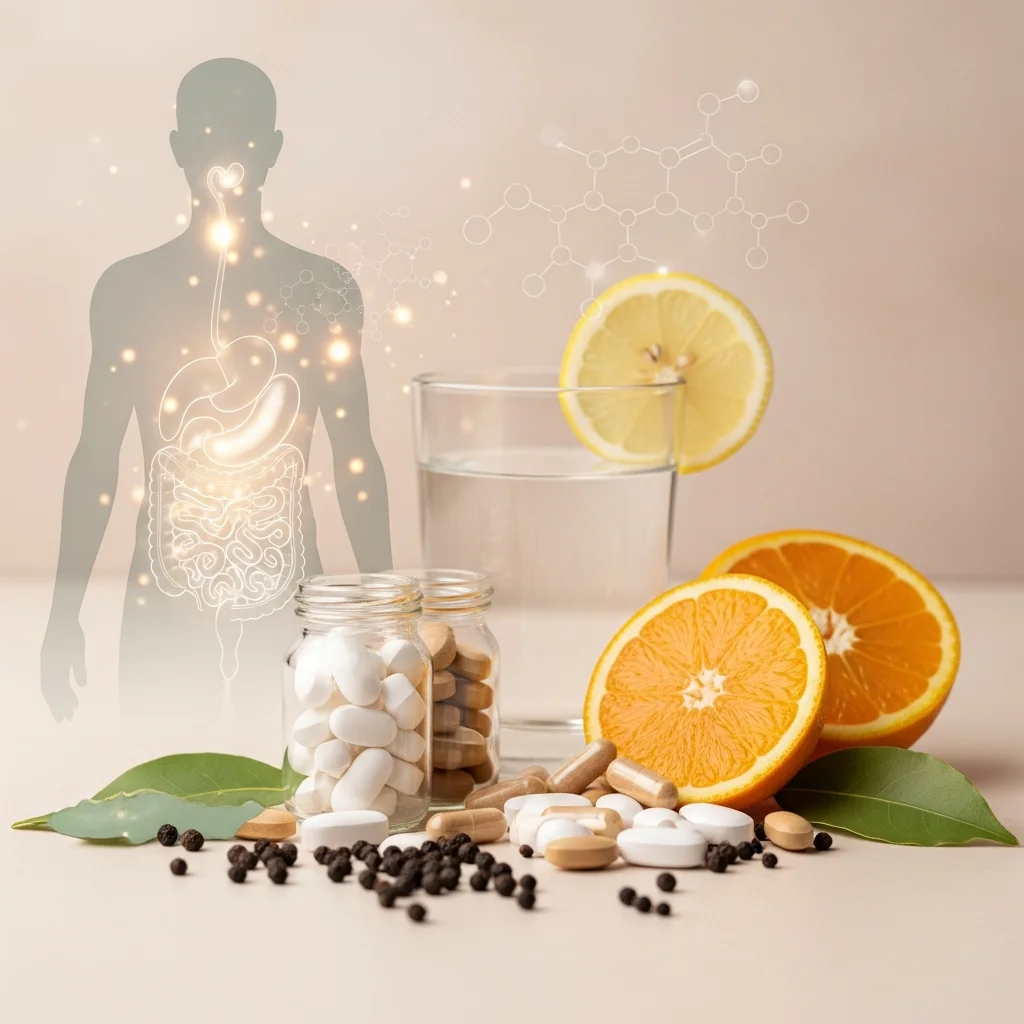
What Is Bioavailability?
Bioavailability is the fraction of an ingested substance that reaches systemic circulation in an active form and is available to exert its biological effect. In plain terms: it measures how much of what you swallow actually gets into your bloodstream and tissues — rather than being destroyed by stomach acid, bound by other molecules, excreted without absorption, or converted into an inactive form.
A drug or supplement with 100% bioavailability delivers all of its dose to circulation. Most oral supplements fall far short of this benchmark. Curcumin from standard turmeric powder has bioavailability as low as 1% in humans — the vast majority is metabolized in the gut wall and liver before entering the bloodstream (Anand et al., Molecules, 2007). Magnesium oxide, the cheapest and most common form of magnesium in supplements, has approximately 4% bioavailability. Meanwhile, magnesium glycinate achieves 80%+ absorption via a peptide transporter pathway that bypasses the bottlenecks that limit oxide.
Understanding bioavailability helps you make smarter purchasing decisions, choose superior forms of key nutrients, time your doses to amplify absorption, and avoid co-administration mistakes that silently waste what you spend on supplements.
Key Bioavailability Concepts:
- First-pass metabolism — the gut wall and liver degrade many compounds before they reach systemic circulation
- Solubility — fat-soluble nutrients need dietary fat; water-soluble nutrients dissolve in aqueous environments
- Molecular form — the chemical form of a nutrient determines which transporters absorb it and how efficiently
- Competitive inhibition — minerals compete for shared intestinal transporters; some block each other
- Delivery technology — liposomes, nanoparticles, and enteric coatings can dramatically improve absorption
The Absorption Journey: From Capsule to Cell
Understanding why bioavailability varies requires following the path a supplement takes from your mouth to the bloodstream. Multiple barriers exist at each stage, and compounds that survive all of them reach circulation — those that don't are eliminated.
Stage 1: Dissolution
A tablet or capsule must first dissolve and release its active ingredient. Poorly manufactured tablets with hard binders may pass through the GI tract largely intact. USP dissolution standards require that supplements dissolve to release ≥75% of their active ingredient within 45 minutes. Independent lab testing by ConsumerLab.com has found some tablets fail this test entirely — particularly calcium carbonate tablets and older multivitamin formulations.
Practical implication: Softgels, capsules, and powders generally dissolve faster than hard tablets. If you're taking tablets, choose brands with third-party dissolution testing verification or crush tablets to ensure release.
Stage 2: Gastric Environment
The stomach's acidic environment (pH 1.5–3.5 when fasted) can destroy acid-sensitive compounds before they reach the intestine. Probiotics are a classic example — most bacteria are killed by gastric acid, which is why probiotic survival rates matter greatly. Enteric-coated capsules are designed to resist stomach acid and dissolve only in the less acidic small intestine (pH 6–7.5), protecting sensitive compounds.
Key nutrients affected: Probiotics (acid-sensitive strains), pancreatic enzymes, some B vitamins, and iron (whose absorption is strongly pH-dependent). Food raises gastric pH slightly, which is why some iron supplements are better tolerated with food but absorbed less efficiently.
Stage 3: Small Intestine Absorption
Most nutrient absorption occurs in the small intestine via two mechanisms: passive diffusion (for lipid-soluble compounds that cross cell membranes without carriers) and active transport (for water-soluble compounds that require specific protein transporters in the intestinal epithelium). Active transport has a finite capacity — saturating these transporters at high doses is why splitting doses of vitamin C, iron, and magnesium dramatically improves total absorption compared to single large doses.
Fat-soluble vitamins (A, D, E, K) are packaged into chylomicrons — lipoprotein particles that require dietary fat for assembly. Without fat in the meal, these vitamins cannot form chylomicrons and absorption collapses. This is why vitamin D3 taken without fat shows up to 50–70% lower serum levels than the same dose taken with a fat-containing meal.
Stage 4: First-Pass Metabolism
Absorbed nutrients enter the portal vein and travel to the liver before reaching systemic circulation — a process called first-pass metabolism. The liver can extensively metabolize compounds, converting them to inactive forms that are excreted. Curcumin is perhaps the most dramatic example: even after crossing the intestinal wall, the liver rapidly glucuronidates and sulfates it, producing metabolites with minimal bioactivity. This is why standard curcumin supplements show blood levels close to zero despite reasonable doses.
Solutions: Piperine (black pepper extract) inhibits the liver's glucuronidation enzymes that degrade curcumin, increasing its bioavailability by approximately 20-fold (Shoba et al., Planta Medica, 1998). Liposomal delivery encapsulates compounds in phospholipid vesicles that enter the lymphatic system and bypass first-pass liver metabolism entirely.
8 Key Factors That Affect Supplement Bioavailability
1. Chemical Form (Chelation, Salt Form, and Molecular Complexes)
The specific chemical form of a mineral or vitamin is arguably the most impactful bioavailability factor. Minerals are sold in different salt forms with drastically different absorption rates. Magnesium oxide (Mg²⁺ bonded to oxide) has ~4% absorption because it is poorly soluble at intestinal pH. Magnesium glycinate (chelated to the amino acid glycine) achieves 80%+ absorption via the PepT1/PepT2 peptide transporter system — a completely different pathway that is not subject to the same saturation limits as ionic mineral transport.
| Mineral Form | Absorption Rate | Notes |
|---|---|---|
| Magnesium oxide | ~4% | Cheapest form; mostly acts as a laxative |
| Magnesium citrate | ~30–40% | Good GI tolerance; common choice |
| Magnesium glycinate | ~80%+ | Best bioavailability; amino acid chelate pathway |
| Magnesium malate | ~70–80% | High absorption; malic acid supports energy |
| Zinc oxide | ~15–20% | Poor absorption; common in cheap multivitamins |
| Zinc picolinate | ~60–70% | Strong evidence for superior absorption |
| Zinc bisglycinate | ~60–70% | Chelated; high bioavailability, gentle on stomach |
| Iron sulfate | ~10–20% | Standard form; GI side effects common |
| Iron bisglycinate | ~40–50% | Chelated; better absorption, minimal constipation |
2. Food Co-Administration: Fat Content and Meal Timing
Fat-soluble vitamins (A, D, E, K) and several other lipophilic compounds require dietary fat for chylomicron packaging and lymphatic absorption. A landmark 2010 study in the Journal of Bone and Mineral Research (Mulligan & Bhatt) found that serum 25-hydroxyvitamin D levels were 56% higher when vitamin D3 was taken with the largest fat-containing meal of the day compared to a fat-free meal. CoQ10 in ubiquinol form shows 3× higher absorption with dietary fat.
Conversely, some supplements are absorbed best on an empty stomach. NMN and NR (NAD+ precursors), probiotics, and iron all show reduced absorption when co-administered with food in certain contexts. For probiotics, food can be either helpful (buffering bacteria against stomach acid) or unhelpful (triggering acid secretion if eaten first) — timing within the meal context matters.
Fat-Soluble Supplements (Always Take With Fat):
Vitamins A, D, E, K · CoQ10 (Ubiquinol) · Curcumin/Turmeric · Resveratrol · Astaxanthin · Omega-3 fish oil · Vitamin K2 (MK-7)
3. Mineral Competition at Shared Transporters
Minerals that share the same intestinal transport proteins compete for absorption — and the competition can be fierce. Calcium and iron both rely heavily on the divalent metal transporter DMT1 (Divalent Metal Transporter 1) in the intestinal epithelium. When both are present simultaneously at high concentrations, calcium dominates due to its higher concentration gradients from typical dosing, reducing iron absorption by up to 60% (Hallberg et al., American Journal of Clinical Nutrition, 1991).
Zinc and copper have an indirect competitive relationship: high-dose zinc supplementation (≥40mg/day over weeks) induces metallothionein — a metal-binding protein — in intestinal cells. Metallothionein preferentially binds copper, sequestering it before it can be transported across the intestinal wall. Long-term high-dose zinc without copper supplementation is a documented cause of copper deficiency and the resulting neurological complications.
Critical Pairs to Separate (2+ Hours Apart):
- • Calcium + Iron: ↓ iron absorption by 50–60%
- • Zinc (high dose) + Copper: ↓ copper status over time
- • Zinc + Calcium (high dose): ↓ zinc absorption by 25–50%
- • Iron + Calcium: ↓ iron absorption by 50–60%
4. Anti-Nutritional Factors: Phytates, Tannins, and Oxalates
Phytic acid (inositol hexakisphosphate) is found in grains, legumes, nuts, and seeds. It forms insoluble complexes with divalent minerals (zinc, iron, calcium, magnesium) in the intestinal lumen, rendering them unavailable for absorption. A diet high in whole grains and legumes — while excellent for fiber and general health — can significantly impair mineral absorption, which is why vegetarians and vegans often need higher mineral intake to achieve adequate absorption.
Tannins in black tea, green tea, coffee, and red wine bind iron and some B vitamins. A comprehensive 2020 meta-analysis in the American Journal of Clinical Nutrition found that coffee consumed within 1 hour of an iron supplement reduced absorption by 39%; black tea reduced it by 64%. These polyphenol interactions are specific to mineral absorption and do not impair fat-soluble vitamin absorption.
Oxalates in spinach, rhubarb, and certain leafy greens bind calcium and somewhat impair its absorption when present in the same meal — which is counterintuitive given that spinach is considered "calcium-rich." The calcium in spinach has approximately 5% bioavailability compared to ~30% from milk, precisely because of oxalic acid complexation.
5. Dose and Transporter Saturation
Active transport systems have a maximum capacity (Vmax) — at high doses, transporters become saturated and any additional nutrient beyond the saturation point is either absorbed passively (much less efficiently) or excreted. Vitamin C is absorbed via SVCT1 and SVCT2 transporters. The body absorbs approximately 100% of a 200mg dose but only ~70% of a 1,000mg single dose — and the remainder is excreted in urine.
Practical solution — split dosing: Dividing a daily 1,000mg vitamin C dose into four 250mg doses spread throughout the day produces significantly higher plasma vitamin C levels than a single 1,000mg dose. The same principle applies to iron (two 150mg doses absorb better than a single 300mg dose) and calcium (no more than 500mg per dose for optimal absorption).
6. Age, Gut Health, and Individual Factors
Bioavailability is not a fixed number — it varies meaningfully between individuals based on age, gut health, genetic variants, and overall nutritional status. Gastric acid production declines significantly with age: approximately 30% of adults over 50 have atrophic gastritis and produce insufficient gastric acid to convert crystalline vitamin B12 to a form that can bind intrinsic factor. This is why the NIH recommends that adults over 50 meet their B12 needs from fortified foods or supplements (which use the free, crystalline form of B12) rather than relying solely on food sources.
Gut microbiome composition affects the bioavailability of several nutrients. Gut bacteria convert vitamin K1 from food into vitamin K2 (MK-4, MK-7) — the forms more bioavailable to bone and cardiovascular tissue. Dysbiosis (disrupted microbiome) impairs this conversion. Short-chain fatty acids produced by gut bacteria enhance calcium and magnesium absorption in the colon. Inflammatory bowel disease, celiac disease, and SIBO (small intestinal bacterial overgrowth) all substantially impair nutrient absorption across the board.
7. Supplement Delivery Technologies
Modern supplement delivery technologies have dramatically increased bioavailability for historically difficult-to-absorb compounds:
- Liposomal encapsulation: Phospholipid vesicles (liposomes) encapsulate compounds and deliver them via lymphatic absorption, bypassing first-pass liver metabolism. Liposomal vitamin C achieves approximately 1.77× higher plasma levels than standard ascorbic acid at equivalent doses. Liposomal glutathione, curcumin, and NMN show similar improvements. The phospholipid shell merges with intestinal cell membranes, delivering the payload directly into cells via endocytosis.
- Nanoparticle formulations: Nanocurcumin and nano-CoQ10 have particle sizes small enough for direct endocytic uptake by intestinal cells, bypassing the need for bile acid-mediated solubilization. Several patented curcumin formulations (Meriva, Theracurmin, Longvida) have demonstrated 29× to 185× higher bioavailability than standard curcumin powder in human pharmacokinetic trials.
- Enteric coating: Polymer coatings that resist stomach acid but dissolve in the neutral-alkaline small intestine. Critical for acid-sensitive probiotics, peppermint oil capsules (prevents early-release heartburn), and pancreatic enzymes.
- Sublingual delivery: Placing supplements under the tongue allows direct absorption through the sublingual mucosa into the bloodstream, bypassing the entire GI tract and first-pass metabolism. NMN in sublingual form, B12 (methylcobalamin), and melatonin all show significantly faster and often higher bioavailability via sublingual administration compared to swallowed capsules.
8. Absorption Enhancers and Synergistic Co-Factors
Certain compounds dramatically increase the bioavailability of others when co-administered:
- Piperine (BioPerine): The alkaloid that gives black pepper its pungency inhibits cytochrome P450 3A4 and P-glycoprotein — two key drug-metabolizing systems in the gut wall and liver. The result is dramatically reduced first-pass metabolism of curcumin, resveratrol, CoQ10, and several B vitamins. The landmark study by Shoba et al. (1998) showed 20-fold (2,000%) higher plasma curcumin levels when 20mg piperine was co-administered with 2g curcumin. Most high-quality curcumin supplements now include piperine; look for "BioPerine" on the label.
- Vitamin C and iron: Ascorbic acid (vitamin C) reduces ferric iron (Fe³⁺) to ferrous iron (Fe²⁺) and forms a soluble iron-ascorbate chelate that resists inhibition by phytates and tannins. Adding 100mg vitamin C to an iron supplement can increase non-heme iron absorption by 2–6× even in the presence of inhibitory foods.
- Vitamin D3 and vitamin K2: While K2 does not directly increase D3 absorption, D3 upregulates calcium transport proteins, and K2 (MK-7) directs the calcium mobilized by D3 into bone tissue rather than arterial walls — a synergistic safety and efficacy relationship. High-dose D3 without adequate K2 is associated with arterial calcification risk.
- Fat and fat-soluble vitamins: Any dietary fat increases the bioavailability of fat-soluble vitamins. Olive oil, avocado, eggs, and nuts are ideal co-administration foods for vitamins A, D, E, K, CoQ10, and lycopene.
Bioavailability by Supplement: The Definitive Reference
| Supplement | Best Form | Key Absorption Strategy | Avoid |
|---|---|---|---|
| Curcumin/Turmeric | Meriva, Theracurmin, Longvida, or with BioPerine | Take with black pepper (piperine) and fat; liposomal forms bypass first-pass | Standard powder without enhancers (~1% BA) |
| Vitamin D3 | D3 (cholecalciferol) — not D2 | Take with fat-containing meal; ~56% more absorption with fat | Taking fasted or with fat-free meal |
| Magnesium | Glycinate or malate | Chelated amino acid forms use peptide transporter — 80%+ absorption | Magnesium oxide (~4% absorption) |
| Zinc | Picolinate or bisglycinate | Separate from calcium, iron, and phytate-rich foods by 2+ hours | Zinc oxide; taking with high-phytate whole grains |
| Iron | Bisglycinate (chelated) | Take with 100mg vitamin C; separate from calcium/coffee by 2+ hours | Taking with tea, coffee, calcium, or dairy |
| CoQ10 | Ubiquinol (reduced form) | Take with fattest meal of the day; ubiquinol absorbs 3× better than ubiquinone for those over 40 | Fasted administration |
| Vitamin K2 | MK-7 (longer half-life than MK-4) | Take with fat; always pair with vitamin D3 | Isolated administration without vitamin D3 |
| Omega-3 | Triglyceride form (not ethyl ester) | Take with fat-containing meal; TG form absorbs 70% better than EE form | Ethyl ester form fasted; fish oil in rancid state |
| Vitamin C | Liposomal for high doses; ascorbic acid for maintenance | Split doses throughout the day (max 500mg per dose for standard form) | Single large doses (>1g at once reduces %) |
| Vitamin B12 | Methylcobalamin (sublingual for elders) | Sublingual bypasses intrinsic factor requirement; important for adults over 50 | Cyanocobalamin for those with MTHFR variants |
| Probiotics | Multi-strain with CFU count validated at expiry | Take 30 min before breakfast; enteric coating helps acid-sensitive strains | Storing in heat/humidity; taking with hot liquids |
| NMN | Sublingual powder or capsule | Take fasted; sublingual NMN bypasses intestinal degradation | Taking with high-fat meal (may slow absorption) |
| Resveratrol | Trans-resveratrol, ideally liposomal | Take with fat; high first-pass metabolism limits standard forms | Standard powder without piperine or lipid carrier |
| Berberine | Berberine HCl with phospholipid (Berberine Phytosome) | Split into 3× daily doses with meals; Phytosome form has 5× higher BA | Single large daily dose; taking fasted |
| Astaxanthin | Esterified (natural, not synthetic) | Highly lipophilic — must take with fat; natural esterified form is more stable | Synthetic astaxanthin; fasted administration |
| Vitamin A | Beta-carotene (provitamin A) or retinyl palmitate | Fat required for absorption; beta-carotene conversion varies genetically | Megadosing retinol (hepatotoxic at excess) |
| Calcium | Calcium citrate (better than carbonate at any pH) | Split doses ≤500mg; separate from iron and zinc; take with food | Calcium carbonate without food (needs acid); >500mg at once |
5 Practical Strategies to Maximize Supplement Absorption
Choose the Right Form, Not Just the Right Nutrient
Before buying any mineral supplement, check the elemental form. A product labeled "250mg Magnesium" that uses oxide delivers ~10mg of absorbed magnesium. The same label on a glycinate product delivers ~200mg. Read the label beyond the headline number — the form tells you how much actually enters your bloodstream.
Match Your Supplement to Its Ideal Meal Context
Fat-soluble supplements belong with fat-containing meals. Water-soluble supplements can be taken at any time but many benefit from food. Some supplements are absorbed best fasted. Building meal-specific supplement "stacks" — a fat-containing breakfast stack and an evening stack with dinner — is the single most actionable way to improve population-level bioavailability across your regimen. See the complete supplement timing guide for a ready-made schedule.
Split Large Doses Into Smaller Ones
Saturating intestinal transporters wastes money and increases excretion. For vitamin C (500mg 2× daily > 1g once), calcium (≤500mg per dose), iron (split doses), and berberine (500mg 3× with meals > 1,500mg once), divided dosing meaningfully increases total daily absorption. For many water-soluble supplements, the cheapest strategy is simply to split the dose.
Add Absorption Enhancers to Your Protocol
Strategic use of piperine (5–20mg with curcumin and resveratrol), vitamin C (100mg with iron), vitamin D3 (with vitamin K2), and fat (with fat-soluble vitamins) can multiply the effective delivered dose of many supplements without changing dosages. Some of these enhancers are already built into well-formulated products — always check labels.
Separate Competing Minerals by 2+ Hours
Taking calcium, iron, zinc, and magnesium together in a single handful is one of the most common supplement absorption mistakes. If you need multiple minerals, separate the competing pairs: calcium and zinc in the morning with breakfast, iron mid-morning 2 hours later, magnesium at night. This simple scheduling change can double effective mineral absorption with zero additional cost.
Understanding Supplement Labels: Bioavailability Buzzwords Decoded
"Chelated"
A mineral bonded to an organic molecule (usually an amino acid). Chelated minerals use peptide transporters in the intestine rather than ionic mineral channels, generally achieving higher absorption. Look for "bisglycinate," "glycinate," "picolinate," or "lysinate" after the mineral name.
"Liposomal"
Encapsulated in phospholipid vesicles that deliver the nutrient via lymphatic absorption, bypassing hepatic first-pass metabolism. Genuinely meaningful for vitamin C, glutathione, curcumin, NMN, and vitamin B12. "Liposomal" claims require proper manufacturing — not all products labeled liposomal use verified encapsulation technology. Look for published absorption studies on the specific product.
"Phytosome" or "Phospholipid Complex"
A patented technology (by Indena) bonding phytochemicals to phospholipids, dramatically increasing lipophilicity and lymphatic absorption. Berberine Phytosome shows ~5× higher bioavailability than standard berberine. Curcumin Phytosome (Meriva) shows ~29× higher blood levels than equivalent doses of standard curcumin powder in head-to-head trials.
"Enteric-coated"
Coated to resist stomach acid and dissolve in the small intestine. Meaningful for probiotics (protects acid-sensitive bacteria), peppermint oil (prevents early release and heartburn), and aspirin. Not meaningful for most vitamins and minerals whose absorption is not acid-dependent.
"Sublingual"
Dissolved under the tongue for direct mucosal absorption. Bypasses GI tract and first-pass metabolism entirely. Genuinely superior for vitamin B12 (especially in older adults with low intrinsic factor), NMN, and melatonin. Requires proper sublingual formulation — capsules swallowed whole provide no sublingual benefit.
"Methylated" (e.g., Methylcobalamin, Methylfolate)
The biologically active methylated form of certain B vitamins that does not require metabolic conversion. Approximately 10–15% of people have the MTHFR C677T genetic variant that impairs conversion of folic acid to active 5-methyltetrahydrofolate (5-MTHF). For these individuals, taking methylfolate directly — rather than folic acid which requires MTHFR-dependent conversion — is meaningfully more effective. Methylcobalamin is the active form of B12 preferred for neurological function.
Shop High-Bioavailability Supplements
Based on the bioavailability evidence above, here are the superior-form supplements to consider:
Magnesium Glycinate
Highest-bioavailability magnesium form (~80%+); gentle on stomach.
Curcumin with BioPerine or Meriva
20–29× higher blood levels than standard turmeric powder.
Zinc Bisglycinate or Picolinate
Chelated zinc with 60–70% absorption; gentle on stomach.
Vitamin D3 + K2 (MK-7)
Synergistic pair; take with fat for 56% higher D3 absorption.
Omega-3 Triglyceride Form
Triglyceride-form fish oil absorbs 70% better than ethyl ester.
CoQ10 Ubiquinol
Reduced ubiquinol form absorbs 3× better; critical for over-40s.
Frequently Asked Questions
What does "bioavailability" mean for supplements?
Bioavailability is the percentage of an ingested dose that reaches systemic circulation in an active, usable form. A supplement with 80% bioavailability delivers 80% of its labeled dose to the bloodstream. One with 4% bioavailability (like magnesium oxide) delivers only 4% — the rest is excreted unused. It's one of the most important but least discussed factors in supplement effectiveness.
Is liposomal vitamin C actually worth the extra cost?
For daily maintenance doses (500–1,000mg/day), the difference between liposomal and standard vitamin C is modest and probably not worth the premium — standard ascorbic acid at that dose range achieves adequate plasma levels. Where liposomal C earns its higher cost is at therapeutic doses (2,000–4,000mg+), where it maintains significantly higher plasma and tissue concentrations than standard forms. If you're using vitamin C for immune support during illness or as part of a high-dose protocol, liposomal is meaningfully superior.
Does taking supplements with food always improve absorption?
No — it depends on the supplement. Fat-soluble vitamins (A, D, E, K), CoQ10, omega-3, and turmeric all require fat in the meal for optimal absorption. However, iron is often absorbed better on an empty stomach (though with lower tolerance), and probiotics survive better when taken 30 minutes before a meal rather than after. NMN and NR are absorbed more efficiently in a fasted state. The key is matching each supplement to its specific optimal meal context.
How do I know if a supplement form is truly high-bioavailability?
Look for published pharmacokinetic (PK) studies that measure blood or tissue levels in humans after supplementation — not animal data, not in vitro (test tube) studies. Legitimate claims should cite the specific study showing superior absorption versus a comparator. Patented forms like Meriva (curcumin phytosome), Theracurmin, Longvida, BioPerine, and Aquamin have published human PK data. Generic claims without citations deserve skepticism.
Can poor gut health reduce supplement absorption?
Significantly. Conditions that damage or inflame the small intestinal mucosa — celiac disease, Crohn's disease, SIBO, prolonged NSAID use — directly impair the absorptive surface area and transporter protein expression responsible for nutrient uptake. People with these conditions often have documented deficiencies in iron, B12, zinc, magnesium, and fat-soluble vitamins despite normal or even elevated intake. If you suspect GI-related malabsorption, work with a gastroenterologist to identify and treat the underlying cause rather than simply increasing supplement doses.
Related Supplement Guides
Supplement Timing Guide 2026
When to take every supplement for maximum absorption
Magnesium Glycinate vs Citrate vs Oxide
Head-to-head comparison of magnesium forms
Supplement Stacking Guide
Which supplements enhance each other vs. block each other
10 Supplement Myths Debunked
Evidence-based verdicts on common supplement misconceptions
Best Magnesium Supplements 2025
Top-rated glycinate, malate, and citrate options reviewed
Best Turmeric & Curcumin Supplements 2025
Phytosome, BioPerine, and liposomal forms compared
Best Vitamin D Supplements 2025
D3 vs D2, optimal dosing, and K2 pairing guide
When to Take Supplements
Morning, evening, and meal-timing strategies
Medical Disclaimer
This article is for educational and informational purposes only and does not constitute medical advice. The bioavailability data cited reflects general research findings; individual absorption varies based on genetics, gut health, age, diet, and health conditions. Consult a qualified healthcare provider before beginning a new supplement regimen, especially if you have a gastrointestinal condition, take prescription medications, or are managing a chronic health condition. Some links on this page are Amazon affiliate links; SupliCore may earn a commission on qualifying purchases at no additional cost to you.