10 Supplement Myths Debunked by Science
What research actually says vs. what the industry wants you to believe
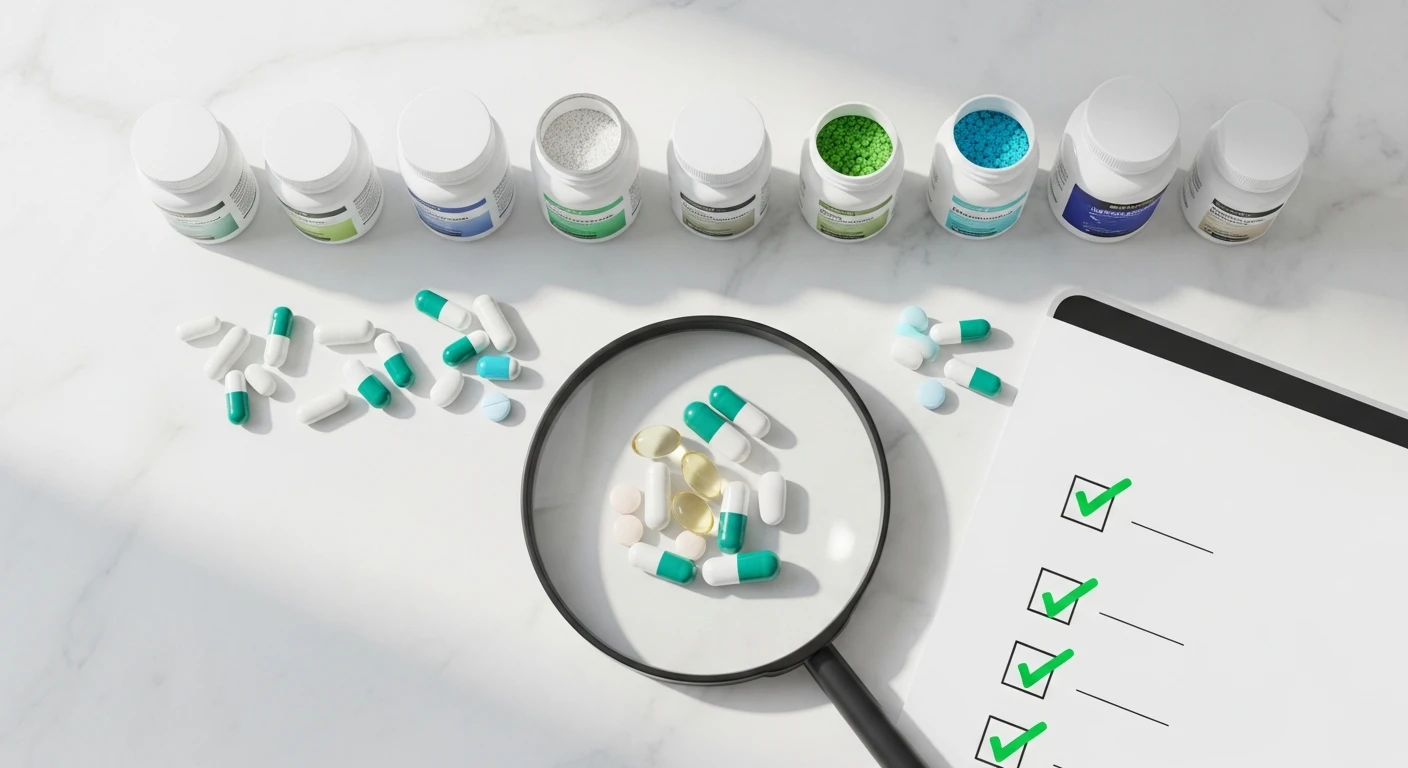
The Supplement Industry's Misinformation Problem
The global supplement market exceeded $177 billion in 2023 and is projected to surpass $220 billion by 2026. With that much money at stake, marketing claims often drift far from what peer-reviewed evidence supports. Myths spread through influencer culture, online forums, and product labeling — leaving consumers confused about what works, what's safe, and what's a waste of money.
This guide examines 10 of the most persistent supplement myths, weighs them against current research, and gives you the evidence-based verdict on each.
How to Use This Guide: Each myth is rated BUSTED, MOSTLY FALSE, or PARTLY TRUE based on the weight of available evidence. Citations link to primary research where possible.
Myth #1: "More is Always Better"
The myth:
"If 1,000mg is good, 5,000mg must be five times better. Megadosing vitamins and minerals maximizes their benefits."
The Evidence
Most nutrients follow a U-shaped dose-response curve — too little causes deficiency, the optimal range supports health, and too much causes toxicity or paradoxical harm. A landmark review published in The New England Journal of Medicine (2019) found that high-dose beta-carotene supplementation actually increased lung cancer risk in smokers, the opposite of what researchers expected.
Similarly, excessive vitamin E supplementation (≥400 IU/day) was associated with a slightly increased all-cause mortality in a meta-analysis published in Annals of Internal Medicine. High-dose zinc (over 40mg/day long-term) suppresses copper absorption and can cause neurological damage. Even vitamin C at very high doses (≥2,000mg) causes osmotic diarrhea and may increase kidney stone risk in susceptible individuals.
The Verdict:
Stick to evidence-based dosing ranges. For most people, correcting a deficiency to the normal range provides meaningful benefit; pushing beyond that rarely helps and sometimes harms. Always check the Tolerable Upper Intake Level (UL) established by the National Academies of Medicine.
Myth #2: "Natural Means Safe"
The myth:
"If it comes from a plant or is labeled 'all-natural,' it has no side effects and is safe at any dose."
The Evidence
Arsenic, cyanide, and aflatoxin are all natural. "Natural" is a marketing term, not a safety classification. Several herbal supplements carry serious documented risks:
- Kava (Piper methysticum): Associated with liver toxicity; over 100 cases of severe hepatotoxicity reported in Europe and the US, leading Germany and Switzerland to briefly ban it.
- Aristolochic acid (found in some traditional herbal preparations): A known human carcinogen causing kidney failure and urothelial cancer.
- Ephedra (Ma Huang): Linked to heart attacks, strokes, and death; banned by the FDA in 2004.
- High-dose vitamin A (retinol): Teratogenic in pregnancy and hepatotoxic at chronic excess doses — it's entirely natural but dangerous.
A 2015 study in The New England Journal of Medicine estimated that supplement-related adverse events cause approximately 23,000 emergency department visits annually in the United States.
The Verdict:
Evaluate every supplement on the specific evidence for its safety profile, not its origin. Use our Supplement Interaction Checker and consult a pharmacist or physician when starting new supplements.
Myth #3: "Supplements Can Replace a Healthy Diet"
The myth:
"Taking a multivitamin every day means you don't need to worry about what you eat."
The Evidence
Whole foods contain thousands of bioactive compounds — phytochemicals, fiber, antioxidants, and synergistic nutrient combinations — that no supplement pill can fully replicate. A comprehensive 2019 analysis published in Annals of Internal Medicine that followed 30,899 adults found that nutrient adequacy achieved through food was associated with reduced all-cause and cardiovascular mortality, but the same nutrients consumed as supplements showed no such benefit.
That said, supplements do serve important roles: correcting clinically diagnosed deficiencies (e.g., vitamin D, B12 in vegans), meeting elevated needs during pregnancy, or bridging gaps that are genuinely hard to close through diet alone.
The Verdict:
Supplements are best used as exactly that — supplements to a solid nutritional foundation. They work best when targeting specific, identified gaps, not as a dietary substitute. See our Beginner Supplement Stack guide for a smart, evidence-based starting point.
Myth #4: "All Brands Are the Same"
The myth:
"Store-brand vitamin C is identical to the premium brand — just buy the cheapest."
The Evidence
Unlike pharmaceuticals, dietary supplements in the United States are regulated under the Dietary Supplement Health and Education Act (DSHEA) of 1994, which does not require manufacturers to prove efficacy or, critically, to prove that what's on the label is actually in the bottle before going to market.
NSF International and ConsumerLab.com have repeatedly found significant discrepancies between label claims and actual content. A 2015 ConsumerLab review of herbal supplements from major retailers found that 4 out of 6 store brands tested contained either the wrong plant species or no detectable active ingredient. For omega-3 fish oils specifically, many products are rancid or contain far less EPA/DHA than claimed.
Third-party certifications (USP, NSF International, Informed Sport, IFOS for fish oil) provide meaningful quality assurance because they test for label accuracy, contamination, and potency independently.
Myth #5: "The FDA Ensures Supplements Are Safe and Effective"
The myth:
"If it's on store shelves, the government has checked that it works and is safe."
The Evidence
Under DSHEA (1994), manufacturers are not required to obtain FDA approval before selling dietary supplements. The FDA can only take action after a product is already on the market and demonstrably causing harm — the burden of proof lies with the agency, not the manufacturer. The FDA estimates there are 50,000–80,000 dietary supplement products on the US market; the agency has the resources to actively monitor only a tiny fraction.
The FDA has found pharmaceutical drugs (including prescription erectile dysfunction drugs, stimulants, and anabolic steroids) secretly added to supplements labeled as "natural" herbal products. The agency maintains a database of tainted supplement advisories with hundreds of products.
The Verdict:
Being on store shelves is not a meaningful safety signal. Always research products independently and favor those with third-party testing. The FDA's Supplement OWL registry and ConsumerLab.com are good starting points for due diligence.
Myth #6: "Protein Supplements Damage Your Kidneys"
The myth:
"High protein intake from supplements strains the kidneys and will cause kidney disease over time."
The Evidence
This myth originated from observational data in patients who already had chronic kidney disease (CKD), for whom high protein intake is indeed problematic. The data does not generalize to healthy adults.
A comprehensive review in Journal of Nutrition and Metabolism (2016) and a meta-analysis in Journal of the International Society of Sports Nutrition found no evidence that high protein intake (up to 2.2g/kg body weight/day) causes kidney damage in healthy individuals. The kidneys of healthy adults adapt to higher protein loads through increased glomerular filtration rate without structural damage.
The nuance: quality matters. Some protein powders contain heavy metals, artificial sweeteners, or added sugars at problematic levels. And if you have pre-existing kidney disease, elevated protein intake does warrant caution and medical supervision.
The Verdict:
For healthy adults, protein supplements at recommended doses are not kidney-damaging. If you have any kidney disease or reduced kidney function, consult your nephrologist before significantly increasing protein intake. Check our Best Protein Powders guide for third-party tested options.
Myth #7: "You Can Tell If a Supplement Is Working"
The myth:
"If I feel better after taking it, it's working. If I feel the same, it's not doing anything."
The Evidence
Many of the most important supplement benefits are invisible: preserving bone density, maintaining adequate vitamin D for immune modulation, or supporting cardiovascular health. You won't feel these benefits acutely, but they matter long-term.
Conversely, the placebo effect is powerful and well-documented. Studies on supplements routinely show that 20–40% of participants in placebo groups report feeling improvements. This doesn't mean something is working — it means subjective experience is an unreliable metric for supplement efficacy. This is exactly why randomized controlled trials (RCTs) with blinding are necessary to assess real effects.
The Verdict:
Rely on objective biomarkers (blood tests for vitamin D, iron, B12, etc.) and peer-reviewed clinical evidence rather than subjective feelings to evaluate supplement effectiveness. Measurable outcomes — not perceived energy changes — are the gold standard.
Myth #8: "Detox Supplements Cleanse Your Liver and Kidneys"
The myth:
"Detox cleanses and liver-support supplements remove toxins that build up from modern diet and environment."
The Evidence
"Detox" is not a defined medical or biochemical concept in the context these products use. The human body has highly sophisticated detoxification systems: the liver performs Phase I and Phase II biotransformation of xenobiotics, the kidneys filter and excrete water-soluble waste, the lymphatic system, skin, and lungs all contribute. These systems work continuously and do not require supplements to "reset" or "cleanse."
A systematic review of detox programs published in the Journal of Human Nutrition and Dietetics (2015) found no convincing evidence that these products reduce human body toxin levels or improve health outcomes. Ironically, some "liver cleanse" products contain botanicals (e.g., certain herbs in high doses) that are themselves hepatotoxic.
The Verdict:
Save your money. Support your liver with adequate hydration, limiting alcohol, maintaining a healthy weight, and getting vaccinated against hepatitis. If you have genuine liver concerns, work with a hepatologist — not a supplement brand.
Myth #9: "Multivitamins Are a Waste of Money"
The myth:
"Multivitamins provide no benefit for most people — it's just expensive urine."
The Evidence
The picture is nuanced. For well-nourished adults eating a varied whole-food diet, large RCTs like the Physicians' Health Study II (NEJM, 2012) found no significant benefit from a daily multivitamin for cardiovascular outcomes or cancer prevention in men.
However, a follow-up analysis in the same cohort (JAMA Internal Medicine, 2022) found a statistically significant reduction in cancer incidence and a modest reduction in cognitive decline with long-term multivitamin use. The COcoa Supplement and Multivitamin Outcomes Study (COSMOS) trial showed a 13% reduction in cancer incidence in older adults.
Multivitamins are especially beneficial for: older adults (reduced absorption of B12, D, and zinc), vegans and vegetarians (B12, iron, zinc, iodine), people with restrictive diets, pregnant women (folic acid is critical for neural tube development), and those with diagnosed deficiencies.
The Verdict:
Not universally wasteful — highly context-dependent. For specific populations, multivitamins provide clear benefit. For young healthy adults eating well, the marginal benefit is small but not zero. See our Best Multivitamins guide for quality options. Shop on Amazon for well-reviewed, third-party tested choices.
Myth #10: "Creatine Is a Steroid That's Bad for You"
The myth:
"Creatine is a performance-enhancing drug similar to anabolic steroids and causes liver or kidney damage."
The Evidence
Creatine is not a steroid. It is a naturally occurring amino acid derivative synthesized in the body from glycine and arginine and found abundantly in meat and fish. It has no structural or mechanistic similarity to anabolic steroids.
Creatine monohydrate is one of the most extensively studied supplements in existence, with over 1,000 peer-reviewed studies published on its effects. The International Society of Sports Nutrition (ISSN) Position Stand (2017, updated 2021) concludes that creatine monohydrate is the most effective ergogenic nutritional supplement available for increasing high-intensity exercise capacity and lean body mass, and is safe for both short and long-term use in healthy individuals.
Multiple long-term studies (up to 5 years) show no adverse effects on kidney or liver function in healthy subjects. Emerging research also suggests cognitive benefits, particularly in older adults and during sleep deprivation (published in Nutrients, 2023).
The Verdict:
Creatine monohydrate has an exceptional safety record and strong evidence for both athletic and cognitive performance. See our Best Creatine Supplements guide, or shop for creatine monohydrate on Amazon.
Quick Reference: Myth Verdicts
| Myth | Verdict |
|---|---|
| More is always better | BUSTED |
| Natural = safe | BUSTED |
| Supplements replace a healthy diet | BUSTED |
| All brands are the same | BUSTED |
| FDA ensures supplement safety | BUSTED |
| Protein damages kidneys (healthy adults) | MOSTLY FALSE |
| You can feel if a supplement works | MOSTLY FALSE |
| Detox supplements cleanse the body | BUSTED |
| Multivitamins are a waste of money | PARTLY TRUE |
| Creatine is a steroid / dangerous | BUSTED |
How to Evaluate Supplement Claims Yourself
1. Check the Evidence Hierarchy
Systematic reviews and meta-analyses of multiple RCTs sit at the top. Single anecdotes ("it worked for me") sit at the bottom. When a supplement is backed only by animal studies, mechanistic theory, or testimonials — not human RCTs — be appropriately skeptical.
2. Look for Industry Funding
A 2016 analysis in JAMA Internal Medicine found that industry-funded nutrition studies were 7.6 times more likely to reach favorable conclusions than independently funded research. Check the "conflict of interest" section of any study. Independently funded research from universities and government agencies is generally more reliable.
3. Beware "Clinically Proven" Language
This phrase is unregulated and meaningless without context. A single small pilot study with 20 participants technically constitutes "clinical evidence." Ask: How many subjects? Was it blinded? Was the effect clinically meaningful, not just statistically significant?
4. Use Reliable Resources
- NIH Office of Dietary Supplements: ods.od.nih.gov — comprehensive fact sheets on individual supplements
- Examine.com: Aggregates primary research without industry funding
- ConsumerLab.com: Independent product quality testing
- Cochrane Reviews: Gold-standard systematic reviews on health interventions
Evidence-Based Supplements Worth Considering
Based on the evidence, here are supplements with robust scientific support. All links include our Amazon affiliate tag.
Vitamin D3 + K2
Strong evidence for bone health, immune function, and deficiency correction.
Magnesium Glycinate
Critical for 300+ enzymatic reactions; most effective absorbable form.
Omega-3 Fish Oil
AHA-endorsed for cardiovascular health; anti-inflammatory EPA and DHA.
Creatine Monohydrate
1,000+ studies; most evidence-backed sports supplement available.
Probiotics
Evidence varies by strain; strongest data for gut health and immunity.
Important Disclaimer: This article is for informational and educational purposes only and does not constitute medical advice. The information provided has not been evaluated by the FDA. Always consult with a qualified healthcare professional before starting or stopping any supplement regimen, especially if you have medical conditions or take prescription medications.
Affiliate Disclosure: As an Amazon Associate, we earn from qualifying purchases. This means we may receive a commission if you purchase through our links at no additional cost to you.