Cognitive Function Optimization Stack 2026
5 evidence-based brain supplements for memory, focus, neuroplasticity, and long-term cognitive health — Lion's Mane, Alpha-GPC, NMN, CoQ10, and L-Theanine reviewed with clinical research citations
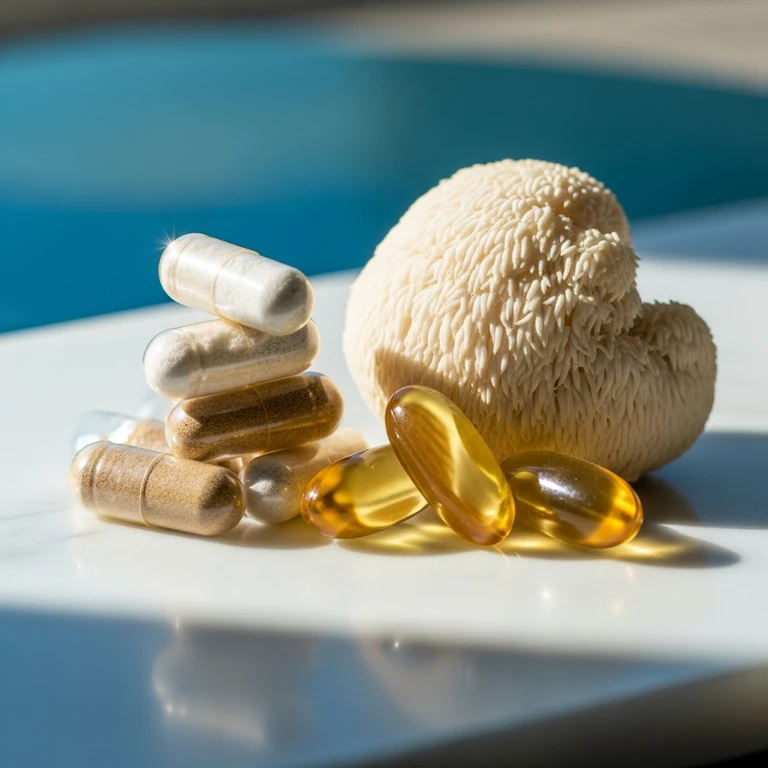
A Systems-Level Approach to Brain Optimization
Most approaches to cognitive supplementation are transactional: take caffeine, get alertness; take a pre-made nootropic blend, get a temporary effect. These strategies share a fundamental limitation — they treat the brain as a static system to be temporarily activated rather than a dynamic biological system that can be structurally improved.
The 2026 Cognitive Function Optimization Stack takes a different approach. Each of the five compounds in this stack addresses a distinct and complementary layer of neurological function: structural neuroplasticity (Lion's Mane via NGF), neurotransmitter substrate supply (Alpha-GPC via acetylcholine), mitochondrial NAD+ restoration (NMN), electron transport chain function (CoQ10), and acute attentional state quality (L-Theanine). Together, they address cognitive performance from the cellular energy level up through neurotransmitter chemistry to neuronal architecture.
Importantly, most of these mechanisms are synergistic rather than additive: NMN and CoQ10 together address the complete mitochondrial ATP production pathway. Lion's Mane and Alpha-GPC together support both the survival and the function of cholinergic neurons. L-Theanine creates the attentional quality in which the structural investments of the other four compounds are most productively expressed. This is a stack designed for the long game — cognitive optimization that compounds over weeks and months.
The Core 2026 Cognitive Stack: Lion's Mane (500–1,000mg) + Alpha-GPC (300–600mg) + NMN (250–500mg) + CoQ10 Ubiquinol (100–200mg) + L-Theanine (100–200mg). Estimated monthly cost: $105–185.
Stack at a Glance
| # | Supplement | Category | Dose & Timing | Rating |
|---|---|---|---|---|
| #1 | Lion's Mane Mushroom NGF stimulation, neuroplasticity, long-term memory & neuroprotection | Nootropic Mushroom / NGF Stimulant | 500–1,000mg standardized extract (>25% beta-glucans) Morning with or without food — effects accumulate over weeks | ★4.9 |
| #2 | Alpha-GPC Acetylcholine synthesis, working memory, learning speed & cholinergic focus | Choline / Acetylcholine Precursor | 300–600mg (50% Alpha-GPC) Morning or 30–60 min before learning/focused work, with food | ★4.8 |
| #3 | NMN (Nicotinamide Mononucleotide) NAD+ restoration, mitochondrial energy, sirtuin activation & cognitive longevity | NAD+ Precursor / Mitochondrial Support | 250–500mg daily Morning with or without food (some evidence for sublingual or liposomal delivery for improved bioavailability) | ★4.8 |
| #4 | CoQ10 (Ubiquinol) Mitochondrial electron transport, brain ATP production & neuroprotective antioxidant defense | Mitochondrial Cofactor / Antioxidant | 100–300mg ubiquinol (reduced form) daily With a fat-containing meal — CoQ10 is fat-soluble and absorption increases significantly with dietary fat | ★4.7 |
| #5 | L-Theanine Calm focused attention, alpha brain wave enhancement & caffeine synergy | Amino Acid / GABAergic & Alpha Wave Modulator | 100–200mg Morning or with caffeine (100–200mg L-theanine per 100mg caffeine for synergistic ratio) | ★4.8 |
Lion's Mane Mushroom
Lion's Mane mushroom (Hericium erinaceus) anchors the cognitive optimization stack because it addresses the most fundamental layer of brain health: the structural integrity and regenerative capacity of neurons themselves. Most nootropics work by transiently elevating specific neurotransmitters — a strategy with a hard ceiling because you cannot exceed the system's neuronal hardware limits. Lion's Mane works differently: its unique bioactive compounds hericenones and erinacines stimulate the synthesis of Nerve Growth Factor (NGF), a protein that governs neuronal survival, differentiation, and neuroplasticity. NGF is to neurons what testosterone is to muscle — the signal that determines whether the system grows, maintains, or atrophies. The landmark clinical evidence comes from Mori et al. (2009, Phytotherapy Research), a double-blind, placebo-controlled trial in 30 adults aged 50–80 with mild cognitive impairment. Participants receiving 3g/day of dried lion's mane powder for 16 weeks showed significantly improved Hasegawa Dementia Scale scores compared to placebo — with gains appearing at week 8 and continuing to accumulate through week 16, then declining after supplementation ceased. This time course is characteristic of a structural neurological mechanism rather than an acute pharmacological effect, and it is what distinguishes lion's mane from every other supplement in this stack: it is building neurological capacity, not simply activating existing pathways. For the 2026 cognitive optimization stack, choose a standardized fruiting body extract (>25% beta-glucans) or dual-extracted product at 500–1,000mg daily. Results require 8–16 weeks of consistent use.
Key Features
- Contains hericenones (fruiting body) and erinacines (mycelium) — two compound classes unique to Hericium erinaceus that cross the blood-brain barrier and directly stimulate Nerve Growth Factor (NGF) synthesis
- NGF is essential for the growth, differentiation, maintenance, and survival of neurons, particularly cholinergic neurons in the basal forebrain — the same neurons that degrade early in Alzheimer's disease
- A 2009 double-blind, placebo-controlled RCT (Mori et al., Phytotherapy Research; n=30, 16 weeks, 3g/day) found lion's mane significantly improved cognitive function scores in adults with mild cognitive impairment versus placebo
- Unlike most nootropics that work via neurotransmitter modulation, lion's mane operates at the level of neuronal architecture — potentially supporting structural brain health rather than just acute neurotransmitter states
- Fruiting body extracts standardized to >25% beta-glucans represent the quality benchmark; avoid mycelium-on-grain products that contain significant rice starch filler and far lower active compound concentrations
Pros & Cons
Pros:
- +The only readily available supplement with a well-characterized mechanism for stimulating endogenous NGF synthesis — a neurotrophin with no safe pharmaceutical equivalent for healthy adults
- +Operates on a longer time horizon than most cognitive supplements: the Mori et al. trial showed continued improvement over 16 weeks, making lion's mane a genuine long-term brain health investment rather than an acute stimulant
- +Exceptional safety profile with no known serious adverse effects; no interaction with most medications; suitable for long-term daily use across healthy adult populations
Cons:
- -Not an acutely perceptible nootropic — effects emerge gradually over 8–16 weeks of consistent use, requiring patience that most "quick fix" supplement users lack
- -Quality varies enormously: mycelium-on-grain products dominate the market and deliver a fraction of the active compounds in genuine fruiting body or dual-extracted products — brand selection is critical
Alpha-GPC
Alpha-GPC is the cholinergic engine of the cognitive optimization stack, directly supplying the substrate for the neurotransmitter most critical to learning, memory encoding, and focused attention. Acetylcholine (ACh) governs the hippocampal long-term potentiation (LTP) that converts short-term experiences into long-term memories, the basal forebrain projections that maintain cortical arousal and sustained attention, and the prefrontal muscarinic receptor signaling that enables cognitive flexibility and working memory updating. Without adequate choline supply, these systems become rate-limited — information processing slows, memory formation degrades, and mental effort increases for the same cognitive output. Alpha-GPC is uniquely positioned as the optimal choline source for this stack because of its pharmacokinetic superiority: comparative studies show it raises brain choline concentrations more effectively per gram than choline bitartrate, phosphatidylcholine, or egg lecithin, with direct blood-brain barrier crossing via specific transport mechanisms. Once in the brain, it is cleaved by phospholipase D to release free choline (immediately available for ACh synthesis) while contributing its glycerophosphocholine backbone to neuronal membrane maintenance — providing dual benefits at the neurotransmitter and structural levels simultaneously. The clinical evidence from De Jesus Moreno Moreno's RCT is the most rigorous cholinergic nootropic trial in the supplement literature: 261 patients with mild-to-moderate Alzheimer's disease receiving 1,200mg/day (400mg three times daily) for 6 months showed significantly better ADAS-Cog scores versus placebo, confirming that cholinergic supplementation via Alpha-GPC produces measurable cognitive benefit even in severely impaired populations. For healthy adults in the optimization context, 300–600mg in the morning is sufficient for meaningful ACh support within the context of normal dietary choline intake.
Key Features
- Alpha-GPC (L-alpha-glycerylphosphorylcholine) is the most bioavailable choline precursor for the brain, crossing the blood-brain barrier efficiently and raising CNS acetylcholine levels more effectively than choline bitartrate or CDP-choline per gram administered
- Acetylcholine is the primary neurotransmitter for hippocampal memory encoding via long-term potentiation (LTP), attentional focus via basal forebrain cortical projections, and cognitive flexibility via prefrontal muscarinic signaling
- A 6-month double-blind RCT (De Jesus Moreno Moreno, Annals of the New York Academy of Sciences; n=261, 400mg TID) found Alpha-GPC significantly improved ADAS-Cog scores in mild-to-moderate Alzheimer's patients versus placebo — the most rigorous cholinergic nootropic trial in the supplement literature
- Synergizes directly with Lion's Mane: Lion's Mane preserves cholinergic neurons via NGF stimulation while Alpha-GPC ensures those neurons have adequate acetylcholine substrate to function — the two mechanisms are complementary and additive
- Dual mechanism: supplies choline for ACh synthesis AND glycerophosphocholine for neuronal membrane phospholipid maintenance — supporting both neurotransmitter production and neuronal structural integrity
Pros & Cons
Pros:
- +Addresses the cholinergic system that is both the most directly targeted by learning and memory demands AND the most vulnerable to age-related decline — making Alpha-GPC simultaneously the most acutely useful and most long-term relevant choline supplement
- +The fastest-acting component of this stack: many users report perceptible improvements in mental clarity, word retrieval, and focused attention within 1–2 hours of the first dose at 300–600mg
- +Potentiates the cognitive effects of every other stack component: better acetylcholine supply improves information processing speed, working memory, and learning efficiency across all cognitive domains
Cons:
- -Some users report mild GI discomfort, headache, or paradoxical fatigue at doses >600mg due to excess acetylcholinergic tone — start at 300mg to establish personal tolerance before escalating
- -Alpha-GPC is hygroscopic: it rapidly absorbs atmospheric moisture and degrades in humid conditions — quality capsules with desiccant and careful storage are essential for maintaining potency
NMN (Nicotinamide Mononucleotide)
NMN (Nicotinamide Mononucleotide) represents the longevity and mitochondrial layer of the cognitive optimization stack — addressing the fundamental biochemistry of how neurons generate the energy required for all cognitive functions. The central mechanism is NAD+ (nicotinamide adenine dinucleotide), a coenzyme present in every cell that participates in over 500 enzymatic reactions, including the electron transport chain reactions that produce ATP in mitochondria, the PARP-mediated DNA strand break repair that prevents neuronal genomic instability, and the activation of sirtuins — a family of enzymes (particularly SIRT1 and SIRT3) that regulate mitochondrial biogenesis, inflammatory gene expression, and the production of BDNF. The central problem NMN addresses is the age-related decline in cellular NAD+ levels: research by Camacho-Pereira et al. (Cell Metabolism, 2016) demonstrated that NAD+ levels fall approximately 40–50% between young adulthood and middle age in both mouse and human tissue, with corresponding reductions in mitochondrial respiratory capacity, SIRT1 activity, and BDNF expression. In neurons, which are extraordinarily energy-intensive and long-lived cells with limited regenerative capacity, this mitochondrial decline manifests as reduced synaptic plasticity, slower information processing, impaired memory consolidation, and increased vulnerability to oxidative stress. NMN is the most direct NAD+ precursor pathway: it is converted to NAD+ via the enzyme NMNAT (nicotinamide mononucleotide adenylyltransferase) in a single enzymatic step — bypassing the rate-limiting NAMPT enzyme that bottlenecks the more common salvage pathway from nicotinamide. Human clinical evidence has matured significantly: the Yamamoto et al. (2022, npj Aging) RCT confirmed NMN supplementation at 250mg/day for 12 weeks significantly elevated blood NAD+ levels and improved functional measures in healthy older adults. For the cognitive optimization stack, 250–500mg daily taken in the morning serves as the mitochondrial energy infrastructure investment — its benefits are long-term and cumulative, synergizing with CoQ10 for ATP production and with Lion's Mane for neurotrophic support.
Key Features
- NMN is a direct precursor to NAD+ (nicotinamide adenine dinucleotide) — the coenzyme essential for mitochondrial ATP production via the electron transport chain, DNA repair via PARP enzymes, and sirtuin (longevity protein) activation
- Brain NAD+ levels decline approximately 40–50% between ages 20 and 60, with corresponding reductions in mitochondrial efficiency, neuronal ATP production, and cognitive performance — NMN supplementation directly addresses this decline
- A 2022 double-blind, placebo-controlled human trial (Yamamoto et al., npj Aging; n=30, 250mg/day, 12 weeks) found NMN supplementation significantly elevated blood NAD+ levels and improved lower-limb function versus placebo in healthy older adults
- Sirtuins (SIRT1, SIRT3) activated by NAD+ regulate mitochondrial biogenesis, neuroinflammation suppression, BDNF (Brain-Derived Neurotrophic Factor) expression, and hippocampal neuroplasticity — connecting NMN's mechanism directly to cognitive function
- Animal studies (Camacho-Pereira et al., Cell Metabolism, 2016) demonstrate NMN supplementation fully rescues age-related mitochondrial dysfunction and NAD+ depletion — providing the mechanistic rationale for human cognitive aging applications
Pros & Cons
Pros:
- +Addresses the deepest layer of neurological aging: mitochondrial NAD+ depletion is increasingly recognized as a primary driver of age-related cognitive decline, not merely a correlate — NMN targets the causal mechanism rather than symptoms
- +Synergizes powerfully with CoQ10: NMN supplies NAD+ to drive electrons through the electron transport chain while CoQ10 serves as the essential shuttle between Complexes I/II and III — the two supplements together address the complete mitochondrial ATP production pathway
- +BDNF upregulation via SIRT1 activation creates a complementary mechanism to Lion's Mane's NGF stimulation — the two supplements together address both major neurotrophins governing brain plasticity and neuronal health
Cons:
- -Human cognitive-specific clinical trials remain limited — most NMN evidence comes from metabolic and aging studies, with cognitive endpoints as secondary measures rather than primary outcomes
- -Cost is the highest in this stack at $40–70/month for quality products; NR (nicotinamide riboside), an alternative NAD+ precursor, costs less but shows similar blood NAD+ elevation in comparative head-to-head studies
CoQ10 (Ubiquinol)
CoQ10 (Coenzyme Q10, ubiquinone/ubiquinol) is the mitochondrial infrastructure partner of NMN in the cognitive optimization stack, providing the essential electron transport function that converts the NAD+ restored by NMN into actual ATP. The mechanism is biochemically precise: the electron transport chain (ETC) in mitochondria operates through a series of protein complexes (I through IV) that transfer electrons derived from NADH and FADH2 — produced during glucose and fat metabolism — along the inner mitochondrial membrane to ultimately reduce oxygen to water. This electron flow powers the pumping of protons across the membrane, creating the electrochemical gradient that drives ATP synthase. CoQ10 (as ubiquinol, QH2) is the non-protein, lipid-soluble molecule that carries electrons from Complex I and Complex II to Complex III — it is not optional or replaceable; it is the literal physical molecule that bridges two essential segments of the ETC. Without adequate CoQ10, electron flow stalls, proton gradient drops, ATP synthesis rates fall, and mitochondrial reactive oxygen species (ROS) generation increases paradoxically — creating both energy deficiency and oxidative damage simultaneously. The brain is particularly CoQ10-dependent: with approximately 20% of total body ATP consumption concentrated in 2% of body mass, neurons operate some of the most energy-intensive mitochondria in the body and cannot tolerate CoQ10 insufficiency. Age-related CoQ10 decline — approximately 40% reduction between ages 20 and 50 — is a well-documented phenomenon that directly corresponds to declining mitochondrial respiratory capacity and increasing neuronal oxidative stress. For the cognitive optimization stack, 100–200mg of ubiquinol (the pre-reduced form with superior bioavailability in adults over 30) taken daily with a fat-containing meal provides the mitochondrial electron transport capacity that makes NMN's NAD+ restoration biochemically meaningful. Together, NMN + CoQ10 constitute a complete mitochondrial optimization system addressing both NAD+ supply and electron transport capacity.
Key Features
- CoQ10 (coenzyme Q10, ubiquinone/ubiquinol) is the essential electron shuttle in the mitochondrial electron transport chain, transferring electrons from Complex I and II to Complex III — without which the proton gradient driving ATP synthase cannot be maintained
- The brain is one of the highest CoQ10-utilizing organs in the body due to its extraordinary mitochondrial density and ATP consumption; CoQ10 deficiency in neurons directly impairs ATP production and accelerates oxidative damage
- CoQ10 levels decline approximately 40% between ages 20 and 50, with statin medications further suppressing endogenous synthesis via HMG-CoA reductase inhibition — making CoQ10 supplementation both a longevity strategy and a statin-user necessity
- As ubiquinol (the reduced form), CoQ10 functions as a potent lipid-soluble antioxidant, quenching free radicals in mitochondrial membranes — protecting the lipid bilayers that are uniquely vulnerable to oxidative damage in high-metabolism tissues like brain
- Ubiquinol (QH2) has demonstrated superior bioavailability versus ubiquinone (Q) in human pharmacokinetic studies, particularly in adults over 40 where the enzymatic conversion of ubiquinone to ubiquinol becomes less efficient
Pros & Cons
Pros:
- +The biochemically essential complement to NMN in this stack: NMN restores NAD+ to drive electrons into the ETC at Complex I, while CoQ10 serves as the non-negotiable electron shuttle that carries those electrons to Complex III — neither mechanism functions at full capacity without the other
- +Ubiquinol's dual role as both an ETC component and a lipophilic antioxidant provides protection against the very oxidative stress that CoQ10-fueled mitochondrial activity generates — a built-in safety mechanism unique among electron transport cofactors
- +Strong neuroprotective evidence: CoQ10 supplementation has been investigated in Parkinson's disease (where mitochondrial Complex I deficiency is a primary pathological feature) and shown to slow functional decline in early-stage disease in a Phase II RCT (Shults et al., 2002, Archives of Neurology)
Cons:
- -Ubiquinol is significantly more expensive than ubiquinone — typically 2–3× the cost per milligram, though the superior bioavailability in adults over 30 generally justifies the price differential for this use case
- -Fat-soluble: absorption is highly meal-dependent — taken in a fasted state, bioavailability can be as low as 10%; taking with a fat-containing meal is non-negotiable for meaningful plasma CoQ10 elevation
L-Theanine
L-Theanine is the acute attention and mental state component of the cognitive optimization stack — the compound that creates the quality of focused, calm attention in which the structural and biochemical improvements driven by the other four supplements are most effectively expressed. Found naturally in green tea leaves at concentrations of 1–4% dry weight, L-theanine produces a distinctive mental state that practitioners of mindfulness meditation describe as alert relaxation: the mind is engaged, focused, and responsive without the anxious over-arousal, mental chatter, or tension that often accompanies stimulant-driven alertness. The neurophysiological signature of this state is increased alpha brain wave power (8–12Hz) — the EEG pattern characteristic of calm, focused wakefulness and the brain state associated with creative insight, learning readiness, and sustained attentional control. Nobre et al. (2008, Asia Pacific Journal of Clinical Nutrition) demonstrated this alpha enhancement in a randomized crossover design: 100mg L-theanine produced significantly elevated alpha wave amplitude in posterior scalp regions within 45–60 minutes versus placebo, with no sedation. The most practically powerful application is the L-theanine + caffeine combination. Caffeine alone at cognitive doses elevates arousal and alertness via adenosine receptor antagonism but frequently produces jitteriness, attentional scatter, and anxiety — particularly at doses above 150mg. L-Theanine at a 2:1 ratio with caffeine (200mg L-theanine: 100mg caffeine) consistently attenuates these adverse effects while amplifying the attentional benefits: Owen et al. (2008, Nutritional Neuroscience) demonstrated significantly better attention switching accuracy and reduced distraction susceptibility with the combination versus either compound alone. For the 2026 cognitive optimization stack, 100–200mg L-theanine in the morning — with or without caffeine — provides the attentional foundation that makes learning, memory work, and deep focus more accessible, creating the subjective mental conditions in which the structural investments of Lion's Mane, Alpha-GPC, NMN, and CoQ10 yield their maximum return.
Key Features
- L-Theanine is a non-protein amino acid found naturally in green tea (Camellia sinensis) that produces alert relaxation without sedation: it enhances alpha brain wave activity (8–12Hz) — the neural signature of calm, focused attention observed in experienced meditators
- A 2008 randomized crossover study (Nobre et al., Asia Pacific Journal of Clinical Nutrition) found L-theanine (100mg) significantly increased alpha wave power in healthy adults 45–60 minutes after ingestion versus placebo, with no sedation
- The L-theanine + caffeine combination is the most reproducibly confirmed cognitive enhancement pair in the human literature: multiple RCTs show the combination significantly improves sustained attention, reaction time, and mental performance versus either compound alone
- Owen et al. (2008, Nutritional Neuroscience) in a double-blind, placebo-controlled crossover RCT (n=27) found L-theanine (100mg) + caffeine (50mg) significantly improved attention switching, alertness, and reduced susceptibility to distraction versus placebo
- Mechanism includes GABA receptor modulation (mildly inhibitory), NMDA receptor antagonism (reducing glutamate excitotoxicity), and inhibition of L-glutamic acid uptake — collectively producing anxiolysis and attentional focusing without impairment
Pros & Cons
Pros:
- +The single best-evidenced acute cognitive enhancer for calm, focused attention: the L-theanine + caffeine combination has replicated consistently across independent laboratories and represents one of the few nutraceutical interventions with near-pharmaceutical-level evidence for attention performance
- +Exceptional safety profile and tolerability: L-theanine is a natural tea constituent with a centuries-long consumption history, zero known serious adverse effects, no dependency or tolerance formation, and no interactions with most medications
- +Lowest cost component in the stack at $10–20/month — delivering some of the most immediately perceptible cognitive benefits for the least investment, making it an excellent entry point for users building the stack incrementally
Cons:
- -Short half-life: L-theanine effects peak within 1–2 hours and diminish over 4–6 hours — not a sustained all-day cognitive enhancer without multiple doses or sustained-release formulations
- -Mild for heavy-stimulant users: those accustomed to high-dose caffeine or stimulant nootropics may find L-theanine's effect profile too subtle; it shines in combination with caffeine, not as a standalone stimulant replacement
The 2026 Cognitive Stack: Daily Protocol
The five components of this stack have distinct timing requirements based on their mechanisms and absorption characteristics. Lion's Mane and NMN can be taken any time with or without food. Alpha-GPC and L-Theanine are most effective taken before focused cognitive work. CoQ10 must be taken with a fat-containing meal for meaningful absorption. The full stack can be consolidated into a single morning routine for most users.
| Supplement | Dose | Timing | Notes |
|---|---|---|---|
| Lion's Mane | 500–1,000mg | Morning, with or without food | Choose fruiting body or dual-extract products standardized to >25% beta-glucans. Avoid mycelium-on-grain products. Benefits require 8–16 weeks of consistent daily use — do not discontinue early. |
| Alpha-GPC | 300–600mg | Morning or 30–60 min before learning work, with food | Start at 300mg and increase to 600mg after 1 week if well tolerated. Store away from humidity — alpha-GPC is hygroscopic. Take with food to minimize GI discomfort. |
| NMN | 250–500mg | Morning with or without food | Sublingual or liposomal formulations may improve bioavailability versus standard capsules. Start at 250mg; increase to 500mg after 2–4 weeks. Benefits are cumulative — NAD+ elevation occurs over weeks of consistent use. |
| CoQ10 (Ubiquinol) | 100–200mg | With breakfast or any fat-containing meal | Fat-soluble — bioavailability increases dramatically when taken with dietary fat. Choose ubiquinol over ubiquinone for adults over 30. If on statins, confirm CoQ10 use with your prescribing physician. |
| L-Theanine | 100–200mg | Morning, with or without food; pair with caffeine for synergy | Use a 2:1 ratio with caffeine if combining (200mg theanine per 100mg caffeine). Onset within 30–45 minutes; effects last 4–6 hours. Safe to redose in the afternoon for extended focus sessions. |
The Four Layers of Cognitive Optimization This Stack Targets
1. Neuroplasticity & Neuronal Architecture → Lion's Mane
Neuroplasticity — the brain's ability to strengthen synaptic connections, grow new dendritic spines, and support neurogenesis — is the hardware layer of cognitive performance. No matter how optimized your neurotransmitter balance, if the underlying neuronal architecture is deteriorating, cognitive capacity declines. Lion's Mane addresses this via NGF (Nerve Growth Factor) stimulation — the primary signal governing neuronal survival, growth, and maintenance of the cholinergic neurons whose degradation is the earliest pathological event in cognitive aging.
2. Neurotransmitter Substrate → Alpha-GPC
Given healthy neuronal architecture, cognitive performance requires adequate neurotransmitter substrate — the raw materials neurons use to produce the chemical signals that transmit information. Acetylcholine is the neurotransmitter most directly implicated in memory formation, focused attention, and learning. Alpha-GPC supplies the choline that is the rate-limiting precursor for acetylcholine synthesis, ensuring the cholinergic system that Lion's Mane maintains structurally is also optimally supplied with the fuel it needs to function.
3. Mitochondrial Energy Production → NMN + CoQ10
Neuronal function — generating action potentials, maintaining membrane potentials, synthesizing neurotransmitters, and supporting synaptic plasticity — is energetically expensive. The brain consumes approximately 20% of total body ATP production. NMN restores cellular NAD+, the coenzyme that drives the electron transport chain and activates sirtuins (longevity proteins that regulate mitochondrial biogenesis and BDNF expression). CoQ10 serves as the essential electron shuttle within the ETC itself, carrying electrons from Complex I/II to Complex III. Together, they address the complete mitochondrial ATP production pathway.
4. Attentional State Quality → L-Theanine
The three layers above represent long-term structural and biochemical investments. L-Theanine addresses the immediate attentional state in which these investments are expressed: it elevates alpha brain wave power, producing calm focused attention without sedation or anxious over-arousal. This mental state — sometimes called "relaxed alertness" — is the neurological context in which memory encoding, learning, and complex reasoning operate most effectively. L-Theanine makes the cognitive work hours you spend with this stack more productive.
Key Research: Human Evidence for Each Compound
Lion's Mane: NGF and Cognitive Function in Mild Cognitive Impairment
Mori et al. (2009, Phytotherapy Research; n=30, 16 weeks, 3g/day) found lion's mane significantly improved Hasegawa Dementia Scale scores in adults with mild cognitive impairment versus placebo, with improvements continuing to accumulate over the full trial period and declining after supplementation ceased. Nagano et al. (2010, Biomedical Research) found lion's mane reduced depression and anxiety scores in 30 menopausal women over 4 weeks. Animal studies confirm robust NGF synthesis stimulation by hericenone and erinacine compounds.
Research: Mori et al. (2009), Phytother Res; Nagano et al. (2010), Biomed Res; Kawagishi et al. (1994), Tetrahedron Lett.
Alpha-GPC: Cholinergic Enhancement and Memory
De Jesus Moreno Moreno (2003, Annals of the New York Academy of Sciences; n=261, 6 months, 400mg TID) found Alpha-GPC significantly improved ADAS-Cog scores in mild-to-moderate Alzheimer's patients versus placebo. Bellar et al. (2015, Journal of the International Society of Sports Nutrition) found 600mg Alpha-GPC 60 minutes pre-exercise significantly improved peak bench press power output — confirming acute cholinergic neuromotor activation.
Research: De Jesus Moreno Moreno (2003), Ann NY Acad Sci; Bellar et al. (2015), J Int Soc Sports Nutr.
NMN: NAD+ Restoration and Aging Biomarkers
Yamamoto et al. (2022, npj Aging; n=30, 12 weeks, 250mg/day) found NMN significantly elevated blood NAD+ concentrations and improved lower-limb function versus placebo in healthy older adults. Yoshino et al. (2021, Science; n=25 postmenopausal women, 10 weeks, 250mg/day) confirmed NMN supplementation significantly increased skeletal muscle NAD+ concentrations and improved muscle insulin sensitivity — demonstrating tissue-level NAD+ elevation beyond blood markers.
Research: Yamamoto et al. (2022), npj Aging; Yoshino et al. (2021), Science.
CoQ10: Mitochondrial Function and Neuroprotection
Shults et al. (2002, Archives of Neurology; n=80, 16 months, up to 1,200mg/day CoQ10) found high-dose CoQ10 significantly slowed functional decline in early Parkinson's disease — the first large RCT demonstrating neuroprotective effects of CoQ10 in a human neurological disorder characterized by mitochondrial Complex I deficiency. Multiple studies confirm CoQ10 supplementation reduces markers of oxidative stress and mitochondrial dysfunction in aging populations.
Research: Shults et al. (2002), Arch Neurol; Rosenfeldt et al. (2003), J Card Surg.
L-Theanine: Alpha Waves and Cognitive Performance
Nobre et al. (2008, Asia Pacific Journal of Clinical Nutrition) confirmed L-theanine (100mg) significantly increased alpha brain wave power within 45–60 minutes versus placebo in healthy adults. Owen et al. (2008, Nutritional Neuroscience; n=27, crossover RCT) found L-theanine (100mg) + caffeine (50mg) significantly improved attention switching accuracy, alertness, and reduced distraction susceptibility versus placebo or either compound alone — the most replicated acute cognitive enhancement finding in the human nootropic literature.
Research: Nobre et al. (2008), Asia Pac J Clin Nutr; Owen et al. (2008), Nutr Neurosci.
Deep Dives: Individual Supplement Reviews
For detailed product comparisons and brand recommendations for each supplement in this stack, see our full review guides:
Frequently Asked Questions
How long until I notice results from this stack?
L-Theanine produces perceptible effects within 30–60 minutes of the first dose. Alpha-GPC effects on mental clarity are often noticed within 1–2 hours. Lion's Mane benefits require 8–16 weeks of consistent supplementation to accumulate meaningfully. NMN and CoQ10 effects on cognitive performance are gradual and may take 4–8 weeks to become perceptible — though NAD+ blood levels rise within the first week. Plan for a 12-week minimum evaluation period for the full stack to show its cognitive potential.
Can I combine this stack with caffeine?
Yes — caffeine complements this stack well. L-Theanine at a 2:1 ratio with caffeine (200mg theanine per 100mg caffeine) attenuates jitteriness and crash while amplifying sustained attention. Alpha-GPC further supports cognitive function by maintaining acetylcholine supply that caffeine-driven catecholamine release can partially deplete over time. There are no contraindications between any stack component and moderate caffeine (100–200mg/day).
Which supplements should I start with if budget is limited?
Start with L-Theanine (most affordable, immediate perceptible benefit) and Lion's Mane (most impactful for long-term brain health, best evidence base). Add Alpha-GPC third for memory and learning. Then CoQ10 as a mitochondrial investment. Add NMN last — it is the most expensive and has the most indirect evidence for cognitive outcomes specifically, though its systemic longevity benefits are well-documented.
How does this stack differ from the Energy & Focus Stack?
The Energy & Focus Optimization Stack is optimized for acute cognitive performance — L-Tyrosine, Rhodiola, Creatine, Alpha-GPC, and B-Complex targeting dopamine, norepinephrine, and cellular energy for same-day cognitive demands. This Cognitive Function Optimization Stack is optimized for long-term brain health and neuroplasticity — Lion's Mane, NMN, and CoQ10 operate over weeks to months and address neuronal architecture, NAD+ metabolism, and mitochondrial function. The two stacks are complementary and several users run both: the Energy stack for demanding work periods, the Cognitive stack as a permanent daily brain health investment.
Are there any interactions I should know about?
The most important interactions to check: (1) Alpha-GPC with anticholinergic medications — Alpha-GPC increases acetylcholine while anticholinergics block it; combining may reduce both compounds' effectiveness. (2) CoQ10 with statins — statins suppress CoQ10 synthesis; supplementation is commonly recommended but confirm with your prescribing physician. (3) NMN with chemotherapy agents — theoretical NAD+ pathway interactions have been raised in cancer contexts; do not supplement during oncological treatment without physician guidance. Lion's Mane has mild antiplatelet activity in vitro — use caution with anticoagulant medications.
Disclaimer: This content is for informational purposes only and does not constitute medical advice. Always consult a qualified healthcare provider before starting any new supplement regimen, especially if you have underlying health conditions, are pregnant or breastfeeding, or are taking prescription medications. The research cited represents the current evidence base and does not guarantee individual results. Some links on this page are affiliate links; SupliCore may earn a commission on qualifying purchases at no additional cost to you. Supplements do not prevent, treat, or cure any disease.