Gut Health Supplement Guide 2026
5 evidence-based supplement categories for digestion, microbiome balance, and gut lining repair — probiotics, prebiotics, digestive enzymes, L-Glutamine, and fiber reviewed with clinical research citations
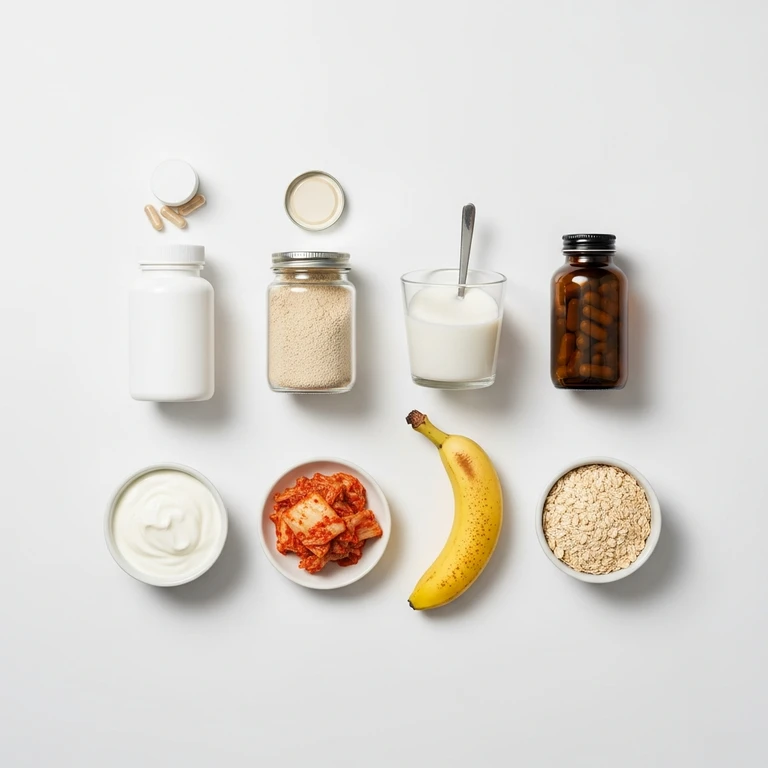
A Systems-Level Approach to Gut Health
The gut is not a single system with a single fix. Digestive comfort, regularity, nutrient absorption, and immune function all depend on several distinct — and interdependent — layers: the bacteria living in your colon, the fuel that feeds those bacteria, the enzymes that break down what you eat, the integrity of the intestinal lining itself, and the physical bulk that moves everything through. Treating gut health as one problem with one supplement usually leads to disappointing results.
This 2026 Gut Health Supplement Guide addresses five distinct and complementary categories: bacterial restoration (probiotics), bacterial fuel (prebiotic fiber), macronutrient breakdown (digestive enzymes), intestinal lining support (L-Glutamine), and physical regularity (psyllium fiber). Each targets a different mechanism, and most work synergistically — prebiotic fiber feeds the bacteria introduced by probiotics, enzymes reduce the undigested food reaching the colon that would otherwise ferment excessively, and L-Glutamine supports the very cells that form the gut's barrier against everything passing through it.
This guide is designed for the long game. Some benefits — like reduced post-meal bloating from digestive enzymes — can appear within days. Others, like meaningful shifts in bacterial diversity from probiotics and prebiotics, take 4–8 weeks of consistent use to assess properly. Build the stack gradually, prioritize gut-friendly whole foods alongside supplementation, and give each category a fair trial period before judging its effect.
The Core 2026 Gut Health Stack: Multi-Strain Probiotic (20–50B CFU) + Prebiotic Fiber (5–10g) + Digestive Enzymes (with meals) + L-Glutamine (5–10g) + Psyllium Husk Fiber (5–10g). Estimated monthly cost: $85–155.
Guide at a Glance
| # | Category | Best For | Dose & Timing | Rating |
|---|---|---|---|---|
| #1 | Multi-Strain Probiotic (20–50 Billion CFU) Live Bacteria / Microbiome Restoration | Restoring bacterial diversity, reducing bloating & supporting regularity | 20–50 billion CFU, 8–12+ diverse strains (Lactobacillus & Bifidobacterium species) Morning on an empty stomach or right before a meal, per label instructions | ★4.8 |
| #2 | Prebiotic Fiber (Inulin / FOS Blend) Fermentable Fiber / Bacterial Fuel Source | Feeding beneficial bacteria, increasing short-chain fatty acid production | 5–10g daily, starting at 2–3g and titrating up over 1–2 weeks With meals, mixed into food or beverages | ★4.6 |
| #3 | Broad-Spectrum Digestive Enzyme Blend Enzyme Complex / Nutrient Breakdown Support | Reducing bloating after meals, supporting breakdown of proteins, fats & carbs | 1–2 capsules with each meal (blend of protease, lipase, amylase, and lactase) Immediately before or with the first bite of meals | ★4.6 |
| #4 | L-Glutamine Amino Acid / Intestinal Lining Support | Supporting intestinal lining integrity & gut barrier function | 5–10g daily, divided into 1–2 doses On an empty stomach, morning and/or before bed | ★4.5 |
| #5 | Psyllium Husk Fiber Soluble Fiber / Bulking & Regularity Agent | Regularity, stool consistency & cholesterol support | 5–10g daily (1–2 teaspoons of husk powder), building up gradually With a full glass of water, either with meals or between meals | ★4.7 |
Multi-Strain Probiotic (20–50 Billion CFU)
A high-quality multi-strain probiotic is the foundation of any gut health protocol because it directly addresses the living bacterial ecosystem that governs digestion, immune signaling, and nutrient absorption. The human gut microbiome contains trillions of bacteria spanning hundreds of species, and modern factors — antibiotics, processed food diets, chronic stress, and reduced fiber intake — routinely disrupt this ecosystem's diversity and balance. Multi-strain formulas are designed to address this disruption from multiple angles: Lactobacillus species predominate in the small intestine and are associated with reduced bloating and improved lactose digestion, while Bifidobacterium species predominate in the colon and are associated with improved stool consistency and reduced inflammatory markers. The clinical evidence base is substantial — Ford et al.'s 2018 meta-analysis in the American Journal of Gastroenterology, pooling 35 randomized controlled trials, found probiotic supplementation produced a statistically significant reduction in IBS symptom severity scores versus placebo, with multi-strain formulas showing particularly consistent benefit for bloating and abdominal discomfort. For the 2026 gut health protocol, prioritize a delayed-release, multi-strain formula delivering 20–50 billion CFU from at least 8–10 distinct, clinically studied strains, taken consistently for a minimum of 4–8 weeks to allow meaningful colonization and symptom assessment.
Key Features
- Multi-strain formulas combining Lactobacillus (L. acidophilus, L. rhamnosus, L. plantarum) and Bifidobacterium (B. lactis, B. longum, B. bifidum) species address different regions of the GI tract and different symptom profiles rather than relying on a single strain
- A 2018 systematic review and meta-analysis (Ford et al., American Journal of Gastroenterology; 35 RCTs) found multi-strain probiotics significantly reduced overall IBS symptom scores and bloating versus placebo
- Delayed-release or acid-resistant capsule technology protects live bacteria from stomach acid, meaningfully increasing the number of viable organisms that reach the intestines versus standard gelatin capsules
- CFU (colony-forming unit) count at the time of manufacture matters less than CFU count guaranteed through expiration — look for brands that state potency "through expiration" rather than "at time of manufacture"
- Refrigerated and shelf-stable formulations show comparable clinical efficacy in trials as long as strain viability is maintained; shelf-stable spore-forming strains (e.g., Bacillus coagulans) offer added convenience for travel
Pros & Cons
Pros:
- +The single most extensively studied gut health intervention, with hundreds of RCTs across IBS, antibiotic-associated diarrhea, and general digestive symptom relief
- +Effects on bloating and irregularity are often noticeable within 2–4 weeks, faster than most other gut health interventions
- +Broad safety profile in healthy adults with a long history of food-source consumption (yogurt, kefir, fermented foods) predating supplement use
Cons:
- -Strain-specific and highly individual: a formula that helps one person may do little for another, since baseline microbiome composition varies significantly between individuals
- -Some users experience temporary increased gas or bloating during the first 1–2 weeks as the microbiome adjusts — this typically resolves with continued use
Prebiotic Fiber (Inulin / FOS Blend)
Prebiotic fiber is the fuel source layer of the gut health stack, addressing a step in the microbiome equation that probiotic supplementation alone cannot: keeping beneficial bacteria fed and thriving once they are present. The term "prebiotic," formally defined by Gibson and Roberfroid and refined in subsequent consensus statements (Gibson et al., 2017, Nature Reviews Gastroenterology & Hepatology), refers to a substrate that is selectively utilized by host microorganisms conferring a health benefit — in practice, this means fibers like inulin (from chicory root), fructooligosaccharides (FOS), and galactooligosaccharides (GOS) that resist digestion in the small intestine and travel intact to the colon, where beneficial bacteria ferment them. This fermentation process produces short-chain fatty acids (SCFAs) — acetate, propionate, and especially butyrate — which serve as the primary energy source for colonocytes, the cells lining the colon, and which have been associated in mechanistic research with reduced gut inflammation, improved mucosal barrier integrity, and favorable metabolic signaling. The practical implication for a 2026 gut health protocol is that prebiotic fiber and probiotic supplementation are mechanistically complementary rather than redundant: probiotics introduce or supplement specific bacterial strains, while prebiotic fiber provides the fermentable substrate that determines how well those populations — and the beneficial bacteria already present in your gut — establish, persist, and produce SCFAs. For most adults, 5–10g daily of inulin or a mixed inulin/FOS blend, introduced gradually to minimize gas and bloating, provides a meaningful bacterial fuel source alongside dietary fiber from whole foods.
Key Features
- Prebiotics are non-digestible fibers that selectively feed beneficial bacteria — primarily Bifidobacterium and Lactobacillus species — rather than being absorbed or digested by the host directly
- Fermentation of prebiotic fiber by gut bacteria produces short-chain fatty acids (SCFAs), particularly butyrate, which serves as the primary energy source for colonocytes (colon lining cells) and supports gut barrier integrity
- A 2016 systematic review (Gibson et al., Nature Reviews Gastroenterology & Hepatology, defining the modern prebiotic concept) confirmed inulin-type fructans and GOS selectively increase Bifidobacterium populations in controlled human trials
- Directly synergistic with probiotic supplementation: prebiotics provide the fermentable substrate that improves survival and colonization of both supplemented and endogenous beneficial bacterial strains — the basis of "synbiotic" formulations
- Distinct from bulking fiber (like psyllium): prebiotic fibers are selected for fermentability and bacterial selectivity rather than primarily for stool bulk or transit time effects
Pros & Cons
Pros:
- +Addresses the root ecological problem that many gut health interventions miss: introducing beneficial bacteria without feeding them limits how well those populations establish and persist
- +Butyrate production from prebiotic fermentation is associated with reduced intestinal inflammation and improved gut barrier function in mechanistic and animal studies, with growing human evidence
- +Low cost relative to other gut health categories, and can be added directly to coffee, smoothies, or water with minimal taste impact
Cons:
- -The most likely category in this guide to cause gas and bloating, especially at doses above 10g/day or without gradual titration — start low (2–3g) and increase slowly over 1–2 weeks
- -Individuals with SIBO (small intestinal bacterial overgrowth) or significant FODMAP sensitivity may experience worsened symptoms from fermentable prebiotic fibers and should approach this category cautiously or avoid it
Broad-Spectrum Digestive Enzyme Blend
Digestive enzymes address the mechanical and chemical breakdown step of digestion — the process by which the food you eat is broken into absorbable nutrients — and serve as the fastest-acting, most immediately noticeable component of a comprehensive gut health protocol. Endogenous enzyme production from the pancreas, stomach, and small intestine brush border naturally declines with age and can be further compromised by chronic stress (which reduces the "rest and digest" parasympathetic activity needed for optimal enzyme secretion), rapid or poorly-chewed eating, and certain digestive conditions. A broad-spectrum enzyme blend — combining protease for protein breakdown, lipase for fat breakdown, amylase for carbohydrate breakdown, and often lactase for lactose digestion — supplements this natural process across all three macronutrients plus a common intolerance trigger. The clinical literature on pancreatic enzyme supplementation, reviewed by Ianiro et al. (2016, Current Drug Metabolism), confirms that enzyme supplementation measurably improves the digestion and absorption of dietary macronutrients, particularly in individuals with reduced endogenous enzyme output. Unlike probiotics and prebiotics, which work through the microbiome over a multi-week timeline, digestive enzymes act immediately and mechanically during the digestive process itself — most users notice reduced post-meal bloating, gas, and heaviness within the first few doses. For the 2026 gut health protocol, take 1–2 capsules of a broad-spectrum blend with the first bite of meals, particularly larger or richer meals, as a complement to the longer-term microbiome-focused strategies of probiotics, prebiotics, and fiber.
Key Features
- A broad-spectrum blend combines protease (protein breakdown), lipase (fat breakdown), amylase (carbohydrate breakdown), and often lactase (lactose breakdown) — covering the three primary macronutrients plus a common intolerance trigger in a single formula
- Digestive enzyme production naturally declines with age and can be further reduced by conditions affecting pancreatic function, chronic stress, or rapid, poorly-chewed eating — supplementation compensates for this reduced endogenous output
- A randomized, placebo-controlled trial (Ianiro et al., 2016, Current Drug Metabolism, review of pancreatic enzyme literature) confirms enzyme supplementation improves the digestion and absorption of macronutrients in individuals with reduced endogenous enzyme output
- Plant-derived enzymes (e.g., bromelain from pineapple, papain from papaya) function across a broader pH range than some animal-derived pancreatic enzymes, offering activity from the stomach through the small intestine
- Distinct mechanism from probiotics and prebiotics: enzymes act immediately, mechanically, and chemically on food during digestion, rather than working through the microbiome over weeks
Pros & Cons
Pros:
- +The fastest-acting product in this guide: effects on post-meal bloating, gas, and heaviness are often noticeable with the very first or second dose, unlike the multi-week timelines of probiotics and prebiotics
- +Particularly useful for large or rich meals, dairy-containing meals (with lactase), or foods an individual has historically struggled to digest comfortably
- +Complements rather than competes with the microbiome-focused categories in this guide — better macronutrient breakdown reduces the amount of undigested food reaching the colon, which can otherwise contribute to excess gas from bacterial fermentation of poorly-digested material
Cons:
- -Symptomatic relief does not address underlying causes of digestive discomfort like food intolerances, SIBO, or motility disorders — persistent symptoms warrant medical evaluation rather than indefinite enzyme reliance
- -Must be timed precisely with meals to be effective; taking enzymes without food or significantly after eating provides little benefit
L-Glutamine
L-Glutamine addresses the structural and cellular-nutrition layer of gut health — a mechanism distinct from the bacterial-composition focus of probiotics, prebiotics, and even the mechanical action of digestive enzymes. Glutamine is the most abundant free amino acid in the human body, and the cells lining the small intestine (enterocytes) and colon (colonocytes) use it preferentially over glucose as their primary metabolic fuel. This preference exists because the intestinal epithelium is one of the most metabolically demanding and rapidly regenerating tissues in the body — the entire lining turns over completely approximately every 3–5 days, a renewal rate that requires substantial, consistent energy substrate. Beyond fueling this cellular turnover, glutamine supports the expression of tight junction proteins — including occludin and zonula occludens-1 (ZO-1) — which form the molecular seals between adjacent intestinal epithelial cells and determine intestinal permeability. When these tight junctions are compromised, intestinal permeability increases, a phenomenon that underlies the popular "leaky gut" concept, though the clinical nomenclature and diagnostic criteria remain more precisely defined in research settings than in general wellness marketing. The clinical evidence base for glutamine's gut barrier effects is strongest in critically ill, post-surgical, and intensely physically stressed populations — contexts where the body's glutamine demand for immune function and intestinal repair exceeds normal endogenous production, making it a "conditionally essential" amino acid. A systematic review by Wang et al. (2015, Journal of Parenteral and Enteral Nutrition) found glutamine supplementation supported intestinal barrier function markers in these compromised populations. For the 2026 gut health protocol, 5–10g of unflavored L-glutamine powder daily — divided into a morning and pre-bed dose, taken on an empty stomach — provides direct cellular fuel to the intestinal lining, complementing the bacterial and enzymatic strategies addressed elsewhere in this guide.
Key Features
- L-Glutamine is the primary metabolic fuel source for enterocytes (small intestine lining cells) and colonocytes, used preferentially over glucose to support the extremely high energy demands of intestinal cell turnover
- The intestinal epithelium regenerates completely every 3–5 days, making it one of the most metabolically demanding tissues in the body — adequate glutamine supply directly supports this rapid cellular renewal
- A systematic review (Wang et al., 2015, Journal of Parenteral and Enteral Nutrition) of glutamine supplementation in critically ill and gastrointestinal-compromised populations found supplementation supported intestinal barrier function markers versus control
- Glutamine supports tight junction protein expression (e.g., occludin, ZO-1) between intestinal epithelial cells — the molecular structures that determine intestinal permeability and are the mechanistic basis of the "leaky gut" concept in gut barrier research
- Becomes conditionally essential during physiological stress (intense exercise, illness, surgical recovery) when the body's own glutamine production may not meet elevated intestinal and immune cell demand
Pros & Cons
Pros:
- +Addresses gut barrier integrity directly at the cellular level, complementing the bacterial-composition focus of probiotics and prebiotics with a structural, cell-nutrition-based mechanism
- +Well-established safety profile with decades of use in clinical nutrition (parenteral and enteral feeding formulas) and sports nutrition, at doses well above typical gut health supplementation ranges
- +Inexpensive, unflavored powder form mixes easily into water and has minimal taste impact, making daily adherence straightforward
Cons:
- -Human evidence for gut barrier benefits in healthy, non-critically-ill populations is less extensive than the evidence base in clinical and critical-care nutrition settings — much of the strongest data comes from hospitalized or intensely stressed populations
- -Effects on gut lining integrity are structural and cumulative, not acutely perceptible — users should not expect an immediate subjective sensation the way they might with digestive enzymes
Psyllium Husk Fiber
Psyllium husk fiber addresses the mechanical regularity and bulking layer of gut health, rounding out this guide's coverage of the microbiome (probiotics, prebiotics), digestive breakdown (enzymes), and cellular lining support (L-glutamine) mechanisms with a distinct physical mechanism: water absorption and gel formation. Derived from the husks of Plantago ovata seeds, psyllium is a soluble fiber that absorbs many times its weight in water as it passes through the digestive tract, forming a viscous gel that normalizes stool consistency in both directions — it adds bulk and moisture to hard, slow-moving stool while adding form and structure to loose, watery stool. This bidirectional normalizing effect, confirmed across multiple randomized controlled trials and summarized in a 2020 meta-analysis by Gibb et al. (American Journal of Clinical Nutrition), makes psyllium one of the most versatile fiber interventions for digestive regularity, effective in both constipation-predominant and diarrhea-predominant presentations. A key practical distinction from the prebiotic fiber category covered earlier in this guide is fermentability: while inulin and FOS are substantially fermented by colonic bacteria (producing beneficial short-chain fatty acids but also gas as a byproduct in sensitive individuals), psyllium is only partially fermented, meaning its regularity benefits come primarily from physical bulking and water retention rather than bacterial activity. This makes psyllium markedly better tolerated by individuals who experience bloating from fermentable fibers, while still providing modest prebiotic-like benefits from its partially fermented fraction. Psyllium also carries an FDA-authorized qualified health claim for cardiovascular benefit, based on consistent trial evidence that its viscous gel binds bile acids in the gut, prompting the liver to draw more cholesterol from the bloodstream to synthesize replacement bile acids — a mechanism that produces measurable LDL cholesterol reductions with regular use. For the 2026 gut health protocol, 5–10g daily with a full glass of water, titrated up gradually from a 2–3g starting dose, provides both digestive regularity and a modest cardiovascular benefit alongside the microbiome and lining-focused strategies elsewhere in this stack.
Key Features
- Psyllium husk is a soluble, gel-forming fiber derived from Plantago ovata seed husks that absorbs many times its weight in water, forming a viscous gel that normalizes stool consistency in both directions — softening hard stool and adding form to loose stool
- A 2020 systematic review and meta-analysis (Gibb et al., American Journal of Clinical Nutrition) of psyllium fiber trials confirmed significant improvements in stool frequency and consistency in adults with chronic constipation versus placebo
- Unlike fermentable prebiotic fibers, psyllium is only partially fermented by gut bacteria, meaning it produces its regularity benefits primarily through physical bulking and water retention rather than bacterial fermentation — this makes it far better tolerated by individuals prone to gas and bloating from fermentable fibers
- The FDA has authorized a qualified health claim for psyllium fiber and reduced risk of coronary heart disease, based on consistent evidence of LDL cholesterol reduction through bile acid binding in the gut
- Effective across the full spectrum of bowel irregularity — multiple RCTs confirm benefit in both constipation-predominant and diarrhea-predominant presentations, a versatility not shared by most single-mechanism digestive supplements
Pros & Cons
Pros:
- +Among the best-tolerated fiber supplements for individuals who experience gas or bloating from fermentable prebiotic fibers like inulin, since psyllium's primary mechanism is physical bulking rather than bacterial fermentation
- +Dual benefit profile: supports regularity and stool consistency while also providing a modest, well-documented LDL cholesterol reduction — a rare case of a digestive supplement with cardiovascular evidence behind it
- +Effects on regularity are often noticeable within days to 1–2 weeks, faster than the microbiome-mediated timelines of probiotics and prebiotics
Cons:
- -Must be taken with adequate water (a full glass per dose, minimum) — insufficient fluid intake with psyllium can worsen constipation or, rarely, cause esophageal or intestinal obstruction
- -Can interfere with the absorption of certain oral medications if taken simultaneously — a general rule of separating psyllium and medications by 1–2 hours is prudent, and individuals on prescription medications should confirm timing with a pharmacist or physician
The 2026 Gut Health Stack: Daily Protocol
The five categories in this guide have distinct timing requirements based on their mechanisms. Probiotics and L-Glutamine are best taken on an empty stomach. Digestive enzymes must be taken with meals to be effective. Prebiotic and psyllium fiber should be introduced gradually and taken with adequate water. Most users can consolidate this into a simple morning-and-mealtime routine.
| Supplement | Dose | Timing | Notes |
|---|---|---|---|
| Multi-Strain Probiotic | 20–50 billion CFU | Morning, empty stomach or before a meal | Choose delayed-release capsules with 8–10+ diverse strains. Give it 4–8 weeks before assessing effect. Mild bloating in week one is common and usually temporary. |
| Prebiotic Fiber (Inulin/FOS) | 5–10g | With meals, mixed into food or drinks | Start at 2–3g and titrate up over 1–2 weeks to avoid gas. Those with SIBO or significant FODMAP sensitivity should approach cautiously. |
| Digestive Enzyme Blend | 1–2 capsules per meal | Immediately before or with the first bite of meals | Choose a broad-spectrum blend (protease, lipase, amylase, lactase). Most useful with large or dairy-containing meals. |
| L-Glutamine | 5–10g | Empty stomach, morning and/or before bed | Unflavored powder mixes easily into water. Structural, cumulative benefit — not acutely perceptible. Consult a physician if you have liver conditions. |
| Psyllium Husk Fiber | 5–10g | With a full glass of water, with or between meals | Always take with adequate water. Separate from oral medications by 1–2 hours. Titrate up from 2–3g to avoid initial bloating. |
The Five Layers of Gut Health This Guide Targets
1. Bacterial Composition → Probiotics
The gut microbiome — trillions of bacteria across hundreds of species — governs digestion, immune signaling, and even nutrient synthesis. Modern factors like antibiotics, processed diets, and chronic stress routinely disrupt this ecosystem. Probiotics address this directly by supplementing beneficial Lactobacillus and Bifidobacterium strains, with strong clinical evidence for reduced bloating and improved regularity.
2. Bacterial Fuel Supply → Prebiotic Fiber
Introducing beneficial bacteria means little if they aren't fed. Prebiotic fiber — inulin, FOS, and GOS — is fermented by beneficial bacteria into short-chain fatty acids like butyrate, the primary fuel source for colon cells, directly supporting the bacterial populations that probiotics establish or that already exist in your gut.
3. Macronutrient Breakdown → Digestive Enzymes
Before nutrients can be absorbed or bacteria can do their work, food must be broken down. Digestive enzymes — protease, lipase, amylase, and lactase — supplement naturally declining enzyme output, reducing post-meal bloating and ensuring less undigested food reaches the colon to over-ferment.
4. Intestinal Lining Integrity → L-Glutamine
The intestinal lining regenerates every 3–5 days, making it one of the most metabolically demanding tissues in the body. L-Glutamine serves as the preferred fuel source for these cells and supports tight junction proteins that govern intestinal permeability — the structural foundation beneath everything else in this guide.
5. Physical Regularity → Psyllium Fiber
All the bacterial balance and cellular repair in the world matters less if transit time and stool consistency aren't functioning well. Psyllium husk forms a water-absorbing gel that normalizes stool consistency in both directions, with the added benefit of an FDA-recognized cholesterol reduction claim.
Key Research: Human Evidence for Each Category
Probiotics: IBS Symptoms and Bloating
Ford et al. (2018, American Journal of Gastroenterology; meta-analysis of 35 RCTs) found probiotic supplementation significantly reduced overall IBS symptom scores and bloating versus placebo, with multi-strain formulas showing particularly consistent benefit.
Research: Ford et al. (2018), Am J Gastroenterol.
Prebiotics: Bifidobacterium Selectivity and SCFA Production
Gibson et al. (2017, Nature Reviews Gastroenterology & Hepatology, consensus statement) confirmed inulin-type fructans and GOS selectively increase Bifidobacterium populations and short-chain fatty acid production in controlled human trials.
Research: Gibson et al. (2017), Nat Rev Gastroenterol Hepatol.
Digestive Enzymes: Macronutrient Digestion and Absorption
Ianiro et al. (2016, Current Drug Metabolism, review of pancreatic enzyme literature) confirmed enzyme supplementation improves digestion and absorption of macronutrients, particularly in individuals with reduced endogenous enzyme output.
Research: Ianiro et al. (2016), Curr Drug Metab.
L-Glutamine: Intestinal Barrier Function
Wang et al. (2015, Journal of Parenteral and Enteral Nutrition, systematic review) found glutamine supplementation supported intestinal barrier function markers in critically ill and gastrointestinal-compromised populations versus control.
Research: Wang et al. (2015), JPEN J Parenter Enteral Nutr.
Psyllium Fiber: Regularity and Cholesterol
Gibb et al. (2020, American Journal of Clinical Nutrition, meta-analysis) confirmed psyllium fiber significantly improved stool frequency and consistency in adults with chronic constipation versus placebo, alongside an FDA-authorized qualified health claim for LDL cholesterol reduction.
Research: Gibb et al. (2020), Am J Clin Nutr.
Deep Dives: Individual Supplement Reviews
For detailed product comparisons and brand recommendations for each category in this guide, see our full review guides:
Frequently Asked Questions
How long until I notice results from this gut health stack?
Digestive enzymes are the fastest — many people notice reduced post-meal bloating within the first few doses. Psyllium fiber typically improves regularity within days to 1–2 weeks. Probiotics and prebiotic fiber require the longest runway: give these 4–8 weeks of consistent daily use before assessing effect, since they work by gradually shifting bacterial populations. L-Glutamine's benefits on gut lining integrity are structural and cumulative, best evaluated over 6–8 weeks.
Do I need all five categories, or can I start with just one or two?
You don't need all five at once. If bloating after meals is your main complaint, start with digestive enzymes for fast relief. If irregularity is the primary issue, start with psyllium fiber and a probiotic. If you're building a comprehensive long-term gut health routine, add prebiotic fiber and L-Glutamine once you've established the first two and are tolerating them well. Introducing all five simultaneously makes it harder to identify what's helping and can increase the odds of temporary digestive adjustment symptoms.
Why do prebiotic fiber and probiotics sometimes cause more bloating at first?
Prebiotic fiber is fermented by gut bacteria, and fermentation produces gas as a natural byproduct — this is usually a sign the fiber is reaching your colon and feeding bacteria as intended, not a sign of a problem. Probiotics can cause temporary bloating during the first 1–2 weeks as bacterial populations shift and adjust. Starting both at low doses and titrating up gradually over 1–2 weeks minimizes this adjustment period for most people.
Can this stack help with a diagnosed condition like IBS or SIBO?
Probiotics have reasonable clinical evidence for general IBS symptom reduction, and digestive enzymes and psyllium fiber can help manage specific symptoms. However, this guide is educational and general in nature — it is not a substitute for individualized medical care. If you have a diagnosed condition like IBS, SIBO, IBD, or a motility disorder, work with a gastroenterologist or registered dietitian, since some categories in this guide (particularly fermentable prebiotic fiber) can worsen symptoms in SIBO specifically.
Are there any interactions I should know about?
The most important interactions to check: (1) Psyllium and other fibers can interfere with oral medication absorption — separate dosing by 1–2 hours. (2) L-Glutamine should be used cautiously by individuals with certain liver conditions given its role in nitrogen metabolism — consult a physician if relevant. (3) Prebiotic fiber can worsen symptoms in SIBO or significant FODMAP sensitivity — approach this category cautiously if you have either condition. (4) Immunocompromised individuals should consult a physician before starting probiotics, given rare reports of bacteremia in high-risk populations.
Disclaimer: This content is for informational purposes only and does not constitute medical advice. Always consult a qualified healthcare provider before starting any new supplement regimen, especially if you have underlying health conditions, are pregnant or breastfeeding, or are taking prescription medications. The research cited represents the current evidence base and does not guarantee individual results. Some links on this page are affiliate links; SupliCore may earn a commission on qualifying purchases at no additional cost to you. Supplements do not prevent, treat, or cure any disease.