Optimal Recovery Stack for High-Intensity Interval Training (HIIT)
The 5 most evidence-backed compounds for faster HIIT recovery — Creatine Monohydrate, Whey Protein Isolate, Beta-Alanine, Magnesium Glycinate, and Tart Cherry Juice Extract reviewed with clinical research citations
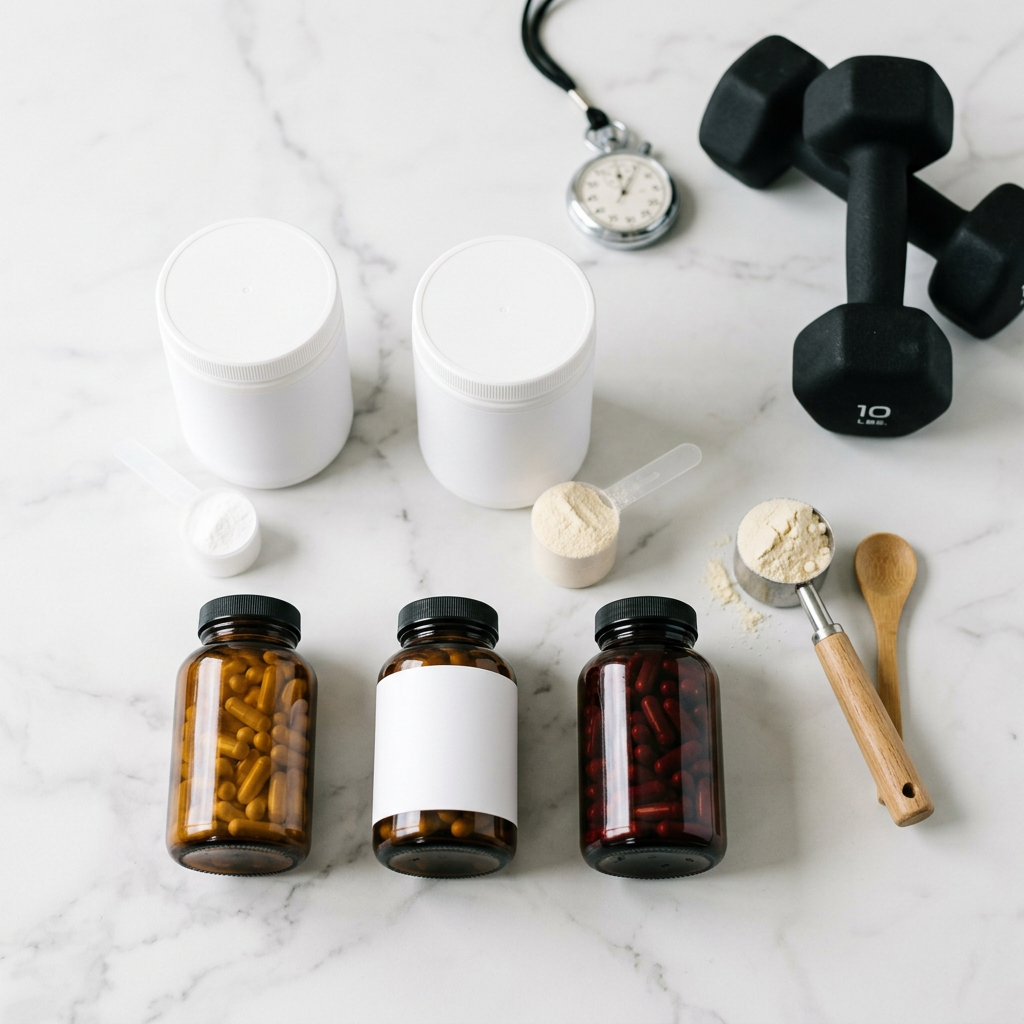
The Science of HIIT Recovery in 2026
High-Intensity Interval Training delivers exceptional cardiovascular and metabolic benefits precisely because it pushes multiple physiological systems — the ATP-phosphocreatine energy system, anaerobic glycolysis, and skeletal muscle — to their functional limits in short, repeated bursts. That same intensity is what makes recovery the limiting factor in long-term HIIT progress: inadequate recovery between sessions leads to accumulating fatigue, declining interval quality, elevated injury risk, and eventually overtraining, while well-managed recovery allows athletes to train harder, more frequently, and with better long-term adaptation.
The 2026 HIIT recovery stack is built around five compounds that each address a distinct, well-characterized recovery bottleneck: Creatine Monohydrate replenishes the ATP-PCr system that fuels every hard interval; Whey Protein Isolate supplies the amino acids needed to repair and rebuild muscle protein broken down during repeated maximal efforts; Beta-Alanine buffers the intramuscular acidosis that drives within-session fatigue; Magnesium Glycinate supports neuromuscular relaxation and the deep sleep during which most tissue repair occurs; and Tart Cherry Juice Extract blunts the excess inflammation and oxidative stress responsible for delayed onset muscle soreness (DOMS).
Together, these five compounds address the full recovery timeline of HIIT training: from within-session energy availability and fatigue resistance, to the 24–72 hour muscle repair and inflammatory window, to the nightly sleep architecture that consolidates each session's training adaptation.
The Core 2026 HIIT Recovery Stack: Creatine Monohydrate (3–5g daily) + Whey Protein Isolate (20–40g post-workout) + Beta-Alanine (3.2–6.4g daily, split) + Magnesium Glycinate (200–400mg evening) + Tart Cherry Extract (480–680mg twice daily). Estimated monthly cost: $92–160.
Stack at a Glance
| # | Supplement | Category | Dose & Timing | Rating |
|---|---|---|---|---|
| #1 | Creatine Monohydrate ATP-PCr replenishment, faster between-interval recovery & long-term power output | ATP System / Phosphagen Recovery | 3–5g daily (optional 20g/day loading phase for 5–7 days) Post-workout or any consistent daily time | ★4.9 |
| #2 | Whey Protein Isolate Muscle protein synthesis, post-HIIT muscle repair & lean mass retention | Complete Protein / Muscle Protein Synthesis | 20–40g (0.25–0.4g/kg body weight) post-workout Within 1–2 hours post-workout; additional servings throughout the day | ★4.8 |
| #3 | Beta-Alanine Carnosine synthesis, lactic acid buffering & delayed onset of muscular fatigue | Amino Acid / Intramuscular Buffer | 3.2–6.4g/day, split into smaller doses Daily, split across 2–4 doses with meals to reduce paresthesia | ★4.6 |
| #4 | Magnesium Glycinate Muscle relaxation, cramp prevention & deep sleep quality for overnight recovery | Essential Mineral / Neuromuscular & Sleep Support | 200–400mg elemental magnesium Evening, 30–60 minutes before bed | ★4.7 |
| #5 | Tart Cherry Juice Extract Reducing delayed onset muscle soreness (DOMS), inflammation & oxidative stress from repeated intervals | Polyphenol / Anti-Inflammatory Recovery Aid | 480–680mg extract (equivalent to ~8–12 oz juice) or 8oz Montmorency tart cherry juice, twice daily Twice daily, beginning 4–5 days before a hard HIIT block and continuing through 48 hours post-exercise | ★4.5 |
Creatine Monohydrate
Creatine monohydrate is the foundational supplement for any HIIT recovery protocol because it targets the exact energy system that high-intensity interval training depletes fastest: the ATP-phosphocreatine (ATP-PCr) system. During all-out efforts of 6–15 seconds — the hallmark of HIIT intervals — muscles rely almost entirely on stored phosphocreatine to rapidly regenerate ATP. This store is depleted within seconds and requires 3–5 minutes to substantially replenish, which is precisely why interval quality degrades across repeated rounds without adequate recovery. The International Society of Sports Nutrition's position stand (Kreider et al., 2017, Journal of the International Society of Sports Nutrition) reviewed decades of literature and concluded creatine monohydrate is not only safe for long-term use in healthy individuals but is the most effective nutritional supplement available for increasing high-intensity exercise capacity and lean muscle mass during training. By saturating intramuscular phosphocreatine stores, creatine supplementation allows the ATP-PCr system to regenerate more rapidly between HIIT intervals, meaning athletes can sustain higher power output across repeated bouts and recover faster session-to-session. Beyond acute performance, creatine also draws water into muscle cells (cellular hydration), which has been shown to independently stimulate protein synthesis signaling and reduce markers of exercise-induced muscle damage. For HIIT recovery specifically, daily use of 3–5g of micronized creatine monohydrate — with or without an initial loading phase — provides the most well-established, evidence-backed foundation of any recovery supplement on the market.
Key Features
- Saturates intramuscular phosphocreatine stores, directly fueling the ATP-PCr system that dominates the first 10–15 seconds of every HIIT interval
- The International Society of Sports Nutrition (ISSN) position stand (Kreider et al., 2017, JISSN) concludes creatine monohydrate is the single most effective legal ergogenic aid for high-intensity exercise capacity
- Speeds phosphocreatine resynthesis between intervals, allowing athletes to maintain power output across repeated HIIT bouts rather than degrading with each round
- Draws water into muscle cells (cell volumization), which independently signals anabolic pathways and supports recovery
- A 2003 Cochrane-level meta-analysis (Branch, J Strength Cond Res) found creatine supplementation significantly improved repeated high-intensity exercise performance across 100+ studies
Pros & Cons
Pros:
- +The most heavily researched sports supplement in existence — over 1,000 studies with an exceptional safety profile at recommended doses
- +Directly addresses the energy system HIIT relies on most (ATP-PCr) rather than a downstream recovery marker
- +Inexpensive relative to its effect size — among the best cost-per-benefit ratios of any supplement in sports nutrition
Cons:
- -Causes water retention (intracellular, not bloating) that can add 1–3 lbs of scale weight, which may concern weight-class or aesthetic-focused athletes
- -Loading phase (20g/day) can cause mild GI discomfort in some users; a slower 3–5g/day approach avoids this at the cost of slower saturation
Whey Protein Isolate
Whey protein isolate addresses the second pillar of HIIT recovery: rebuilding the muscle protein broken down during repeated high-intensity efforts. While HIIT is often framed as a cardiovascular or metabolic conditioning tool, the eccentric loading and repeated maximal contractions involved — particularly in HIIT formats incorporating sprints, jumps, or resistance circuits — produce meaningful muscle protein breakdown that must be offset with adequate dietary protein to support repair and adaptation. Whey protein triggers muscle protein synthesis (MPS) more potently than most other protein sources due to its rapid digestion kinetics and exceptionally high leucine content — the specific branched-chain amino acid that activates the mTOR signaling pathway responsible for initiating MPS. The 2018 Morton et al. meta-analysis in the British Journal of Sports Medicine, which pooled data from 49 randomized controlled trials and 1,863 participants, found that protein supplementation significantly augmented training-induced increases in lean body mass and strength, with effects most pronounced in those training at higher intensities and frequencies — directly applicable to HIIT athletes training multiple times per week. Isolate is preferred over concentrate for a HIIT recovery stack specifically because its higher purity (typically 90%+ protein) and near-complete lactose removal reduce the GI distress that can accompany a large protein bolus taken shortly after intense exercise, when digestive blood flow is already reduced. A post-workout serving of 20–40g, timed within roughly one to two hours of finishing a session, provides the amino acid substrate needed to shift the body from the net catabolic state induced by intense training into net muscle protein accretion.
Key Features
- Rapidly digested and absorbed, delivering a fast, high-magnitude leucine spike that triggers mTOR-mediated muscle protein synthesis (MPS)
- Whey isolate is processed to remove most lactose and fat, delivering ≥90% protein by weight with minimal GI distress versus whey concentrate
- A 2018 meta-analysis in the British Journal of Sports Medicine (Morton et al., 49 studies, 1,863 participants) found protein supplementation significantly augmented resistance and high-intensity training-induced gains in lean mass and strength
- Complete essential amino acid profile with the highest leucine content of any common protein source — the specific amino acid that triggers the MPS signaling cascade
- Repeated HIIT sessions create measurable muscle protein breakdown; adequate post-session protein intake shifts net protein balance from catabolic to anabolic
Pros & Cons
Pros:
- +The gold-standard recovery protein with the deepest research base of any protein source for post-exercise muscle repair
- +Fast absorption kinetics make it ideal specifically for the post-HIIT window when the muscle is primed for nutrient uptake
- +Isolate form minimizes lactose-related GI discomfort, which matters when training intensity is already taxing the gut
Cons:
- -More expensive per gram of protein than whey concentrate or bulk food sources like chicken or eggs
- -Not necessary for those already meeting daily protein targets (1.6–2.2g/kg) through whole foods — it is a convenience tool, not a unique nutrient
Beta-Alanine
Beta-alanine addresses a distinct and often overlooked dimension of HIIT recovery and performance: intramuscular acid-base buffering. High-intensity interval efforts lasting roughly 30 seconds to several minutes rely heavily on anaerobic glycolysis, which generates hydrogen ions (H+) as a metabolic byproduct. As H+ accumulates faster than it can be cleared, intramuscular pH falls, directly impairing the enzymes responsible for muscle contraction and contributing to the burning sensation and performance decline athletes experience during repeated hard intervals. Carnosine, a dipeptide stored in skeletal muscle, is one of the body's primary intramuscular pH buffers — and beta-alanine is the rate-limiting amino acid precursor required for its synthesis, since dietary carnosine itself is broken down before it can be absorbed intact. Chronic beta-alanine supplementation has been shown in muscle biopsy studies to raise intramuscular carnosine concentrations by 20–80% after 4–10 weeks of consistent use, directly enhancing the muscle's buffering capacity. The 2012 Hobson et al. meta-analysis in Amino Acids, pooling 15 controlled studies, found that beta-alanine supplementation produced a significant, moderate improvement in exercise capacity specifically for efforts lasting 60 seconds to 4 minutes — a duration range that overlaps almost exactly with standard HIIT work intervals (e.g., 30/30s, 1:1 Tabata-style, or 2–4 minute threshold intervals). This is corroborated by the ISSN's formal position stand on beta-alanine (Trexler et al., 2015, Journal of the International Society of Sports Nutrition), which concludes 4–6 weeks of beta-alanine supplementation (4–6g/day) meaningfully improves exercise performance, particularly in trained individuals performing high-intensity work. For a HIIT recovery stack, beta-alanine's role is preventative and performance-sustaining: by delaying the acidosis that drives within-session fatigue, athletes can maintain higher work output across intervals, which — perhaps counterintuitively — reduces the total recovery burden by lowering the degree of metabolic and mechanical stress accumulated per session at a given training quality.
Key Features
- The rate-limiting substrate for carnosine synthesis in skeletal muscle — supplementation raises intramuscular carnosine concentrations by 20–80% over 4–10 weeks
- Carnosine buffers hydrogen ions (H+) that accumulate during high-intensity glycolytic exercise, delaying the drop in muscle pH that drives fatigue during 1–4 minute efforts typical of HIIT
- A 2012 meta-analysis in Amino Acids (Hobson et al., 15 studies) found beta-alanine supplementation significantly improved exercise capacity in efforts lasting 60 seconds to 4 minutes — precisely the duration range of most HIIT work intervals
- The ISSN position stand on beta-alanine (Trexler et al., 2015, JISSN) confirms it as safe and effective for improving high-intensity exercise performance with chronic daily supplementation
- A 2017 meta-analysis (Saunders et al., British Journal of Sports Medicine) found beta-alanine improved high-intensity exercise performance across a range of protocols with the largest effects on tasks between 30 seconds and 10 minutes
Pros & Cons
Pros:
- +Directly targets the biochemical mechanism of fatigue during HIIT-length efforts (H+ accumulation and pH drop), rather than a general recovery marker
- +Well-supported by an ISSN position stand — a rare distinction reserved for the most robustly evidenced sports supplements
- +Effects are cumulative and durable — carnosine stores stay elevated for weeks after loading, meaning consistent daily use builds a lasting physiological buffer
Cons:
- -Causes paresthesia (a harmless tingling/flushing sensation) at single doses above ~800mg–1g; splitting doses or using sustained-release formulations minimizes this
- -Requires 4–10 weeks of daily loading to meaningfully elevate intramuscular carnosine — it is not an acute, same-day ergogenic aid
Magnesium Glycinate
Magnesium glycinate rounds out the physiological side of HIIT recovery by supporting two processes that are easy to overlook but critical to adaptation: neuromuscular relaxation and sleep quality. Magnesium is a cofactor for ATP synthesis (magnesium binds ATP to form the biologically active Mg-ATP complex used in virtually every energy-requiring cellular reaction) and for the calcium-regulated processes governing muscle contraction and relaxation. During and after intense interval training, magnesium is lost through sweat and increased urinary excretion, and athletes training HIIT multiple times per week are at meaningfully elevated risk of a subclinical magnesium deficit that standard blood tests often fail to detect (since less than 1% of total body magnesium is stored in blood serum). Insufficient magnesium has been associated with impaired muscle relaxation, increased susceptibility to cramping, and disrupted sleep architecture — all of which directly undermine recovery between HIIT sessions. The glycinate (bisglycinate) chelated form is specifically preferred for a recovery stack because it pairs magnesium with glycine, an inhibitory neurotransmitter and amino acid shown in its own right to improve subjective sleep quality, while avoiding the dose-limiting GI effects (loose stools, cramping) that commonly occur with magnesium oxide or citrate at doses high enough to be physiologically meaningful. Sleep is arguably the single most important recovery variable following high-intensity training — the majority of growth hormone secretion and much of the body's tissue repair and immune modulation occurs during deep, slow-wave sleep. The Abbasi et al. (2012) randomized, double-blind, placebo-controlled trial published in the Journal of Research in Medical Sciences found that 500mg/day of magnesium supplementation over 8 weeks in adults with insomnia significantly improved sleep efficiency, total sleep time, and sleep onset latency, alongside favorable changes in serum melatonin and cortisol. For HIIT athletes, taking 200–400mg of elemental magnesium as glycinate in the evening supports both the direct neuromuscular relaxation needed after repeated maximal efforts and the deep sleep architecture required to consolidate the training adaptation.
Key Features
- Magnesium is a required cofactor in over 300 enzymatic reactions, including ATP synthesis, muscle contraction/relaxation, and protein synthesis — all directly relevant to HIIT recovery
- Intense exercise increases magnesium excretion through sweat and urine; HIIT athletes training frequently are at elevated risk of subclinical magnesium insufficiency
- The glycinate (bisglycinate) chelate form uses glycine as a carrier amino acid, which independently has calming, GABA-modulating effects and avoids the laxative GI effects common with magnesium oxide or citrate at higher doses
- Magnesium regulates calcium flux at the neuromuscular junction — adequate levels support proper muscle relaxation after contraction and are associated with reduced exercise-associated muscle cramping
- A randomized controlled trial in the Journal of Research in Medical Sciences (Abbasi et al., 2012) found magnesium supplementation in older adults with insomnia significantly improved sleep efficiency, sleep time, and reduced early-morning awakening versus placebo
Pros & Cons
Pros:
- +Addresses the overnight recovery window directly — sleep is when the majority of growth hormone release and tissue repair occurs following intense training
- +The glycinate form has the best combination of bioavailability and GI tolerance among common magnesium chelates, unlike oxide (poorly absorbed) or citrate (can cause loose stools at effective doses)
- +A 2017 review in Nutrients (Zhang et al.) concluded magnesium status is directly linked to exercise performance and that supplementation may benefit athletes with inadequate intake, which is common given typical Western dietary patterns
Cons:
- -Benefits are most apparent in those with suboptimal baseline magnesium status; already-replete individuals may notice more subtle effects
- -Sedating/relaxing effects mean it should be taken in the evening, not before training or competition
Tart Cherry Juice Extract
Tart cherry juice extract targets the inflammatory and oxidative-stress side of HIIT recovery — the mechanisms most directly responsible for delayed onset muscle soreness (DOMS) that can compromise the quality of a subsequent training session if not adequately managed. Repeated high-intensity intervals, especially those involving eccentric loading (sprinting, jumping, plyometric or resistance-based HIIT formats), produce microscopic muscle tissue damage that triggers a local inflammatory response and a rise in reactive oxygen species. This process is a necessary part of the adaptation signal that eventually makes muscle stronger and more fatigue-resistant, but when inflammation and oxidative stress are excessive or recovery time is short (as is common in HIIT programs run several times per week), the resulting soreness and functional strength deficit can compromise the intensity of the next session, creating a negative training-quality spiral. Montmorency tart cherries are unusually rich in anthocyanins, a class of polyphenol antioxidants with demonstrated anti-inflammatory activity in human trials. The pivotal study by Bowtell et al. (2011), published in Medicine & Science in Sports & Exercise, found that consuming Montmorency cherry juice for 4 days before and 2 days after a bout of intensive strength exercise significantly reduced perceived muscle soreness and accelerated the recovery of muscle strength compared to placebo — directly relevant to the repeated-bout nature of a HIIT training program. This was corroborated in endurance athletes by Kuehl et al. (2010) in the Journal of the International Society of Sports Nutrition, whose double-blind, placebo-controlled trial in marathon runners found tart cherry juice significantly reduced post-race muscle pain, and by Levers et al. (2015, also JISSN), which found tart cherry powder reduced inflammatory markers and sped functional recovery following repeated resistance exercise bouts. For a HIIT recovery stack, the practical protocol is to begin tart cherry supplementation 4–5 days before a demanding training block and continue for 48 hours afterward, providing anti-inflammatory and antioxidant support across the window when cumulative muscle damage and soreness peak.
Key Features
- Montmorency tart cherries contain a dense profile of anthocyanins — polyphenol antioxidants with demonstrated anti-inflammatory and free-radical-scavenging activity
- A landmark study in Medicine & Science in Sports & Exercise (Bowtell et al., 2011) found Montmorency cherry juice significantly reduced muscle soreness and accelerated strength recovery following intensive strength exercise versus placebo
- Kuehl et al. (2010, Journal of the International Society of Sports Nutrition) found tart cherry juice significantly reduced post-marathon muscle pain in runners versus placebo, one of the first controlled trials in endurance/high-intensity athletes
- Levers et al. (2015, JISSN) found tart cherry powder supplementation reduced inflammatory markers and accelerated recovery of muscle function following repeated bouts of resistance exercise
- Repeated HIIT sessions produce cumulative microtrauma and oxidative stress; tart cherry's anthocyanins help blunt the resulting inflammatory cascade without fully suppressing the adaptive signaling exercise requires
Pros & Cons
Pros:
- +One of the few natural compounds with multiple controlled human trials specifically measuring DOMS and recovery of muscle function, not just subjective soreness
- +Whole-food-derived polyphenol profile provides antioxidant benefits beyond a single isolated compound
- +Works synergistically with adequate sleep and protein intake — reduced inflammation and soreness make it easier to train at the intended intensity in the next scheduled HIIT session
Cons:
- -Juice concentrate versions carry meaningful sugar content (natural, but still caloric) — capsule extracts avoid this trade-off
- -Effects are most reliably demonstrated when supplementation begins several days before a hard training block, requiring more planning than an acute post-workout supplement
The 2026 HIIT Recovery Stack: Daily Protocol
Unlike a single-timing stack, HIIT recovery components are spread across the day to match each supplement's mechanism: creatine and protein center on the post-workout window, beta-alanine is split throughout the day to build a chronic carnosine reserve, and magnesium and tart cherry support the overnight and multi-day recovery windows respectively.
| Supplement | Dose | Timing | Notes |
|---|---|---|---|
| Creatine Monohydrate | 3–5g | Post-workout (or any consistent time) | Timing matters less than daily consistency — what saturates muscle stores is total daily intake over weeks, not the specific hour taken. |
| Whey Protein Isolate | 20–40g | Within 1–2 hours post-workout | Mix with water or a carbohydrate source to also support glycogen replenishment after glycolytic-dominant HIIT sessions. |
| Beta-Alanine | 3.2–6.4g | Split into 2–4 doses with meals | Splitting doses to under ~800mg–1g at a time minimizes the harmless tingling (paresthesia) side effect. |
| Magnesium Glycinate | 200–400mg | Evening, 30–60 minutes before bed | Supports neuromuscular relaxation and deep sleep, when the bulk of overnight tissue repair occurs. |
| Tart Cherry Extract | 480–680mg | Twice daily, starting 4–5 days before a hard block | Continue through 48 hours post-training for the strongest DOMS-reduction effect shown in the research. |
The HIIT Recovery Cascade: What Each Supplement Targets
HIIT recovery is not a single process but a cascade spanning seconds (within-interval energy availability) to days (muscle repair and inflammation resolution). The 2026 HIIT recovery stack addresses five distinct points along that cascade:
1. ATP-PCr Depletion → Creatine Monohydrate
Every hard HIIT interval draws first on stored phosphocreatine to rapidly regenerate ATP. This store depletes within seconds and needs minutes to refill — the exact bottleneck that determines whether interval 8 looks like interval 1. Creatine saturates intramuscular phosphocreatine stores, speeding this refill and sustaining power output across repeated bouts.
2. Muscle Protein Breakdown → Whey Protein Isolate
Repeated maximal contractions, especially with eccentric loading, break down contractile muscle protein. Without adequate amino acid supply, the body cannot fully repair this damage before the next session. Whey protein isolate delivers a fast, leucine-rich amino acid pool that shifts net protein balance toward repair and growth.
3. Intramuscular Acidosis → Beta-Alanine
Anaerobic glycolysis during 30-second to 4-minute HIIT intervals generates hydrogen ions that drop muscle pH and impair contraction, driving the fatigue that ends a hard interval. Beta-alanine raises intramuscular carnosine, the muscle's primary chemical buffer against this acidosis, sustaining higher work output for longer.
4. Neuromuscular Fatigue & Disrupted Sleep → Magnesium Glycinate
Magnesium losses through sweat and urine accumulate with frequent HIIT training, impairing the calcium-magnesium balance that governs muscle relaxation and increasing susceptibility to cramping and poor sleep. Magnesium glycinate restores this balance and supports the deep sleep architecture during which most growth hormone release and tissue repair takes place.
5. Excess Inflammation & DOMS → Tart Cherry Juice Extract
Microscopic muscle damage from repeated intervals triggers an inflammatory response that, if excessive, produces delayed onset muscle soreness that compromises the next session's intensity. Tart cherry's anthocyanin polyphenols blunt this excess inflammatory and oxidative-stress response without eliminating the adaptive signal training requires.
Key Research: Clinical Evidence for Each Compound
Creatine Monohydrate: The ISSN Position Stand
Kreider et al. (2017, Journal of the International Society of Sports Nutrition) reviewed decades of research and concluded creatine monohydrate is safe and the most effective legal nutritional supplement for increasing high-intensity exercise capacity and lean mass. Branch (2003, Journal of Strength and Conditioning Research) meta-analyzed over 100 studies confirming significant improvements in repeated high-intensity exercise performance.
Research: Kreider et al. (2017), JISSN; Branch (2003), J Strength Cond Res.
Whey Protein: Muscle Protein Synthesis and Lean Mass
Morton et al. (2018, British Journal of Sports Medicine), a meta-analysis of 49 RCTs and 1,863 participants, found protein supplementation significantly augmented resistance and high-intensity training-induced gains in lean mass and strength, with a clear dose-response relationship up to roughly 1.6g/kg/day total protein intake.
Research: Morton et al. (2018), Br J Sports Med.
Beta-Alanine: Buffering High-Intensity Fatigue
Hobson et al. (2012, Amino Acids) meta-analyzed 15 studies and found beta-alanine significantly improved exercise capacity for efforts between 60 seconds and 4 minutes. The ISSN position stand (Trexler et al., 2015, JISSN) confirms 4–6 weeks of supplementation (4–6g/day) meaningfully improves high-intensity performance, and a 2017 meta-analysis (Saunders et al., British Journal of Sports Medicine) corroborated benefits across a range of high-intensity protocols.
Research: Hobson et al. (2012), Amino Acids; Trexler et al. (2015), JISSN; Saunders et al. (2017), Br J Sports Med.
Magnesium: Sleep Quality and Exercise Performance
Abbasi et al. (2012, Journal of Research in Medical Sciences), a randomized double-blind placebo-controlled trial, found magnesium supplementation significantly improved sleep efficiency, total sleep time, and sleep onset latency. A 2017 review in Nutrients (Zhang et al.) concluded magnesium status is directly linked to exercise performance and that athletes with inadequate intake may benefit from supplementation.
Research: Abbasi et al. (2012), J Res Med Sci; Zhang et al. (2017), Nutrients.
Tart Cherry: Reducing DOMS and Accelerating Strength Recovery
Bowtell et al. (2011, Medicine & Science in Sports & Exercise) found Montmorency cherry juice significantly reduced muscle soreness and accelerated strength recovery after intensive exercise. Kuehl et al. (2010, JISSN) found tart cherry juice significantly reduced post-marathon muscle pain, and Levers et al. (2015, JISSN) found tart cherry powder reduced inflammatory markers and sped functional recovery after repeated resistance exercise bouts.
Research: Bowtell et al. (2011), Med Sci Sports Exerc; Kuehl et al. (2010), JISSN; Levers et al. (2015), JISSN.
Deep Dives: Individual Supplement Reviews
For detailed product comparisons and brand recommendations for key supplements in this stack, see our full review guides:
Frequently Asked Questions
Do I need all five supplements, or can I start with fewer?
If you can only start with two, creatine monohydrate and whey protein isolate deliver the largest, most consistently replicated effects and are the foundation of virtually every evidence-based recovery protocol for high-intensity training. Beta-alanine is the next highest priority if your HIIT sessions regularly include intervals in the 30-second to 4-minute range. Magnesium glycinate and tart cherry extract are excellent additions once the fundamentals are covered, particularly if you struggle with sleep quality or notice significant next-day soreness.
How long before I notice recovery improvements?
Whey protein's muscle repair benefits and magnesium's sleep effects can be noticeable within days to a couple of weeks. Creatine requires roughly 2–4 weeks of consistent daily use to saturate muscle phosphocreatine stores and deliver its full between-interval recovery benefit (or as little as 5–7 days with a loading protocol). Beta-alanine's carnosine-buffering effect builds gradually over 4–10 weeks of daily supplementation and is not a same-day ergogenic aid. Tart cherry's anti-inflammatory benefit is most reliable when started 4–5 days before a demanding training block rather than taken only after soreness has already set in.
Can I take all five supplements together safely?
Yes — all five have no known adverse interactions with one another and target distinct, complementary recovery mechanisms. The main practical notes: beta-alanine should be split into smaller doses throughout the day to minimize harmless tingling, magnesium is best taken in the evening rather than pre-workout since it is mildly relaxing, and those with kidney disease, on diuretics, or taking specific medications (e.g., certain antibiotics that interact with magnesium) should consult a physician before starting any new supplement regimen.
Should I take these supplements on rest days too?
Creatine, beta-alanine, and magnesium should be taken daily, including rest days — their benefits depend on maintaining saturated tissue stores (creatine and carnosine) or consistent nightly repletion (magnesium), not on same-day training. Whey protein and tart cherry extract are more workout-dependent: protein is most valuable distributed across meals on any day you are training toward a protein target, while tart cherry's strongest evidence is for the days immediately surrounding a demanding training block rather than indefinite daily use.
Will creatine or whey protein cause unwanted weight gain for a HIIT-focused athlete?
Creatine causes intracellular water retention (typically 1–3 lbs), which is functional muscle hydration rather than fat gain and does not impair HIIT performance — if anything, it supports it. Whey protein isolate itself is low in calories per serving (roughly 100–120 calories for 20–25g of protein) and, used to meet rather than dramatically exceed daily protein targets, supports lean mass retention rather than unwanted weight gain. Total daily caloric intake, not these two supplements, determines whether body weight changes over time.
Disclaimer: This content is for informational purposes only and does not constitute medical advice. Always consult a qualified healthcare provider before starting any new supplement regimen, especially if you have underlying health conditions, are pregnant or breastfeeding, or are taking prescription medications. The research cited represents the current evidence base but does not guarantee individual results. Some links on this page are affiliate links; SupliCore may earn a commission on qualifying purchases at no additional cost to you.