Muscle Building & Strength Supplement Stack 2026
The 5 most evidence-backed supplements for hypertrophy and power output — targeting ATP regeneration, muscle protein synthesis, acidosis buffering, and recovery with Creatine Monohydrate, Whey Protein Isolate, Beta-Alanine, L-Carnitine L-Tartrate, and Betaine Anhydrous
Why Resistance Training Alone Isn't Always Enough
Progressive resistance training is the essential stimulus for muscle growth and strength gains — no supplement replaces it. But the rate at which a training stimulus translates into actual muscle tissue depends on a chain of biochemical processes: how much immediate energy the muscle has available for maximal effort, how long it can sustain high-intensity work before fatigue, how efficiently the body synthesizes new muscle protein afterward, and how quickly the tissue recovers to train again.
Each of these processes has a distinct, well-studied biochemical bottleneck: ATP availability during maximal-effort contractions, hydrogen ion accumulation during sustained anaerobic work, leucine-triggered mTOR signaling for muscle protein synthesis, and androgen receptor sensitivity and tissue repair during recovery. This stack targets all four bottlenecks with five supplements that have the deepest and most consistent clinical evidence base in sports nutrition research.
Unlike many supplement categories built on speculative or preliminary science, creatine monohydrate and whey protein in particular are among the most rigorously studied compounds in all of nutrition science, with decades of randomized controlled trials establishing both efficacy and an exceptional safety profile.
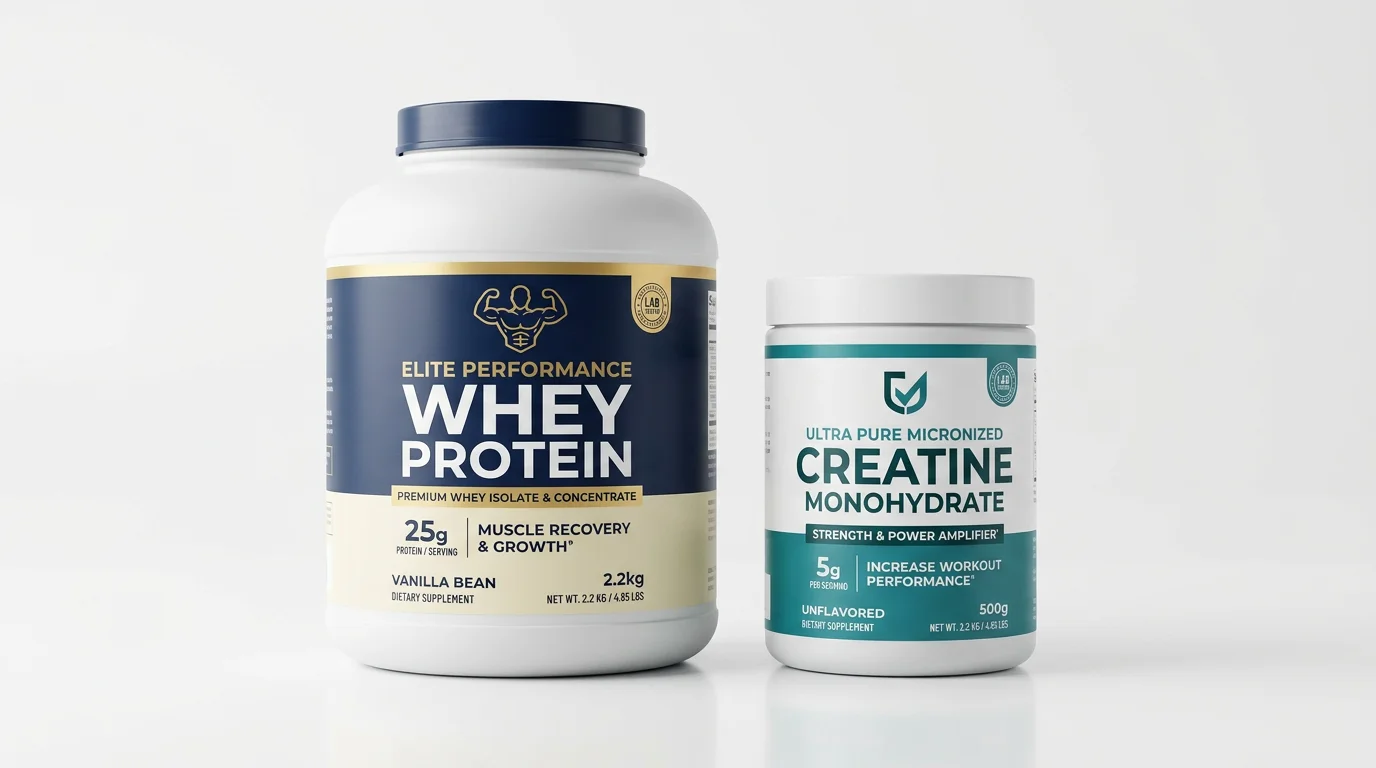
The Muscle Building & Strength Stack 2026: Creatine Monohydrate (3–5g daily) + Whey Protein Isolate (20–40g per serving, post-workout) + Beta-Alanine (3.2–6.4g daily, split doses) + L-Carnitine L-Tartrate (2,000mg daily, with a meal) + Betaine Anhydrous (2.5g daily). Estimated monthly cost: $87–166.
Stack at a Glance
| # | Supplement | Category | Dose & Timing | Rating |
|---|---|---|---|---|
| #1 | Creatine Monohydrate ATP production, power output, intracellular hydration, and muscle hypertrophy | Organic Acid / Amino Derivative | 3–5g daily (monohydrate form, no loading phase required) Daily, post-workout or morning on non-training days | ★5 |
| #2 | Whey Protein Isolate Muscle protein synthesis, post-workout recovery, and meeting daily macronutrient targets | Dairy-Derived Protein Isolate | 20–40g per serving Post-workout or between meals to stimulate MPS | ★4.9 |
| #3 | Beta-Alanine Intramuscular carnosine synthesis, buffering lactic acid, and high-intensity muscular endurance (60-240s range) | Non-Essential Amino Acid | 3.2–6.4g daily (can be split into smaller doses to avoid paresthesia) Daily, pre-workout or split throughout the day | ★4.7 |
| #4 | L-Carnitine L-Tartrate (LCLT) Androgen receptor upregulation, reducing exercise-induced muscle damage, and enhancing recovery | Amino Acid Derivative | 2,000mg daily With a high-carbohydrate or high-protein meal, morning or post-workout | ★4.6 |
| #5 | Betaine Anhydrous (Trimethylglycine) Power output, cellular hydration, methyl donation, and work capacity | Methyl Derivative / Osmolyte | 2.5g daily Pre-workout or split across morning and afternoon | ★4.6 |
Creatine Monohydrate
Creatine monohydrate is the foundational supplement in any muscle-building and strength stack because its mechanism of action addresses the most immediate rate-limiting factor in high-intensity muscular work: ATP availability. During short, maximal-effort contractions — a heavy squat, a sprint, a set of five reps to failure — the muscle's existing ATP is depleted within seconds, and the phosphocreatine (PCr) system is the fastest available pathway for regenerating it, donating a phosphate group to ADP to rapidly reconstitute usable ATP. Creatine supplementation increases the size of this phosphocreatine reservoir by roughly 20–40% in most individuals, directly expanding the number of maximal-effort repetitions or sprints a muscle can sustain before fatigue sets in. This translates into a well-documented, dose-response training effect: the International Society of Sports Nutrition's 2017 position stand, synthesizing decades of randomized controlled trials, concludes that creatine monohydrate is the most effective legal nutritional supplement available for increasing high-intensity exercise capacity and building lean muscle mass during resistance training, with effect sizes and safety data that exceed virtually every other supplement category. Beyond the acute ATP-buffering mechanism, creatine draws water into the muscle cell through osmotic cell volumization, and this intracellular hydration is increasingly understood as an anabolic signal in its own right — a stretched, more hydrated cell membrane appears to activate mTOR-related signaling pathways associated with increased protein synthesis, independent of and additive to creatine's performance benefit. A newer and mechanistically compelling line of research also implicates creatine in satellite cell biology: these muscle-resident stem cells proliferate and donate their nuclei to existing muscle fibers in response to training stress, and higher myonuclear density is associated with a greater long-term ceiling for hypertrophy — suggesting creatine may support not just the workouts that build muscle, but the cellular infrastructure underlying long-term growth. For the 2026 stack, 3–5g of micronized creatine monohydrate daily, taken consistently rather than cycled, is sufficient to reach and maintain saturated muscle phosphocreatine stores without a loading phase.
Key Features
- Creatine phosphate serves as an immediate, rapidly mobilized reservoir for regenerating ATP during high-intensity, short-duration muscular contractions — supplementation increases intramuscular phosphocreatine stores by roughly 20–40%, directly expanding the muscle's capacity to sustain maximal power output across sets
- A landmark body of research, including a 2003 meta-analysis and decades of follow-up RCTs summarized by the International Society of Sports Nutrition (ISSN, 2017 position stand), consistently finds creatine monohydrate is the single most effective legal ergogenic supplement for increasing high-intensity exercise capacity and lean muscle mass during resistance training
- Creatine draws water into muscle cells via cell volumization, and this intracellular hydration itself appears to act as an anabolic signal — stretching the cell membrane triggers signaling cascades associated with increased protein synthesis, independent of its direct ATP-buffering role
- Emerging research points to creatine's role in satellite cell activation and proliferation — satellite cells are muscle stem cells that donate their nuclei to existing muscle fibers, and a higher myonuclear count is associated with a greater long-term capacity for hypertrophy
- Unlike most supplements on this list, creatine monohydrate does not require a "loading phase" to be effective — steady daily dosing of 3–5g reaches saturated muscle stores within roughly 3–4 weeks, with a front-loading protocol (20g/day for 5–7 days) only accelerating, not improving, the ultimate outcome
Pros & Cons
Pros:
- +The most extensively researched sports supplement in existence, with an exceptionally strong and consistent safety record across hundreds of clinical trials spanning decades, populations, and dosing protocols
- +Directly increases both acute strength/power performance and long-term lean mass accrual — a rare dual acute-and-chronic performance benefit that most other supplements in this category do not offer
- +Inexpensive relative to its effect size, with creatine monohydrate specifically representing the best-studied and most cost-effective form compared to newer, unproven, and more expensive creatine salts (e.g., creatine HCl, buffered creatine)
Cons:
- -Causes transient water retention (typically 1–3 lbs) as intracellular water increases during the initial saturation period — a cosmetic, not physiological, concern that some users mistake for fat gain
- -A minority of users report mild GI discomfort at higher single doses; splitting the daily dose or taking with food generally resolves this
Whey Protein Isolate
Whey protein isolate supplies the essential biochemical raw material and molecular trigger that the rest of this stack's performance-enhancing mechanisms are ultimately in service of: muscle protein synthesis. Resistance training itself only sensitizes muscle tissue to an anabolic stimulus — it is adequate dietary protein, specifically the essential amino acids and leucine content it provides, that actually initiates the repair and growth process afterward. Leucine functions as the primary activating ligand for mTORC1, the central signaling complex that, once triggered, upregulates the cellular machinery responsible for building new muscle protein; whey protein isolate is unusually leucine-dense relative to other protein sources, making it an efficient way to reliably clear the leucine threshold associated with a maximal MPS response in each serving. This isn't merely theoretical: a comprehensive 2018 meta-analysis in the British Journal of Sports Medicine by Morton and colleagues, pooling 49 randomized controlled trials, found that protein supplementation significantly increased both strength and muscle mass gains during resistance training programs, with the magnitude of benefit closely tracking total daily protein intake up to approximately 1.6g/kg bodyweight — a finding that reframes whey supplementation less as a magic ingredient and more as a highly practical tool for reliably hitting an evidence-based daily protein target that is genuinely difficult to reach through whole foods alone on a demanding training and life schedule. Whey's specific advantage over other protein sources (casein, plant blends, egg) in the peri-workout window is its rapid digestion and absorption kinetics: amino acids, and leucine specifically, appear in circulation quickly after ingestion, aligning with the relatively narrow post-training window during which trained muscle tissue is maximally sensitized to an anabolic stimulus. The isolate form specifically — as opposed to concentrate — undergoes additional filtration that removes the majority of lactose and fat, yielding a higher percentage of protein by weight and meaningfully better digestive tolerability for the many trainees who experience bloating or discomfort from concentrate. For the 2026 stack, a 20–40g serving of whey protein isolate post-workout, sized to help reach a total daily protein intake in the 1.6–2.2g/kg bodyweight range, most directly translates the training stimulus and creatine-supported power output into actual muscle tissue growth.
Key Features
- Whey protein isolate is exceptionally rich in leucine, the branched-chain amino acid that functions as the primary molecular trigger for mTORC1 (mechanistic target of rapamycin complex 1) — the master signaling pathway that initiates muscle protein synthesis (MPS) in response to a meal or training stimulus
- A 2018 meta-analysis in the British Journal of Sports Medicine (Morton et al., 49 RCTs) found protein supplementation significantly increased strength and muscle mass gains during resistance training, with effects plateauing around 1.6g/kg bodyweight total daily protein — informing how whey should be dosed relative to total dietary intake rather than in isolation
- Whey's rapid digestion and absorption kinetics produce a fast, pronounced spike in circulating amino acids and leucine specifically, making it particularly well-suited to the peri-workout window when the muscle is most sensitized to an anabolic stimulus (the training-induced "sensitization" of MPS machinery)
- The isolate form removes the majority of lactose and fat present in whey concentrate through additional filtration, yielding a higher percentage of protein by weight (typically 90%+) and improved digestive tolerability for lactose-sensitive individuals
- Whey provides a complete essential amino acid profile with a high biological value and PDCAAS score, meaning it supplies all nine essential amino acids in ratios the body can efficiently use for tissue repair, rather than being limited by a single low amino acid as with many plant-protein sources
Pros & Cons
Pros:
- +The most direct and immediate driver of muscle protein synthesis in this stack — while creatine and beta-alanine extend training capacity, whey supplies the literal raw material and biochemical trigger the body uses to repair and build muscle tissue afterward
- +Extensive, high-quality meta-analytic evidence (not just isolated trials) confirms both the strength and hypertrophy benefits of adequate protein intake during resistance training, with whey specifically outperforming slower-digesting proteins in acute post-exercise contexts
- +Highly practical solution for meeting the elevated daily protein targets (typically 1.6–2.2g/kg bodyweight) required to maximize a resistance-training hypertrophy response — a target that is difficult to reach through whole food alone for many training schedules
Cons:
- -Total daily protein intake matters more than any single serving — whey supplementation cannot compensate for an overall diet that falls short of daily protein targets, and MPS benefits plateau once adequate total intake is reached
- -Dairy-derived; while isolate removes most lactose, individuals with a true milk protein allergy (distinct from lactose intolerance) should avoid whey and use a plant-based alternative
Beta-Alanine
Beta-alanine occupies a mechanistically distinct and complementary role in the muscle-building and strength stack: where creatine expands the muscle's available energy substrate for maximal-effort contractions, beta-alanine addresses the metabolic byproduct that ultimately limits how long high-intensity effort can be sustained once that energy system is engaged. As muscle fibers rely increasingly on anaerobic glycolysis during sets in the roughly 60–240 second duration range — a hallmark of hypertrophy-focused training with moderate-to-high rep counts and shorter rest periods — hydrogen ions accumulate intramuscularly, lowering local pH and directly interfering with the calcium-handling and cross-bridge cycling processes required for continued forceful muscle contraction, producing the familiar burning sensation and rapid strength decline near failure. Beta-alanine is the rate-limiting amino acid substrate for synthesizing carnosine, a dipeptide stored at high concentration specifically in skeletal muscle tissue, where it functions as an intracellular buffer that neutralizes these accumulating hydrogen ions and delays the onset of acidosis-driven fatigue. This mechanism is supported by a substantial and specifically-scoped body of clinical evidence: a 2012 meta-analysis in Amino Acids by Hobson and colleagues, pooling 15 randomized controlled trials, found beta-alanine supplementation produced a statistically significant improvement in exercise performance specifically within the 60–240 second duration window, with markedly weaker or absent effects outside that range — a precision that reflects the specificity of its buffering mechanism rather than a general-purpose ergogenic effect. Because muscle carnosine concentration builds gradually with sustained dietary beta-alanine intake, reaching a meaningfully elevated plateau typically requires 4 or more weeks of consistent daily supplementation, positioning beta-alanine as a chronic loading strategy analogous to creatine rather than an acute, same-day pre-workout stimulant, despite its frequent inclusion in stimulant-containing pre-workout blends. The characteristic tingling sensation (paresthesia) some users experience at higher single doses is a harmless result of beta-alanine's direct action on peripheral sensory neurons and is easily avoided by splitting the total daily dose into smaller 1.6–2g servings, which preserves the full carnosine-loading benefit. For the 2026 stack, 3.2–6.4g of beta-alanine daily, split across two or more doses, complements creatine's ATP-regeneration benefit by extending the number of high-quality repetitions a lifter can complete before acidosis-driven fatigue sets in.
Key Features
- Beta-alanine is the rate-limiting substrate for the synthesis of carnosine, a dipeptide stored at high concentrations in skeletal muscle that acts as an intracellular pH buffer, neutralizing the hydrogen ions that accumulate during high-intensity anaerobic glycolysis and contribute to the burning sensation and force decline associated with muscular fatigue
- A 2012 meta-analysis in Amino Acids (Hobson et al., 15 RCTs) found beta-alanine supplementation significantly improved exercise performance specifically in the 60–240 second duration range — the window in which anaerobic glycolysis and hydrogen ion accumulation are the dominant limiters of performance, such as high-rep resistance training sets, sprint intervals, and short-duration conditioning work
- Unlike creatine, which increases available energy substrate, beta-alanine works by delaying the onset of the acidosis-driven fatigue that ultimately limits how many additional high-intensity repetitions or seconds of effort a muscle can sustain — a complementary, non-overlapping mechanism to creatine's ATP-regeneration effect
- Chronic daily supplementation is required because carnosine must accumulate gradually in muscle tissue over several weeks (typically 4+ weeks to reach a meaningfully elevated plateau) — beta-alanine functions as a chronic loading strategy rather than an acute pre-workout stimulant
- The well-documented side effect of paresthesia (a harmless tingling sensation in the face, neck, and extremities) occurs at higher single doses and is caused by beta-alanine's direct action on peripheral sensory neurons — splitting the daily dose into smaller 1.6–2g servings largely eliminates this without reducing total carnosine-loading benefit
Pros & Cons
Pros:
- +Fills a specific and well-defined mechanistic gap that neither creatine nor whey protein addresses: buffering the metabolic byproduct (hydrogen ions/acidosis) that directly limits performance during sustained high-rep sets and short-duration conditioning work
- +Particularly valuable for hypertrophy-focused training that emphasizes moderate-to-high rep ranges (8–20+ reps) and shorter rest periods, where anaerobic glycolysis and associated fatigue are the dominant performance limiter rather than raw ATP availability
- +Strong, consistent meta-analytic evidence specifically within its supported performance window, giving it one of the more mechanistically precise evidence bases among widely used pre-workout ingredients
Cons:
- -Effect is most relevant to the specific 60–240 second high-intensity duration window; benefits for very short (under 60 seconds, ATP-PCr dominant) or very long (aerobic-dominant) efforts are considerably weaker or unsupported by the current evidence
- -Requires several weeks of consistent daily use before intramuscular carnosine reaches a meaningfully elevated plateau — this is not an acute, same-day performance booster despite frequently being marketed in pre-workout blends
L-Carnitine L-Tartrate (LCLT)
L-carnitine L-tartrate (LCLT) contributes a mechanism to the muscle-building stack that is genuinely distinct from creatine, whey protein, and beta-alanine's performance-and-synthesis focus: enhancing the muscle tissue's hormonal sensitivity and accelerating recovery from the training stimulus itself. A research program led by William Kraemer and colleagues, spanning multiple resistance-training trials, found that LCLT supplementation increases androgen receptor content in skeletal muscle following intense resistance exercise — critically, this is not a mechanism of raising circulating testosterone levels (as some marketing implies), but rather of increasing the muscle tissue's capacity to respond to the testosterone that is already present, effectively improving the downstream signal transduction of an existing hormonal stimulus rather than manipulating hormone production itself. The same body of research documented a second, complementary benefit: LCLT supplementation reduced biochemical markers of exercise-induced muscle damage, including circulating creatine kinase and myoglobin (both released into the bloodstream when muscle fiber membranes are disrupted by intense training), alongside reduced self-reported muscle soreness in the days following resistance exercise. Together, these findings position LCLT as a recovery-and-sensitivity-focused addition rather than a direct driver of acute performance output — its value lies in supporting the tissue-level repair and hormonal responsiveness that ultimately determines how quickly a lifter can return to high-quality training and how effectively each training stimulus translates into adaptation. It is worth noting specifically that the tartrate-bound form (LCLT), rather than acetyl-L-carnitine or unmodified L-carnitine, is the form used across the trials establishing these resistance-training-specific benefits, making it the most evidence-matched choice when the goal is recovery and androgen receptor support rather than the cognitive-focused benefits sometimes associated with ALCAR. Because carnitine uptake into muscle tissue appears to be enhanced by an insulin-mediated transport mechanism, LCLT is best absorbed when taken alongside a carbohydrate- or protein-containing meal rather than on an empty stomach. For the 2026 stack, 2,000mg of LCLT daily, taken with a meal, supports the recovery capacity that allows the strength and hypertrophy stimulus from creatine-supported training and beta-alanine-extended volume to actually be realized as consistent, cumulative progress.
Key Features
- A body of research led by William Kraemer and colleagues found that L-carnitine L-tartrate (LCLT) supplementation increases androgen receptor content in skeletal muscle tissue following resistance exercise — a mechanism distinct from raising circulating testosterone itself, instead increasing the muscle's sensitivity and responsiveness to the testosterone already present
- The same research program found LCLT supplementation reduced biochemical markers of exercise-induced muscle damage (including creatine kinase and myoglobin) and reduced self-reported muscle soreness following intense resistance training, suggesting a genuine recovery-acceleration effect beyond its receptor-signaling mechanism
- Unlike acetyl-L-carnitine (ALCAR) or plain L-carnitine, the tartrate-bound form (LCLT) is specifically the form studied in the resistance-training and recovery literature — the tartrate salt does not itself have unique biological activity but was the form used in the trials establishing these effects, making it the most evidence-matched choice for this specific goal
- LCLT also participates in fatty acid transport into mitochondria for beta-oxidation, though at the doses and context relevant to this stack (recovery and receptor sensitivity rather than fat-loss claims), this is a secondary rather than primary mechanism of interest
- Carbohydrate or protein co-ingestion appears to meaningfully improve carnitine's uptake into muscle tissue via an insulin-mediated transport mechanism, which is why LCLT is best taken alongside a meal rather than in a fasted state
Pros & Cons
Pros:
- +Addresses a distinct mechanism — androgen receptor density and post-exercise recovery — that none of the other four stack components directly target, rounding out the stack's coverage from pure performance output to the tissue-level recovery process that ultimately permits training frequency and progression
- +Directly relevant to training sustainability: reduced exercise-induced muscle damage and soreness supports more frequent high-quality training sessions, which is itself one of the strongest drivers of long-term strength and hypertrophy progress
- +Research specifically conducted in a resistance-training population and context (rather than extrapolated from endurance or general-health studies), improving the direct applicability of the evidence to this stack's goals
Cons:
- -The evidence base, while mechanistically compelling, is smaller in total trial volume than creatine or whey protein — LCLT is best understood as a supporting, recovery-focused addition rather than a primary driver of the stack's strength or hypertrophy outcomes
- -Effects on androgen receptor content and recovery markers require weeks of consistent supplementation to manifest — this is not an acute pre-workout ingredient and will not produce a same-day subjective effect
Betaine Anhydrous (Trimethylglycine)
Betaine anhydrous (trimethylglycine) rounds out the muscle-building and strength stack with two complementary mechanisms not directly addressed by creatine, whey protein, beta-alanine, or LCLT: methyl-group donation and cellular osmolyte activity. Chemically, betaine carries three methyl groups attached to a glycine backbone, and it donates one of these groups to convert homocysteine — an amino acid byproduct of methionine metabolism that is associated with impaired vascular and cellular function when chronically elevated — back into methionine, via the enzyme betaine-homocysteine methyltransferase (BHMT). While this methylation pathway is most commonly discussed in a cardiovascular-health context, it has also been directly studied in resistance-training populations with genuinely relevant strength and body-composition outcomes: a 2013 trial in the Journal of the International Society of Sports Nutrition by Cholewa and colleagues found that 6 weeks of betaine supplementation in trained men significantly increased lean body mass, arm circumference, and vertical jump power output compared to placebo, alongside subjectively improved training work capacity. The second mechanism — betaine's role as a potent cellular osmolyte — connects directly to creatine's own hydration-driven anabolic signaling: both compounds appear to support cell volumization through independent chemical pathways, and some researchers hypothesize this shared cell-hydration effect may be part of why the two compounds have shown positive results when studied together in the same resistance-training protocols. Betaine occurs naturally in foods such as beets, spinach, and whole grains, but the doses used in the supporting clinical trials — and included in this stack — substantially exceed what is practically achievable through diet alone, making direct supplementation the more reliable way to match the evidence base. For the 2026 stack, 2.5g of betaine anhydrous daily, taken pre-workout or split across the day, complements creatine's cell-hydration and power-output mechanisms while adding a methylation-pathway benefit and a training work-capacity effect documented specifically in resistance-trained individuals.
Key Features
- Betaine (trimethylglycine) donates one of its three methyl groups to convert homocysteine — an amino acid byproduct associated with impaired vascular and cellular function at elevated levels — back into methionine via the enzyme betaine-homocysteine methyltransferase (BHMT), a distinct biochemical role from any other supplement in this stack
- A series of RCTs, including a 2013 study in the Journal of the International Society of Sports Nutrition (Cholewa et al.), found betaine supplementation over 6 weeks of resistance training significantly increased lean body mass, arm size, and vertical jump power compared to placebo in trained men
- As a potent osmolyte, betaine helps regulate cellular water balance and appears to support cell volumization in a manner mechanistically complementary to creatine's cell-hydration effect — both compounds are thought to contribute to an anabolic cell-swelling signal through independent chemical mechanisms
- Multiple studies report betaine supplementation improves subjective work capacity and reduces feelings of fatigue during high-volume resistance training sessions, alongside the objective power and lean mass outcomes measured in controlled trials
- Betaine is naturally present in foods like beets, spinach, and whole grains, but supplementation delivers a substantially higher and more consistent dose than achievable through diet alone, matching the levels used in the supporting clinical trials
Pros & Cons
Pros:
- +Adds a genuinely distinct biochemical mechanism (methyl donation and homocysteine metabolism) alongside a complementary cell-hydration effect, rounding out the stack's mechanistic diversity beyond the more directly performance- or protein-synthesis-focused components
- +Direct RCT evidence for lean body mass and power output gains specifically in a resistance-training population, rather than solely biomarker- or animal-model-derived evidence
- +Reasonably priced and easy to add to an existing stack without any known negative interaction with creatine, whey, beta-alanine, or LCLT — several trials have in fact studied betaine as an addition to a creatine-containing regimen
Cons:
- -The clinical evidence base, while positive and specifically conducted in trained populations, is smaller in total trial volume than creatine or whey protein — betaine functions best as a complementary, supporting addition rather than a foundational pillar of the stack
- -Effects on lean mass and power output were measured over multi-week resistance training programs (6+ weeks) — betaine is not positioned as an acute, same-day pre-workout ingredient despite sometimes being marketed as one
Training Day vs. Rest Day: The Complete Daily Protocol
Creatine, beta-alanine, and betaine are chronic-loading compounds — they build effect over consistent daily use regardless of whether you train that day, so they should be taken every day, not just on workout days. Whey protein and LCLT are best timed around the meal or training window where their acute mechanisms — muscle protein synthesis and insulin-mediated uptake, respectively — are most active.
| Time | Supplement | Dose | Notes |
|---|---|---|---|
| Morning (with breakfast) | L-Carnitine L-Tartrate | 2,000mg | With a carb- or protein-containing meal for insulin-mediated uptake. |
| Betaine Anhydrous | 1.25g | Split daily dose reduces GI load. | |
| Beta-Alanine | 1.6–3.2g | Split dose to minimize paresthesia tingling. | |
| Pre-Workout | Betaine Anhydrous | 1.25g | Second dose; supports power output for the session. |
| Beta-Alanine | 1.6–3.2g | Remainder of daily dose. | |
| Post-Workout | Whey Protein Isolate | 20–40g | Primary MPS-stimulating window; count toward daily protein target. |
| Creatine Monohydrate | 3–5g | Any time is effective; post-workout is a convenient anchor habit. | |
| Rest Days | Creatine, Beta-Alanine, Betaine, LCLT | Full daily doses | These four require consistent daily dosing — do not skip on rest days. |
Give the full stack 4–6 weeks of consistent daily use before assessing effect — creatine reaches saturated muscle stores in roughly 3–4 weeks, beta-alanine\'s carnosine loading takes a similar timeline, and betaine and LCLT\'s lean-mass and recovery benefits were measured in trials spanning 6+ weeks of resistance training.
The Physiology of Muscle Growth: Four Bottlenecks This Stack Addresses
1. ATP Availability During Maximal Effort (Creatine)
Heavy, maximal-effort contractions rapidly deplete existing muscle ATP, and the phosphocreatine system is the fastest pathway for regenerating it. Creatine monohydrate increases the size of this phosphocreatine reservoir by 20–40%, directly expanding how many maximal-effort repetitions a muscle can sustain — the most upstream performance mechanism in this stack.
2. Acidosis-Driven Fatigue During Sustained Effort (Beta-Alanine)
As sets extend into the 60–240 second anaerobic glycolysis range, accumulating hydrogen ions lower intramuscular pH and interfere with force production. Beta-alanine's conversion to intramuscular carnosine buffers this acidosis, delaying fatigue and extending the number of high-quality repetitions before failure — a mechanism sequential to, not overlapping with, creatine's ATP-regeneration effect.
3. Muscle Protein Synthesis After Training (Whey Protein)
Training only sensitizes muscle tissue to grow — adequate protein, and leucine specifically, is what actually triggers mTORC1 signaling and initiates the repair and synthesis process. Whey protein isolate's leucine density and rapid absorption make it an efficient way to reliably clear the threshold for a maximal muscle protein synthesis response after each session.
4. Hormonal Sensitivity & Tissue Repair (LCLT & Betaine)
How quickly and completely muscle tissue recovers determines how soon — and how effectively — a lifter can train again. L-Carnitine L-Tartrate increases androgen receptor content and reduces exercise-induced muscle damage markers, while betaine's methylation and cell-hydration activity supports lean mass accrual over sustained resistance training — together closing the loop between training stimulus and realized adaptation.
Training & Nutrition Synergies
This stack amplifies a structured resistance training program and adequate total nutrition — it does not replace either. Progressive overload (gradually increasing training weight, volume, or intensity over time) remains the primary driver of long-term strength and hypertrophy; creatine, beta-alanine, and betaine extend how much high-quality training volume a lifter can perform, but the training itself still has to progressively increase in demand for continued adaptation.
Total daily protein intake (typically 1.6–2.2g/kg bodyweight for individuals in a resistance training program) and adequate overall caloric intake relative to training and body composition goals matter more than any single supplement — whey protein is a practical tool for reaching a daily protein target, not a substitute for an otherwise inadequate diet. Sleep is also directly implicated in muscle recovery and growth hormone release, and chronic sleep restriction has been shown to blunt resistance-training adaptations even when nutrition and training are well executed.
None of the five supplements in this stack can compensate for inconsistent training, inadequate total protein or calorie intake, or chronic sleep debt — they are most effective, and the clinical trial evidence cited throughout this guide is most applicable, when layered onto a structured resistance training program and sound nutritional fundamentals rather than used as a substitute for them.
Key Clinical Evidence
Creatine: High-Intensity Performance and Lean Mass
International Society of Sports Nutrition (2017 position stand), synthesizing decades of RCTs: creatine monohydrate is the most effective legal nutritional supplement for increasing high-intensity exercise capacity and lean muscle mass during resistance training.
Research: ISSN (2017), position stand, J Int Soc Sports Nutr.
Whey Protein: Strength and Muscle Mass Gains
Morton et al. (2018, British Journal of Sports Medicine, meta-analysis of 49 RCTs): protein supplementation significantly increased strength and muscle mass gains during resistance training, with effects plateauing around 1.6g/kg bodyweight total daily protein.
Research: Morton et al. (2018), Br J Sports Med.
Beta-Alanine: High-Intensity Exercise Performance
Hobson et al. (2012, Amino Acids, meta-analysis of 15 RCTs): beta-alanine supplementation significantly improved exercise performance specifically in the 60–240 second duration range where anaerobic glycolysis and acidosis are the dominant performance limiter.
Research: Hobson et al. (2012), Amino Acids.
L-Carnitine L-Tartrate: Androgen Receptor Content and Recovery
Kraemer et al. (multiple trials): LCLT supplementation increased skeletal muscle androgen receptor content following resistance exercise and reduced biochemical markers of exercise-induced muscle damage (creatine kinase, myoglobin) and muscle soreness.
Research: Kraemer et al., resistance-training trial series.
Betaine: Lean Body Mass and Power Output
Cholewa et al. (2013, Journal of the International Society of Sports Nutrition): 6 weeks of betaine supplementation in trained men significantly increased lean body mass, arm size, and vertical jump power compared to placebo.
Research: Cholewa et al. (2013), J Int Soc Sports Nutr.
Related Guides & Individual Supplement Reviews
For in-depth brand comparisons, dosage guidance, and product picks for the key supplements in this stack:
Frequently Asked Questions
Do I need to do a creatine loading phase?
No. A loading phase (roughly 20g/day for 5–7 days) saturates muscle phosphocreatine stores faster, but a steady 3–5g daily dose reaches the same saturated endpoint within about 3–4 weeks without the higher initial dose or associated water retention. Both approaches arrive at the same ultimate benefit.
How long does this stack take to show results?
Within days to 1–2 weeks: Creatine begins expanding phosphocreatine stores immediately, with performance benefits building over the first few weeks. 4–6 weeks: Beta-alanine's carnosine loading, and betaine and LCLT's lean-mass and recovery benefits, require sustained daily use over several weeks of resistance training to reach the magnitude documented in clinical trials. Evaluate the complete stack at the 6-week mark alongside consistent training.
Do I need all five supplements, or can I start with fewer?
If budget or simplicity is a priority, creatine monohydrate and whey protein have the deepest and broadest clinical evidence base and are the strongest starting point. Beta-alanine adds meaningful benefit for higher-rep, higher-volume training; LCLT and betaine are reasonable, evidence-supported additions once the core two are established habits.
Is the tingling from beta-alanine dangerous?
No. The tingling sensation (paresthesia) is a harmless, temporary effect of beta-alanine acting on peripheral sensory neurons and is not a sign of an adverse reaction. Splitting the daily dose into smaller 1.6–2g servings taken at different times of day largely eliminates the sensation without reducing the total carnosine-loading benefit.
Can vegans or those with dairy allergies use this stack?
Creatine, beta-alanine, LCLT, and betaine are all synthetically produced or plant/mineral-derived and are vegan-friendly. Whey protein is dairy-derived; individuals who are vegan or have a milk protein allergy should substitute a plant-based protein source (such as pea, rice, or a blended plant protein) that supplies a comparable total daily protein and leucine intake.
Disclaimer: As an Amazon Associate, we earn from qualifying purchases at no extra cost to you. The information provided is for educational purposes only and is not medical advice. These supplements support training performance, recovery, and muscle protein synthesis but do not guarantee specific strength or muscle gain outcomes, which depend on training program, total nutrition, sleep, and individual response. Consult a qualified healthcare provider before starting any supplement regimen, especially if pregnant, breastfeeding, or taking prescription medications.