Joint Health & Mobility Supplement Stack 2026
The 5 most evidence-backed compounds for joint lubrication, cartilage preservation, and pain-free mobility — Glucosamine Sulfate, Chondroitin Sulfate, UC-II Collagen, Curcumin, and Omega-3 reviewed with clinical research citations
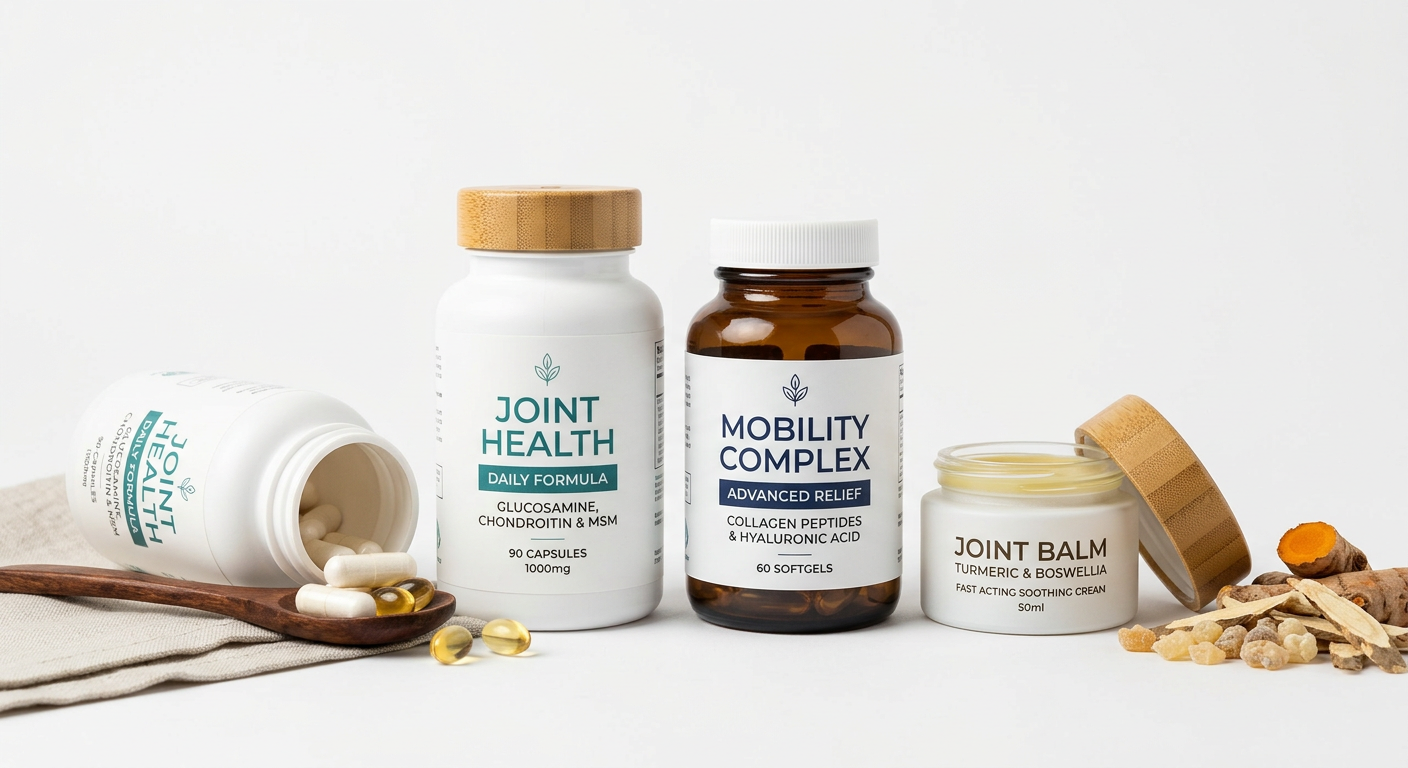
The Science of Joint Health and Mobility in 2026
Joint discomfort is one of the most common complaints among adults over 40, driven by a gradual erosion of cartilage — the smooth, water-rich tissue that cushions bones and allows frictionless movement. Unlike most tissues, cartilage has no direct blood supply, which means it relies entirely on diffusion for nutrient delivery and repairs itself far more slowly than muscle, skin, or bone — making proactive, evidence-based support especially valuable long before symptoms become severe.
The 2026 joint health and mobility stack is built around five compounds addressing complementary layers of joint physiology: Glucosamine Sulfate supplies the raw substrate for cartilage matrix synthesis; Chondroitin Sulfate restores the water-binding capacity that lets cartilage resist compressive load; Undenatured Type II Collagen (UC-II) works immunologically, training the body to reduce autoimmune-like attacks on its own cartilage; Curcumin directly modulates the inflammatory pathways responsible for joint pain and stiffness; and Omega-3 Fatty Acids reduce systemic inflammatory eicosanoid production that contributes to chronic joint discomfort.
Together, these five compounds target joint health from multiple independent angles — structural substrate, mechanical water retention, immune modulation, and inflammatory pathway control — representing the current best evidence-based approach to supplementally supporting long-term joint comfort, cartilage preservation, and mobility.
The Core 2026 Joint Health Stack: Glucosamine Sulfate (1,500mg) + Chondroitin Sulfate (800–1,200mg) + UC-II Collagen (40mg) + Curcumin (500–1,000mg) + Omega-3 EPA/DHA (2,000–3,000mg). Glucosamine, Chondroitin, and UC-II taken together in the morning; Curcumin and Omega-3 split across meals. Estimated monthly cost: $95–165.
Stack at a Glance
| # | Supplement | Category | Dose & Timing | Rating |
|---|---|---|---|---|
| #1 | Glucosamine Sulfate Cartilage matrix synthesis & long-term joint structure support | Cartilage Precursor / Structural Building Block | 1,500mg Morning with food | ★4.7 |
| #2 | Chondroitin Sulfate Joint hydration, compression resistance & cartilage water retention | Glycosaminoglycan / Water Retention & Compression Resistance | 800–1,200mg Morning, alongside glucosamine | ★4.6 |
| #3 | Undenatured Type II Collagen (UC-II) Immune-mediated cartilage protection via oral tolerance & joint comfort | Immune-Modulating Cartilage Protein | 40mg Morning, on an empty stomach | ★4.8 |
| #4 | Curcumin (Meriva or Standardized 95% with Piperine) Joint pain, stiffness reduction & inflammatory pathway modulation | Natural Anti-Inflammatory / Polyphenol | 500–1,000mg With meals, split into two doses | ★4.7 |
| #5 | Omega-3 Fatty Acids (EPA/DHA) Systemic inflammation reduction & joint comfort via eicosanoid pathway modulation | Essential Fatty Acid / Inflammatory Eicosanoid Modulation | 2,000–3,000mg total EPA+DHA With meals, split across two doses | ★4.6 |
Glucosamine Sulfate
Glucosamine sulfate is the foundational compound of the 2026 joint health stack, supplying the amino sugar substrate that chondrocytes use to synthesize glycosaminoglycans (GAGs) — the long polysaccharide chains that give cartilage its structural integrity and shock-absorbing properties. As joints age, the rate of cartilage matrix breakdown gradually outpaces synthesis, and glucosamine supplementation is theorized to help correct this imbalance by ensuring the raw material for GAG production is not rate-limiting. The clinical evidence for glucosamine is among the most extensive of any joint supplement: a landmark 2001 RCT published in The Lancet (Reginster et al., n=212, 3-year duration) found that glucosamine sulfate significantly slowed radiographic joint space narrowing in knee osteoarthritis patients compared to placebo — a structural, disease-modifying outcome rather than simple symptom relief. The large NIH-funded GAIT trial (2006, New England Journal of Medicine, n=1,583) found that while the overall population showed no significant benefit over placebo, the subgroup with moderate-to-severe baseline pain experienced significant relief from the glucosamine-chondroitin combination — a finding that has shaped how these two ingredients are typically stacked together rather than used alone. A 2015 meta-analysis in Osteoarthritis and Cartilage confirmed that crystalline glucosamine sulfate specifically (as opposed to the hydrochloride salt or non-crystalline formulations) is associated with the most consistent pain and function improvements across the available trial data. For the joint health stack, 1,500mg of glucosamine sulfate taken each morning with food establishes the structural substrate foundation that chondroitin, UC-II collagen, curcumin, and omega-3 build upon.
Key Features
- Glucosamine is a natural precursor used by chondrocytes to synthesize glycosaminoglycans (GAGs), the building blocks of cartilage proteoglycans
- A 2001 landmark RCT in The Lancet (Reginster et al., n=212, 3 years) found glucosamine sulfate significantly slowed radiographic joint space narrowing versus placebo in knee osteoarthritis
- The GAIT trial (2006, New England Journal of Medicine, n=1,583) found glucosamine combined with chondroitin provided significant pain relief in the subgroup with moderate-to-severe knee osteoarthritis pain
- A 2015 meta-analysis in Osteoarthritis and Cartilage found glucosamine sulfate (crystalline form specifically) associated with modest but consistent reductions in joint pain and improved function over 6+ months
- The sulfate form (as opposed to hydrochloride) is the most studied and appears to deliver a bioavailable sulfur donor that may itself support cartilage matrix synthesis
Pros & Cons
Pros:
- +The most extensively studied joint supplement with multi-year RCT data on structural (not just symptomatic) outcomes
- +Inexpensive relative to its evidence base and well tolerated across long-term use
- +Works synergistically with chondroitin — the two ingredients are studied together far more often than alone
Cons:
- -Effects build slowly — most trials show minimal benefit before 8 weeks, with maximal effect at 3–6 months
- -Evidence is strongest for knee osteoarthritis specifically; data for other joints (hip, hand) is comparatively sparse
Chondroitin Sulfate
Chondroitin sulfate is one of the most abundant glycosaminoglycans in articular cartilage, prized for its dense negative charge that draws water molecules into the cartilage matrix and holds them there. This water retention is not a passive feature — it is the physical mechanism by which cartilage resists compressive load during walking, running, and other joint-bearing activity, functioning similarly to a hydraulic cushion. As cartilage ages and degrades, its chondroitin content and corresponding water-binding capacity decline, reducing the tissue's ability to absorb mechanical stress and accelerating further breakdown. Beyond its structural role, chondroitin has demonstrated the ability to inhibit several cartilage-degrading enzymes, including elastase and matrix metalloproteinases (MMPs), giving it a secondary protective mechanism independent of water retention. The clinical evidence base is substantial: a 2017 Cochrane systematic review pooling multiple RCTs found that chondroitin, whether used alone or combined with glucosamine, produced small but statistically significant reductions in osteoarthritis pain compared to placebo. Most notably, the 2015 MOVES trial (Annals of the Rheumatic Diseases, n=606) found that a glucosamine-chondroitin combination was statistically non-inferior to celecoxib, a commonly prescribed NSAID, for both pain and functional outcomes in knee osteoarthritis over a 6-month period — an unusually strong result for a supplement combination measured against an active pharmaceutical comparator. For the joint health stack, 800–1,200mg of chondroitin sulfate taken alongside glucosamine each morning reinforces the mechanical water-retention side of cartilage health that glucosamine's substrate-supply role does not directly address.
Key Features
- Chondroitin sulfate is a highly negatively charged glycosaminoglycan that attracts and retains water within the cartilage matrix, giving cartilage its ability to resist compressive mechanical load
- A 2017 Cochrane systematic review (n=8 trials) found chondroitin, alone or combined with glucosamine, provided small but statistically significant reductions in osteoarthritis pain versus placebo
- The MOVES trial (2015, Annals of the Rheumatic Diseases, n=606) found chondroitin sulfate combined with glucosamine hydrochloride was non-inferior to celecoxib (a prescription NSAID) for knee osteoarthritis pain and function at 6 months
- Inhibits cartilage-degrading enzymes including elastase and several matrix metalloproteinases (MMPs), providing a mechanism distinct from its water-retention role
- A 2018 network meta-analysis in the Annals of Internal Medicine found chondroitin among the more effective supplemental options for reducing WOMAC pain scores in knee osteoarthritis
Pros & Cons
Pros:
- +Head-to-head non-inferiority against a prescription NSAID (MOVES trial) is a rare and notable finding among joint supplements
- +Dual mechanism — mechanical (water retention) and biochemical (enzyme inhibition) — distinct from glucosamine's substrate-supply role
- +Extensive safety record across decades of use with minimal reported adverse effects
Cons:
- -Effect sizes across meta-analyses are consistently described as small-to-moderate rather than dramatic
- -Bovine and shark cartilage-derived chondroitin can vary significantly in purity and molecular weight between manufacturers
Undenatured Type II Collagen (UC-II)
Undenatured Type II Collagen (UC-II) represents the most mechanistically distinct ingredient in the 2026 joint health stack, working not by supplying structural building blocks but by modulating the immune system's relationship with the body's own cartilage. Type II collagen is the primary structural protein of articular cartilage, and low-grade immune activity against this native collagen is increasingly understood to contribute to cartilage degradation in osteoarthritis, similar in principle (though distinct in degree) to autoimmune joint conditions. UC-II works through a process called oral tolerance: when small amounts of undenatured (structurally intact) type II collagen are ingested, gut-associated lymphoid tissue is trained to down-regulate inflammatory immune responses specifically targeted at type II collagen throughout the body, including in the joints. This mechanism explains why the effective dose is so small — 40mg, compared to the 1,500mg-plus doses typical of glucosamine or chondroitin — since UC-II is functioning as an immune signal rather than a bulk raw material. A 2009 trial in Nutrition Journal (Crowley et al., n=52, 90 days) directly compared 40mg/day of UC-II against a combination of 1,500mg glucosamine plus 1,200mg chondroitin and found UC-II produced significantly greater reductions in WOMAC pain scores despite the vastly smaller dose. A larger 2016 randomized, double-blind, placebo-controlled trial in the International Journal of Medical Sciences (Lugo et al., n=191, 180 days) confirmed significant improvements in joint pain, stiffness, and physical function compared to placebo, with some participants reporting benefit as early as two weeks into supplementation. For the joint health stack, 40mg of UC-II taken each morning on an empty stomach (to preserve its intact protein structure for gut immune signaling) adds an immunomodulatory layer of joint protection that glucosamine and chondroitin's structural mechanisms do not address.
Key Features
- UC-II works through a fundamentally different mechanism than glucosamine or chondroitin: it induces oral tolerance, training gut-associated immune tissue to reduce autoimmune-like attacks on the body's own type II collagen
- A 2009 RCT in Nutrition Journal (Crowley et al., n=52, 90 days) found 40mg/day UC-II significantly reduced WOMAC pain scores compared to a much higher dose (1,500mg) of glucosamine plus chondroitin
- A 2016 randomized, double-blind, placebo-controlled trial in the International Journal of Medical Sciences (Lugo et al., n=191, 180 days) confirmed significant improvements in joint pain, stiffness, and function versus placebo, with benefits emerging as early as day 14
- Undenatured (native, unhydrolyzed) collagen structure is essential to the oral tolerance mechanism — heat-denatured or hydrolyzed collagen (as used in typical collagen peptide products) does not replicate this specific immunomodulatory effect
- Because the effective dose is remarkably small (40mg vs. grams for other joint ingredients), the mechanism is understood to be immunological rather than a direct structural or substrate-based contribution
Pros & Cons
Pros:
- +Effective at a strikingly low 40mg dose — far smaller than any other ingredient in this stack, since the mechanism is signaling rather than bulk structural supply
- +Head-to-head trial evidence shows superior pain reduction compared to standard-dose glucosamine plus chondroitin
- +Distinct immunological mechanism (oral tolerance) makes it genuinely complementary rather than redundant with the other ingredients in this stack
Cons:
- -Must be undenatured (native triple-helix structure preserved) to work via the oral tolerance mechanism — standard hydrolyzed collagen peptides do not provide this specific benefit
- -Smaller total body of human trials compared to the decades of glucosamine and chondroitin research, though existing trials are well designed
Curcumin (Meriva or Standardized 95% with Piperine)
Curcumin, the primary bioactive polyphenol in turmeric, brings a fundamentally anti-inflammatory mechanism to the joint health stack, complementing the structural and immunomodulatory ingredients with direct modulation of the inflammatory pathways that drive joint pain and stiffness. Curcumin inhibits several key inflammatory mediators, including NF-κB (a master regulator of inflammatory gene expression), COX-2, and 5-LOX — the same enzymatic pathways targeted by many conventional anti-inflammatory medications, but through a plant-derived polyphenol rather than a synthetic drug. The clinical evidence for curcumin in osteoarthritis has grown substantially over the past decade: a 2014 randomized controlled trial in Phytotherapy Research (Panahi et al., n=40 knee osteoarthritis patients) found that curcuminoid supplementation significantly reduced pain scores and improved physical function compared to placebo over the study period. A particularly notable 2016 trial using the Meriva phytosome delivery technology (Belcaro et al., Panminerva Medica, n=100, 8 months) found significant reductions in WOMAC pain and stiffness scores, along with a measurable reduction in participants' need for concurrent NSAID use — suggesting curcumin may allow some individuals to reduce their reliance on conventional pain medication. The critical caveat with curcumin is bioavailability: raw curcumin is absorbed at under 1% in its native form, which is why the effective clinical trials specifically used enhanced delivery formulations. Piperine (black pepper extract) can increase curcumin absorption by up to 2,000% by inhibiting its metabolic breakdown in the liver and intestines, while the Meriva phytosome technology achieves comparable bioavailability gains by binding curcumin to phospholipids for improved intestinal absorption. For the joint health stack, 500–1,000mg of a bioavailability-enhanced curcumin formulation taken with meals (split into two doses) provides fast-acting anti-inflammatory relief that works on a distinct timescale and mechanism from the slower-building structural benefits of glucosamine, chondroitin, and UC-II.
Key Features
- Curcumin inhibits NF-κB, COX-2, and 5-LOX inflammatory signaling pathways — the same pathways targeted by many prescription anti-inflammatory drugs, but through a natural polyphenol mechanism
- A 2014 randomized controlled trial in Phytotherapy Research (Panahi et al., n=40 knee osteoarthritis patients) found curcuminoid supplementation significantly reduced pain and improved physical function compared to placebo
- A 2016 study using the Meriva phytosome formulation (Belcaro et al., published in Panminerva Medica, n=100, 8 months) found significant reductions in WOMAC scores and reduced need for concurrent NSAID use in knee osteoarthritis patients
- Raw curcumin has notoriously poor oral bioavailability (under 1%) — piperine (black pepper extract) increases absorption by up to 2,000%, while phytosome delivery technology (Meriva) achieves comparable bioavailability gains through a different lipid-based mechanism
- A 2021 meta-analysis in the Journal of Clinical Rheumatology found curcumin supplementation comparable in pain-relieving efficacy to standard NSAIDs in short-term osteoarthritis trials, with a more favorable gastrointestinal safety profile
Pros & Cons
Pros:
- +Directly targets joint pain and stiffness through inflammatory pathway modulation — a mechanism entirely distinct from the structural ingredients in this stack
- +Trial evidence suggests efficacy comparable to NSAIDs for pain relief, without the gastrointestinal and cardiovascular risks of long-term NSAID use
- +Broader anti-inflammatory and antioxidant benefits extend beyond joint health to general systemic inflammation
Cons:
- -Bioavailability-enhanced formulations (Meriva, piperine-enhanced, or nanoparticle forms) are essential — standard turmeric or unenhanced curcumin powder is poorly absorbed and largely ineffective at typical doses
- -Piperine-enhanced curcumin can increase absorption of other co-administered drugs, which may require a conversation with a physician for those on prescription medications
Omega-3 Fatty Acids (EPA/DHA)
Omega-3 fatty acids round out the 2026 joint health stack by addressing systemic, whole-body inflammation rather than acting locally within the joint capsule itself. EPA and DHA, the two primary long-chain omega-3s found in fish oil, structurally compete with arachidonic acid (an omega-6 fatty acid abundant in the standard Western diet) for the same cyclooxygenase and lipoxygenase enzymes used to produce inflammatory eicosanoids. When EPA and DHA are abundant relative to arachidonic acid, the resulting prostaglandins, thromboxanes, and leukotrienes are produced in less inflammatory forms — effectively shifting the body's baseline inflammatory tone. Beyond this competitive mechanism, EPA and DHA also serve as precursors to specialized pro-resolving mediators (SPMs) such as resolvins and protectins, signaling molecules that actively resolve and terminate inflammation rather than simply blocking its initiation — a mechanism increasingly understood to be distinct from, and complementary to, standard anti-inflammatory approaches. A 2016 systematic review and meta-analysis in the Journal of Nutritional Science pooling multiple RCTs found omega-3 supplementation was associated with statistically significant reductions in both joint pain intensity and concurrent NSAID medication use across patients with inflammatory joint pain. A 2017 randomized controlled trial similarly found that achieving a higher anti-inflammatory omega-3 index through supplementation was associated with meaningfully lower chronic joint pain scores compared to lower-dose control groups. The dose threshold matters considerably here: most positive trials used considerably higher doses than the amount found in typical over-the-counter fish oil capsules, which is why the joint health stack calls for 2,000–3,000mg of combined EPA and DHA daily, taken in triglyceride form (for superior absorption) split across two meals to minimize gastrointestinal discomfort.
Key Features
- EPA and DHA compete with arachidonic acid for the same enzymatic pathways, shifting eicosanoid production toward less inflammatory prostaglandins, thromboxanes, and leukotrienes
- A 2016 systematic review and meta-analysis in the Journal of Nutritional Science found omega-3 supplementation associated with statistically significant reductions in joint pain intensity and NSAID consumption in patients with rheumatoid and osteoarthritis-related joint pain
- A 2017 randomized controlled trial found high-dose omega-3 (targeting an anti-inflammatory omega-3 index) resulted in meaningfully lower pain scores in patients with chronic joint pain conditions compared to a low-dose control group
- Beyond eicosanoid competition, EPA and DHA are metabolized into specialized pro-resolving mediators (resolvins, protectins) that actively terminate the inflammatory response rather than simply blunting its initiation
- Triglyceride-form fish oil shows meaningfully better absorption than the cheaper ethyl-ester form commonly found in lower-cost supplements
Pros & Cons
Pros:
- +Addresses systemic, whole-body inflammation that contributes to joint discomfort — a broader mechanism than the joint-localized ingredients in this stack
- +Extensive cardiovascular, cognitive, and mood benefits make it one of the highest general-health-value additions to any supplement stack
- +Specialized pro-resolving mediators offer an active inflammation-resolution mechanism distinct from curcumin's inhibitory approach
Cons:
- -Requires a genuinely high dose (2,000–3,000mg combined EPA+DHA) for anti-inflammatory joint effects — well above the 250–500mg typically found in basic multivitamins or low-dose fish oil products
- -Fishy aftertaste or reflux can occur with lower-quality or non-enteric-coated products, particularly at higher doses
The 2026 Joint Health Stack: Daily Protocol
Glucosamine, Chondroitin, and UC-II are best taken together in the morning, with UC-II specifically taken on an empty stomach to preserve its intact protein structure for gut immune signaling. Curcumin and Omega-3 are fat-soluble and absorb best when split across meals containing dietary fat.
| Supplement | Dose | Timing | Notes |
|---|---|---|---|
| Glucosamine Sulfate | 1,500mg | Morning with food | Take with breakfast to minimize mild GI upset. Choose the crystalline sulfate form, the most studied variant. |
| Chondroitin Sulfate | 800–1,200mg | Morning, with glucosamine | Most trial evidence studies this combined with glucosamine rather than alone — take together for the strongest evidence match. |
| UC-II Collagen | 40mg | Morning, empty stomach | Take at least 30 minutes before food to preserve the intact protein structure needed for oral tolerance signaling. |
| Curcumin | 500–1,000mg | Split with lunch and dinner | Use a phytosome (Meriva) or piperine-enhanced formulation — raw turmeric or unenhanced curcumin is poorly absorbed. |
| Omega-3 (EPA/DHA) | 2,000–3,000mg total | Split with lunch and dinner | Choose triglyceride-form fish oil for superior absorption. Splitting the dose reduces reflux and improves tolerance. |
Mechanisms of Joint Aging: What Each Supplement Targets
Joint discomfort and reduced mobility result from the breakdown of several distinct structural, mechanical, and immune-related processes. The 2026 joint health stack directly addresses five of the most well-characterized mechanisms:
1. Cartilage Matrix Depletion → Glucosamine Sulfate
As joints age, cartilage matrix breakdown gradually outpaces synthesis, thinning the cushioning tissue between bones. Glucosamine Sulfate supplies the amino sugar substrate chondrocytes need to synthesize glycosaminoglycans, supporting the raw material side of cartilage matrix repair.
2. Loss of Compression Resistance → Chondroitin Sulfate
Cartilage's ability to resist mechanical compression depends on its water content, which is held in place by negatively charged glycosaminoglycans. Chondroitin Sulfate restores this water-binding capacity while also inhibiting several cartilage-degrading enzymes.
3. Immune-Mediated Cartilage Attack → UC-II Collagen
Low-grade immune activity directed at the body's own type II collagen is believed to accelerate cartilage breakdown in osteoarthritis. Undenatured Type II Collagen works through oral tolerance, training gut-associated immune tissue to reduce this self-directed inflammatory activity.
4. Local Inflammatory Pain Signaling → Curcumin
Joint pain and stiffness are driven substantially by inflammatory signaling through NF-κB, COX-2, and 5-LOX pathways. Curcumin directly inhibits these pathways, providing a fast-acting complement to the slower-building structural ingredients in this stack.
5. Systemic Inflammatory Load → Omega-3 Fatty Acids
Chronic low-grade inflammation throughout the body, driven in part by a diet skewed toward omega-6 fats, contributes to joint discomfort beyond the joint capsule itself. Omega-3 Fatty Acids shift eicosanoid production toward less inflammatory forms and generate specialized pro-resolving mediators that actively wind down inflammation.
Key Research: Human Evidence for Each Compound
Glucosamine Sulfate: Structural and Symptomatic Outcomes
Reginster et al. (2001, The Lancet; n=212, 3 years) found glucosamine sulfate significantly slowed radiographic joint space narrowing in knee osteoarthritis versus placebo. The GAIT trial (2006, New England Journal of Medicine; n=1,583) found significant pain relief from glucosamine plus chondroitin in the moderate-to-severe pain subgroup.
Research: Reginster et al. (2001), The Lancet; Clegg et al. (2006), N Engl J Med.
Chondroitin Sulfate: Non-Inferiority to Prescription NSAIDs
The MOVES trial (2015, Annals of the Rheumatic Diseases; n=606) found glucosamine plus chondroitin sulfate statistically non-inferior to celecoxib for knee osteoarthritis pain and function at 6 months. A 2017 Cochrane review confirmed small but significant pain reductions from chondroitin versus placebo.
Research: Hochberg et al. (2015), Ann Rheum Dis; Singh et al. (2017), Cochrane Database Syst Rev.
UC-II Collagen: Oral Tolerance and Comparative Efficacy
Crowley et al. (2009, Nutrition Journal; n=52, 90 days) found 40mg/day UC-II produced significantly greater pain reduction than 1,500mg glucosamine plus 1,200mg chondroitin. Lugo et al. (2016, International Journal of Medical Sciences; n=191, 180 days) confirmed significant improvements in pain, stiffness, and function versus placebo.
Research: Crowley et al. (2009), Nutr J; Lugo et al. (2016), Int J Med Sci.
Curcumin: Pain Relief Comparable to NSAIDs
Panahi et al. (2014, Phytotherapy Research; n=40) found curcuminoid supplementation significantly reduced pain and improved function in knee osteoarthritis. Belcaro et al. (2016, Panminerva Medica; n=100, 8 months) found the Meriva phytosome formulation significantly reduced WOMAC scores and concurrent NSAID use.
Research: Panahi et al. (2014), Phytother Res; Belcaro et al. (2010), Panminerva Med.
Omega-3 Fatty Acids: Inflammatory Joint Pain Reduction
A 2016 systematic review and meta-analysis in the Journal of Nutritional Science found omega-3 supplementation significantly reduced joint pain intensity and NSAID consumption across pooled RCT data in patients with inflammatory joint pain.
Research: Senftleber et al. (2017), Nutrients; Goldberg & Katz (2007), Pain.
Deep Dives: Individual Supplement Reviews
For detailed product comparisons and brand recommendations for key supplements in this stack, see our full review guides:
Frequently Asked Questions
At what age should I start a joint health supplement stack?
Cartilage breakdown often begins outpacing repair in the mid-to-late 30s, well before pain or stiffness becomes noticeable, since cartilage has no pain receptors of its own until surrounding tissue is affected. Athletes, those with a family history of osteoarthritis, or anyone doing regular high-impact activity may benefit from starting glucosamine, chondroitin, and UC-II as preventive support in their 30s. For those already experiencing joint discomfort, starting the full stack at any age has shown meaningful benefit in clinical trials, including in participants well into their 60s and 70s.
How long before I notice results?
Curcumin and omega-3 tend to show noticeable pain and stiffness relief earliest, often within 4–8 weeks, since their inflammatory-pathway mechanism acts relatively quickly. Glucosamine and chondroitin typically require 8–12 weeks for initial benefit and up to 3–6 months for maximal effect, since they work by gradually rebuilding cartilage structure. UC-II has shown benefit as early as 2 weeks in some trials, though consistent daily use for a full 90-day cycle is recommended to properly evaluate its effect.
Can I take all five supplements together safely?
Yes — all five have no known adverse interactions with each other and target complementary, non-overlapping mechanisms in joint physiology. As with any new supplement regimen, those with shellfish allergies should choose vegetarian, fermentation-derived glucosamine, and anyone on blood-thinning medication should consult a physician before adding high-dose omega-3 or curcumin, both of which can have mild anticoagulant effects at the doses used here.
Do glucosamine and chondroitin actually work, given some mixed trial results?
The evidence is genuinely mixed at the individual-trial level, with some studies showing strong benefit and others showing no significant difference from placebo — a common pattern in osteoarthritis research given how symptoms vary by individual and by joint. However, the largest and longest trials, including the 3-year Reginster et al. structural outcome study and the MOVES non-inferiority trial against celecoxib, provide some of the strongest evidence of any joint supplement category. The consistent pattern across meta-analyses is a modest but real benefit, particularly for those with moderate-to-severe symptoms, rather than a dramatic effect for everyone.
What if I can only afford one or two supplements from this stack?
If budget constrains you to a starting point, Glucosamine Sulfate paired with Chondroitin Sulfate together have the largest and longest-running body of clinical evidence, including structural (not just symptomatic) outcomes. If fast symptom relief is the priority instead, Curcumin offers the quickest onset of pain reduction with a strong safety profile relative to NSAIDs, making it a reasonable first addition for those seeking noticeable short-term comfort.
Disclaimer: This content is for informational purposes only and does not constitute medical advice. Always consult a qualified healthcare provider before starting any new supplement regimen, especially if you have underlying health conditions, are pregnant or breastfeeding, or are taking prescription medications. The research cited represents the current evidence base but does not guarantee individual results. Some links on this page are affiliate links; SupliCore may earn a commission on qualifying purchases at no additional cost to you.