Mitochondrial Health & Cellular Energy Stack 2026
The 5 most evidence-backed compounds for ATP production, mitochondrial biogenesis, and cellular antioxidant defense — CoQ10 (Ubiquinol), PQQ, Acetyl-L-Carnitine, NMN, and Alpha-Lipoic Acid reviewed with clinical research citations
The Science of Mitochondrial Health in 2026
Mitochondria are the cellular structures responsible for generating adenosine triphosphate (ATP), the energy currency that powers nearly every biological process, from muscle contraction to neuron firing to DNA repair. A single cell can contain hundreds to thousands of mitochondria, and their collective output determines how much usable energy is available to tissue at any given moment. Mitochondrial function declines measurably with age through several interrelated mechanisms: falling levels of key cofactors like CoQ10 and NAD+, reduced mitochondrial biogenesis (the process of building new mitochondria), accumulated oxidative damage to mitochondrial DNA, and less efficient fuel delivery into the mitochondrial matrix. This decline is widely considered one of the central hallmarks of biological aging and is linked to reduced energy levels, slower recovery, and diminished cellular resilience.
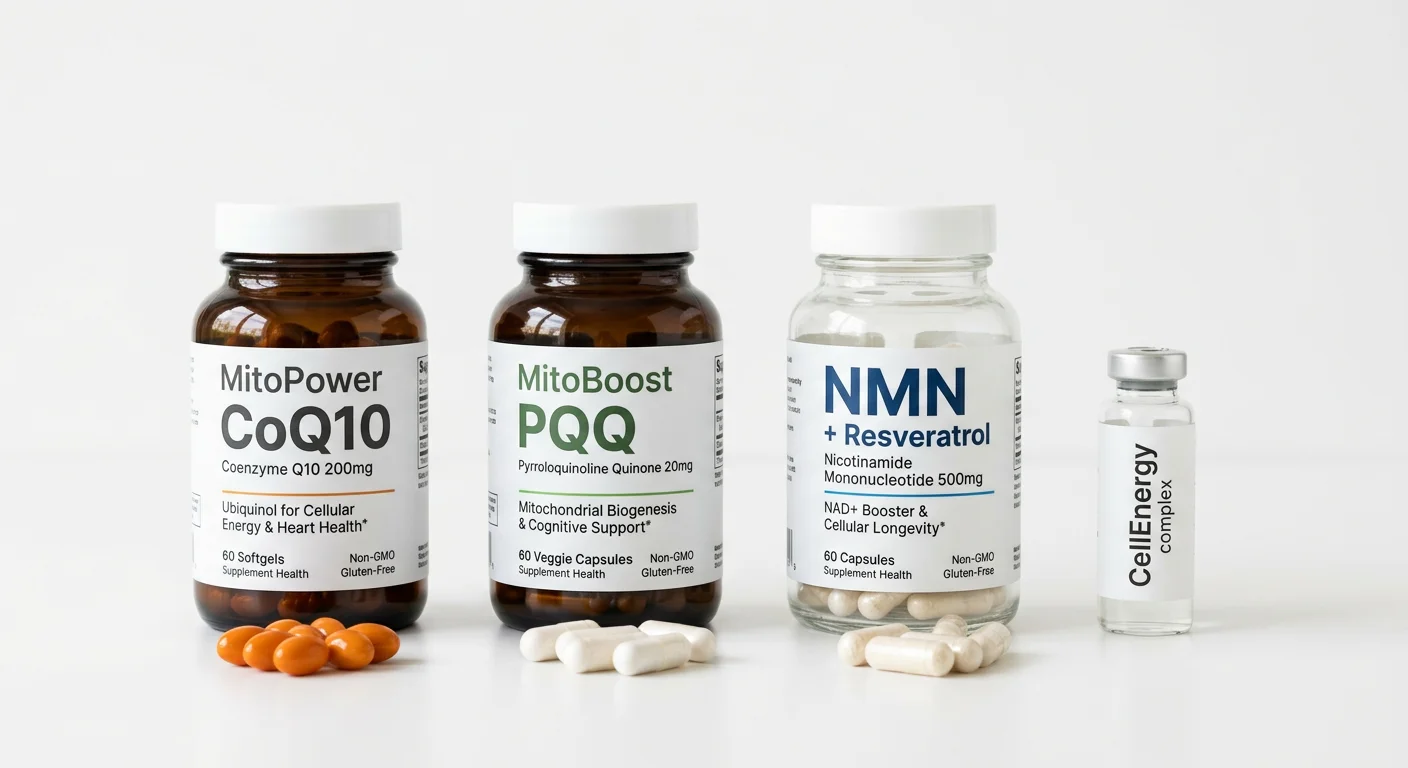
The 2026 mitochondrial health and cellular energy stack is built around five compounds that intervene at distinct, complementary points in this system: CoQ10 (as Ubiquinol) supports the electron transport chain directly, the core machinery of ATP synthesis, while doubling as a localized mitochondrial antioxidant; PQQ triggers mitochondrial biogenesis, increasing the total number of functioning mitochondria rather than just their efficiency; Acetyl-L-Carnitine (ALCAR) shuttles fatty acid fuel across the mitochondrial membrane, addressing a critical fuel-delivery bottleneck; NMN restores the NAD+ coenzyme pool required for nearly every mitochondrial redox reaction and for mitochondrial DNA repair; and Alpha-Lipoic Acid supports carbohydrate-derived fuel entry into the citric acid cycle while regenerating the body's broader antioxidant network.
Together, these five compounds address cellular energy production from multiple angles simultaneously — electron transport, mitochondrial quantity, fuel delivery, coenzyme availability, and antioxidant defense — representing the current best evidence-based approach to supplementally supporting mitochondrial health and sustained cellular energy.
The Core 2026 Mitochondrial Health Stack: CoQ10/Ubiquinol (100–200mg) + PQQ (10–20mg) + Acetyl-L-Carnitine (500–2,000mg) + NMN (250–500mg) + Alpha-Lipoic Acid (300–600mg). CoQ10 and PQQ taken together with a fat-containing meal; NMN taken on an empty stomach in the morning; ALCAR in the morning or early afternoon; ALA between meals. Estimated monthly cost: $110–200.
Stack at a Glance
| # | Supplement | Category | Dose & Timing | Rating |
|---|---|---|---|---|
| #1 | Coenzyme Q10 (Ubiquinol) ATP production & mitochondrial antioxidant defense | Electron Transport Chain Cofactor / Antioxidant | 100–200mg (as Ubiquinol) Morning or midday with a fat-containing meal | ★4.8 |
| #2 | PQQ (Pyrroloquinoline Quinone) Mitochondrial biogenesis & new mitochondria formation | Redox Cofactor / Mitochondrial Biogenesis Signal | 10–20mg Morning with food | ★4.6 |
| #3 | Acetyl-L-Carnitine (ALCAR) Fatty acid transport into mitochondria & cognitive energy metabolism | Amino Acid Derivative / Fatty Acid Transport Shuttle | 500–2,000mg Morning or early afternoon (avoid evening due to mild stimulating effect) | ★4.7 |
| #4 | NMN (Nicotinamide Mononucleotide) NAD+ restoration & mitochondrial DNA repair support | NAD+ Precursor / Cellular Repair Cofactor | 250–500mg Morning, on an empty stomach | ★4.5 |
| #5 | Alpha-Lipoic Acid (ALA) Mitochondrial antioxidant regeneration & carbohydrate metabolism support | Mitochondrial Antioxidant / Carbohydrate Metabolism Cofactor | 300–600mg Between meals, on an empty stomach for optimal absorption | ★4.6 |
Coenzyme Q10 (Ubiquinol)
Coenzyme Q10 is the foundational component of the 2026 mitochondrial health stack, functioning as an obligatory electron and proton shuttle within Complex I, Complex II, and Complex III of the electron transport chain — the biochemical assembly line responsible for the overwhelming majority of cellular ATP production. Without adequate CoQ10, electrons cannot move efficiently between these complexes, directly bottlenecking how much usable energy a cell can generate from glucose and fatty acid oxidation. Endogenous CoQ10 synthesis is itself mitochondrially demanding and declines meaningfully with age; by the seventh and eighth decades of life, tissue CoQ10 concentrations in metabolically demanding organs like the heart and brain can fall by roughly half compared to young adulthood, coinciding with well-documented declines in cellular energy output. The clinical evidence for supplementation is substantial: the landmark Q-SYMBIO trial, published in JACC: Heart Failure (Mortensen et al., 2014, n=420, 2-year follow-up), found that CoQ10 supplementation in chronic heart failure patients significantly reduced major adverse cardiovascular events and all-cause mortality compared to placebo — one of the strongest hard-outcome trials for any nutritional supplement. Beyond its role as an electron carrier, CoQ10 in its reduced ubiquinol form also functions as a potent lipid-soluble antioxidant embedded directly in the inner mitochondrial membrane, neutralizing the reactive oxygen species generated as an unavoidable byproduct of oxidative phosphorylation before they can damage mitochondrial DNA and membrane lipids. For the mitochondrial health stack, 100–200mg of ubiquinol taken with a fat-containing meal provides both the electron transport substrate and the localized antioxidant defense that underpin cellular energy production.
For a deeper breakdown of brands and formulations, see our full guide to the Best CoQ10 Supplements 2026.
Key Features
- CoQ10 is an essential electron and proton carrier within Complex I, II, and III of the mitochondrial electron transport chain — the pathway responsible for generating over 90% of the body's ATP
- Endogenous CoQ10 synthesis declines substantially with age, with tissue levels in the heart, brain, and skeletal muscle dropping as much as 50% by age 80
- A 2014 randomized, double-blind, placebo-controlled trial in JACC: Heart Failure (Q-SYMBIO study, n=420, 2 years) found CoQ10 supplementation significantly reduced major cardiovascular events and all-cause mortality in heart failure patients
- Ubiquinol, the reduced/active form of CoQ10, shows meaningfully higher bioavailability than standard ubiquinone, particularly in older adults whose enzymatic conversion capacity declines with age
- Functions as a lipid-soluble antioxidant within the inner mitochondrial membrane, directly neutralizing reactive oxygen species generated as a byproduct of ATP synthesis
Pros & Cons
Pros:
- +The most extensively studied mitochondrial nutrient in this stack, with strong human outcome data spanning cardiovascular health, statin-associated myopathy, and general energy metabolism
- +Directly targets the rate-limiting electron transport chain machinery rather than an upstream or adjunct pathway
- +Ubiquinol form offers substantially improved absorption for those over 40, when natural conversion from ubiquinone slows
Cons:
- -Fat-soluble and requires a meal containing dietary fat for meaningful absorption — taken on an empty stomach, bioavailability drops considerably
- -Ubiquinol costs notably more per milligram than standard ubiquinone-form CoQ10
PQQ (Pyrroloquinoline Quinone)
PQQ occupies a mechanistic niche that no other ingredient in this stack fills: rather than supporting the function of existing mitochondria, it signals the cell to build entirely new ones. PQQ activates the PGC-1α (peroxisome proliferator-activated receptor gamma coactivator 1-alpha) signaling cascade, widely regarded as the master regulatory switch controlling mitochondrial biogenesis. When this pathway is upregulated, cells respond by increasing mitochondrial DNA replication and assembling additional functional mitochondria, effectively raising the total cellular capacity for ATP production rather than merely optimizing the efficiency of the mitochondria already present. Foundational research published in the Journal of Biological Chemistry demonstrated that mice raised on PQQ-deficient diets showed significantly reduced mitochondrial content and impaired growth, with both measures normalizing after PQQ was reintroduced to the diet — direct evidence of PQQ's role as an essential nutrient for mitochondrial proliferation. In humans, a 2010 pilot study published in the Journal of Nutritional Science and Vitaminology found that 20mg/day of PQQ supplementation in healthy adults reduced markers of systemic inflammation and improved several measures linked to mitochondrial function alongside subjective sleep quality. PQQ also possesses an unusually stable quinone redox structure, allowing each molecule to cycle through oxidation and reduction states thousands of times without being permanently consumed — a chemical durability that gives it disproportionate antioxidant reach relative to standard dosing. For the mitochondrial health stack, 10–20mg of PQQ taken with food in the morning complements CoQ10's support of existing electron transport chain function by working to expand the total mitochondrial pool available to meet cellular energy demand.
Key Features
- PQQ activates the PGC-1α signaling pathway, the master regulator of mitochondrial biogenesis that triggers cells to build new mitochondria rather than simply maintaining existing ones
- A 2010 pilot study in the Journal of Nutritional Science and Vitaminology (n=10) found PQQ supplementation reduced inflammatory markers and improved measures of mitochondrial function and sleep quality in healthy adults
- Animal research published in the Journal of Biological Chemistry found PQQ deficiency in mice resulted in reduced mitochondrial content and impaired neonatal growth, reversible upon PQQ repletion
- One of the few known compounds that directly increases mitochondrial number and density, complementing CoQ10 and ALCAR, which support the function of existing mitochondria
- Exhibits an unusually stable redox cycling capacity, allowing it to undergo thousands of electron transfer cycles without being consumed, unlike most conventional antioxidants
Pros & Cons
Pros:
- +Uniquely targets mitochondrial quantity via biogenesis, a distinct and complementary mechanism to the antioxidant and cofactor roles of the other ingredients in this stack
- +Human pilot data shows measurable improvements in cognitive and sleep-related outcomes alongside biomarkers of mitochondrial function
- +Exceptionally stable redox chemistry gives it outsized antioxidant capacity relative to its dose
Cons:
- -Human clinical evidence remains limited to small pilot studies — larger confirmatory RCTs are still needed
- -Most of the mechanistic evidence for mitochondrial biogenesis specifically comes from animal and cell-culture research rather than large human trials
Acetyl-L-Carnitine (ALCAR)
Acetyl-L-Carnitine addresses a distinct and essential bottleneck in mitochondrial energy production: getting fatty acid fuel across the mitochondrial membrane in the first place. Long-chain fatty acids cannot passively diffuse across the inner mitochondrial membrane; instead, they must be shuttled across via the carnitine-acylcarnitine translocase system, a transport mechanism entirely dependent on adequate carnitine availability. Without sufficient carnitine, fatty acids accumulate in the cytoplasm rather than reaching the mitochondrial matrix where beta-oxidation and ATP synthesis actually occur — effectively starving the cell of one of its primary fuel sources regardless of how much fat is consumed in the diet. ALCAR, the acetylated form of L-carnitine, offers an additional advantage: its acetyl group crosses the blood-brain barrier with notably higher efficiency than free carnitine and can be used directly in the synthesis of acetylcholine, a key neurotransmitter involved in memory and cognitive processing. This dual mechanism is reflected in the clinical literature — a meta-analysis published in the Journal of Alzheimer's Disease pooling multiple randomized controlled trials found that ALCAR supplementation produced significant improvements in cognitive function scores, particularly among older adults already experiencing mild cognitive impairment. Separately, a double-blind, placebo-controlled trial in Neuropsychobiology found that 90 days of ALCAR supplementation in older adults significantly reduced both physical and mental fatigue scores compared to placebo. Because endogenous carnitine synthesis and tissue stores decline with age, supplementation becomes increasingly relevant for maintaining efficient fatty acid oxidation capacity later in life. For the mitochondrial health stack, 500–2,000mg of ALCAR taken in the morning or early afternoon ensures the fatty acid delivery pipeline into the mitochondria keeps pace with the electron transport and biogenesis support provided by CoQ10 and PQQ.
For a deeper breakdown of brands and formulations, see our full guide to the Best L-Carnitine Supplements.
Key Features
- ALCAR shuttles long-chain fatty acids across the inner mitochondrial membrane via the carnitine-acylcarnitine translocase system, a required step before those fatty acids can be oxidized for ATP production
- The acetyl group carried by ALCAR crosses the blood-brain barrier efficiently and can be used to synthesize acetylcholine, linking mitochondrial fatty acid metabolism directly to neurotransmitter production
- A meta-analysis in the Journal of Alzheimer's Disease covering multiple RCTs found ALCAR supplementation was associated with significant improvements in cognitive function scores, particularly in older adults with mild cognitive impairment
- Endogenous carnitine synthesis and tissue levels decline with age, reducing the efficiency of mitochondrial fatty acid oxidation in older adults even when dietary fat intake is unchanged
- A double-blind, placebo-controlled trial published in Neuropsychobiology found ALCAR supplementation reduced physical and mental fatigue scores in older adults over a 90-day treatment period
Pros & Cons
Pros:
- +Addresses fatty acid transport, the specific rate-limiting delivery step in mitochondrial energy metabolism that CoQ10 and PQQ do not directly target
- +Dual benefit spanning both physical energy metabolism and cognitive/neurotransmitter support via its acetyl group
- +Human trial evidence directly measures fatigue and cognitive outcomes, not just biochemical markers
Cons:
- -Can have a mild stimulating effect in some individuals, making evening dosing prone to disrupting sleep
- -Some users report a transient fishy body odor at higher doses due to trimethylamine metabolites
NMN (Nicotinamide Mononucleotide)
NMN supplies the cell with a direct biosynthetic precursor to NAD+, arguably the single most important coenzyme in cellular energy metabolism. NAD+ (and its reduced form, NADH) serves as the essential electron carrier for glycolysis, the citric acid cycle, and the electron transport chain itself — without adequate NAD+, the entire sequence of reactions that convert glucose and fat into ATP simply cannot proceed at normal efficiency. Unlike CoQ10, PQQ, or ALCAR, which each support a specific structural or transport component of mitochondrial metabolism, NAD+ availability is a foundational constraint underlying the whole system. Cellular NAD+ levels are well documented to decline substantially with age, with some tissue measurements showing reductions of 50% or more between young adulthood and later life, a decline strongly associated with reduced mitochondrial efficiency and slower repair of accumulated mitochondrial DNA damage. The clinical evidence for NMN supplementation as a countermeasure has grown considerably: a 2021 randomized, double-blind, placebo-controlled trial published in Nature Communications (Yoshino et al., n=48 prediabetic postmenopausal women, 60 days) found that oral NMN significantly increased blood NAD+ metabolite levels and improved skeletal muscle insulin sensitivity, muscle remodeling, and insulin signaling compared to placebo. Beyond fueling redox reactions directly, NAD+ is also the required substrate for sirtuins (a family of proteins, including SIRT1 and SIRT3, involved in regulating mitochondrial biogenesis and metabolic adaptation) and for PARP enzymes, which repair damaged mitochondrial DNA — meaning adequate NAD+ availability supports not just current ATP output but the cell's capacity to maintain and repair its mitochondrial population over time. Nicotinamide Riboside (NR), a related NAD+ precursor with a comparable human evidence base, can be used interchangeably with NMN based on individual product preference. For the mitochondrial health stack, 250–500mg of NMN taken on an empty stomach in the morning supports the foundational NAD+ pool that the transport, biogenesis, and antioxidant mechanisms of the other four ingredients ultimately depend on.
For a deeper breakdown of brands and formulations, see our full guide to the Best NMN Supplements 2026.
Key Features
- NMN is a direct metabolic precursor to NAD+ (nicotinamide adenine dinucleotide), the essential coenzyme required for the redox reactions that drive glycolysis, the citric acid cycle, and oxidative phosphorylation
- Cellular NAD+ concentrations decline by an estimated 50% or more between young adulthood and old age, directly constraining mitochondrial energy metabolism and DNA repair capacity
- A 2021 randomized, double-blind, placebo-controlled trial in Nature Communications (n=48, 60 days) found NMN supplementation significantly increased blood NAD+ levels and improved skeletal muscle insulin sensitivity in prediabetic women
- NAD+ is a required substrate for sirtuins (SIRT1, SIRT3) and PARP enzymes, both of which regulate mitochondrial biogenesis and mitochondrial DNA damage repair, respectively
- NR (Nicotinamide Riboside) is a closely related NAD+ precursor with comparable human trial evidence and can be substituted for NMN in this stack based on individual preference or product availability
Pros & Cons
Pros:
- +Targets NAD+, an upstream coenzyme pool required for virtually every mitochondrial redox reaction, giving it broad mechanistic relevance across the entire energy production pathway
- +Directly supports mitochondrial DNA repair via PARP and sirtuin activation, addressing accumulated mitochondrial damage rather than only current output
- +Growing base of human RCT evidence for metabolic biomarkers, including insulin sensitivity and blood NAD+ elevation
Cons:
- -The most expensive ingredient in this stack per month, reflecting its more complex manufacturing process
- -Human trials, while growing, remain smaller in scale and shorter in duration than the decades of CoQ10 and carnitine research
Alpha-Lipoic Acid (ALA)
Alpha-Lipoic Acid closes out the mitochondrial health stack by addressing both carbohydrate fuel entry into the mitochondria and providing a uniquely versatile layer of antioxidant protection. As a required cofactor for pyruvate dehydrogenase and alpha-ketoglutarate dehydrogenase, ALA is essential for converting pyruvate — the end product of glycolysis — into acetyl-CoA, the molecule that actually enters the citric acid cycle to generate the electron carriers ultimately used for ATP synthesis. Without adequate ALA availability, glucose-derived fuel is metabolically stranded before it can reach the mitochondrial energy-producing machinery, mirroring the fatty acid transport role that ALCAR fulfills on the fat-oxidation side of metabolism. What sets ALA apart from most antioxidants in this space is its unusual solubility profile: it is one of the very few naturally occurring antioxidants soluble in both water and fat, allowing it to operate within lipid membranes and aqueous cytoplasm alike, rather than being confined to a single cellular compartment as Vitamin C and Vitamin E are. This versatility is compounded by ALA's ability to regenerate other antioxidants — including Vitamin C, Vitamin E, and glutathione — back to their active reduced states after they have neutralized free radicals, effectively extending the working capacity of the body's broader antioxidant network. The clinical evidence base is substantial: a 2011 systematic review and meta-analysis in Diabetic Medicine, pooling multiple randomized controlled trials, found that ALA supplementation significantly improved symptoms of diabetic peripheral neuropathy, a condition mechanistically linked to mitochondrial oxidative damage within nerve cell mitochondria. A separate double-blind, placebo-controlled trial published in the Journal of the American College of Nutrition found that combining ALA with ALCAR improved measures of mitochondrial function and reduced oxidative stress biomarkers in older adults. For the mitochondrial health stack, 300–600mg of ALA taken between meals on an empty stomach rounds out the protocol by supporting carbohydrate-derived fuel entry into the citric acid cycle while regenerating the broader antioxidant defenses that protect all five ingredients' combined mitochondrial gains.
For a deeper breakdown of brands and formulations, see our full guide to the Best Alpha-Lipoic Acid Supplements 2026.
Key Features
- ALA is a required cofactor for pyruvate dehydrogenase and alpha-ketoglutarate dehydrogenase, two enzyme complexes essential for converting glucose-derived pyruvate into usable mitochondrial fuel entering the citric acid cycle
- Uniquely soluble in both water and fat, allowing ALA to function as an antioxidant across all cellular compartments, unlike Vitamin C (water-soluble only) or Vitamin E (fat-soluble only)
- A 2011 systematic review and meta-analysis in Diabetic Medicine covering multiple RCTs found ALA supplementation significantly improved symptoms of diabetic peripheral neuropathy, a condition linked to mitochondrial oxidative damage in nerve tissue
- Regenerates other antioxidants, including Vitamin C, Vitamin E, and glutathione, back to their active reduced forms after they neutralize free radicals — extending the effective antioxidant capacity of the whole cellular defense network
- A double-blind, placebo-controlled trial in the Journal of the American College of Nutrition found ALA supplementation combined with ALCAR improved measures of mitochondrial function and reduced oxidative stress markers in older adults
Pros & Cons
Pros:
- +Universal solubility profile gives it broader antioxidant reach across cell membranes and cytoplasm than most single-environment antioxidants
- +Directly supports carbohydrate-derived fuel entry into the citric acid cycle, complementing ALCAR's role in fatty acid fuel delivery
- +Regenerates the body's other key antioxidants, amplifying the defensive value of Vitamin C, Vitamin E, and glutathione already present
Cons:
- -Can cause mild GI upset, including nausea, in some individuals — starting at a lower dose and taking with a small amount of food can help
- -May lower blood glucose levels, requiring monitoring and potential dose adjustment in those on diabetes medications
The 2026 Mitochondrial Health Stack: Daily Protocol
CoQ10 and PQQ are best taken together with a fat-containing meal, since CoQ10 is fat-soluble and requires dietary fat for meaningful absorption. NMN is typically taken on an empty stomach in the morning, ALCAR in the morning or early afternoon to avoid its mild stimulating effect disrupting sleep, and ALA between meals for optimal absorption.
| Supplement | Dose | Timing | Notes |
|---|---|---|---|
| CoQ10 (Ubiquinol) | 100–200mg | Morning or midday with a fat-containing meal | Choose the ubiquinol form, especially over age 40, for meaningfully better absorption than standard ubiquinone. |
| PQQ | 10–20mg | Morning with food | Pairs naturally with CoQ10 — supports new mitochondria formation while CoQ10 supports existing mitochondrial output. |
| Acetyl-L-Carnitine | 500–2,000mg | Morning or early afternoon | Avoid evening dosing due to its mild stimulating effect, which can interfere with sleep onset in sensitive individuals. |
| NMN | 250–500mg | Morning, empty stomach | NR (Nicotinamide Riboside) is an acceptable substitute with comparable human evidence for raising NAD+ levels. |
| Alpha-Lipoic Acid | 300–600mg | Between meals, empty stomach | Start at the lower end of the dose range to assess GI tolerance; those on diabetes medication should monitor blood glucose. |
Five Pillars of Mitochondrial Function: What Each Supplement Targets
Cellular energy decline results from the breakdown of several distinct, interdependent mitochondrial processes. The 2026 mitochondrial health stack directly addresses five of the most well-characterized mechanisms:
1. Electron Transport Chain Efficiency → CoQ10 (Ubiquinol)
CoQ10 shuttles electrons through Complex I, II, and III of the electron transport chain, the direct machinery of ATP synthesis. CoQ10 supplementation restores levels that decline substantially with age, supporting the core electron transport step that every other mechanism in this stack ultimately feeds into.
2. Mitochondrial Quantity → PQQ
Rather than optimizing existing mitochondria, cells can respond to signals like PGC-1α activation by building entirely new mitochondria. PQQ triggers this mitochondrial biogenesis pathway, increasing the total cellular capacity for ATP production over time.
3. Fatty Acid Fuel Delivery → Acetyl-L-Carnitine
Long-chain fatty acids cannot cross the inner mitochondrial membrane unassisted. ALCAR shuttles these fatty acids across via the carnitine-acylcarnitine translocase system, ensuring fat-derived fuel actually reaches the mitochondrial matrix where it can be oxidized for energy.
4. NAD+ Coenzyme Availability → NMN
NAD+ is the essential electron carrier for glycolysis, the citric acid cycle, and oxidative phosphorylation, and also fuels sirtuin and PARP enzymes involved in mitochondrial regulation and DNA repair. NMN restores the NAD+ pool that declines by roughly half between young adulthood and old age.
5. Carbohydrate Fuel Entry & Antioxidant Regeneration → Alpha-Lipoic Acid
Glucose-derived pyruvate requires ALA as a cofactor before it can enter the citric acid cycle as acetyl-CoA. Alpha-Lipoic Acid supports this carbohydrate fuel entry point while also regenerating Vitamin C, Vitamin E, and glutathione, extending the antioxidant protection covering all four other ingredients' mitochondrial gains.
Key Research: Human Evidence for Each Compound
CoQ10: Cardiovascular Outcomes and Mortality
Mortensen et al. (2014, JACC: Heart Failure; Q-SYMBIO study, n=420, 2-year follow-up) found CoQ10 supplementation significantly reduced major adverse cardiovascular events and all-cause mortality in chronic heart failure patients in a randomized, double-blind, placebo-controlled design.
Research: Mortensen et al. (2014), JACC: Heart Failure.
PQQ: Mitochondrial Function and Inflammatory Markers
A 2010 pilot study in the Journal of Nutritional Science and Vitaminology (n=10 healthy adults) found PQQ supplementation reduced inflammatory markers and improved measures linked to mitochondrial function and sleep quality compared to baseline.
Research: J Nutr Sci Vitaminol (2010), PQQ pilot study.
ALCAR: Cognitive Function and Fatigue Outcomes
A meta-analysis in the Journal of Alzheimer's Disease pooling multiple RCTs found ALCAR supplementation significantly improved cognitive function scores, particularly in older adults with mild cognitive impairment. A separate double-blind, placebo-controlled trial in Neuropsychobiology found 90 days of ALCAR use reduced physical and mental fatigue scores in older adults.
Research: J Alzheimers Dis (ALCAR meta-analysis); Neuropsychobiology (ALCAR fatigue trial).
NMN: NAD+ Levels and Insulin Sensitivity
Yoshino et al. (2021, Nature Communications; n=48 prediabetic postmenopausal women, 60 days) found NMN supplementation significantly increased blood NAD+ metabolite levels and improved skeletal muscle insulin sensitivity in a randomized, double-blind, placebo-controlled trial.
Research: Yoshino et al. (2021), Nature Communications.
Alpha-Lipoic Acid: Diabetic Neuropathy and Mitochondrial Oxidative Stress
A 2011 systematic review and meta-analysis in Diabetic Medicine found ALA supplementation significantly improved symptoms of diabetic peripheral neuropathy across multiple RCTs. A double-blind, placebo-controlled trial in the Journal of the American College of Nutrition found ALA combined with ALCAR improved mitochondrial function measures and reduced oxidative stress markers in older adults.
Research: Diabetic Medicine (2011), ALA meta-analysis; J Am Coll Nutr, ALA/ALCAR combination trial.
Deep Dives: Individual Supplement Reviews
For detailed product comparisons and brand recommendations for key supplements in this stack, see our full review guides:
Frequently Asked Questions
How long before I notice results from a mitochondrial health stack?
Most trials in this stack measured biomarker and outcome changes over 60 days to 2 years, and subjective energy improvements generally track a similar gradual timeline. CoQ10 and ALCAR's effects on tissue saturation and fuel delivery typically build over 4–8 weeks of consistent use, while PQQ's mitochondrial biogenesis effects and NMN's NAD+ restoration are slower physiological processes that may take 8–12 weeks or longer to become noticeable.
Can I take all five supplements together safely?
Yes — all five target complementary, non-overlapping mechanisms in mitochondrial energy metabolism and have no known adverse interactions with each other. As with any new supplement regimen, those who are pregnant, breastfeeding, taking anticoagulant medication (relevant to CoQ10), or managing diabetes (relevant to Alpha-Lipoic Acid's blood glucose effects) should consult a physician before starting.
Is NMN or NR the better NAD+ precursor to choose?
Both NMN and NR (Nicotinamide Riboside) are well-studied NAD+ precursors with comparable human trial evidence for raising blood NAD+ levels, and the two are broadly interchangeable in this stack. The choice often comes down to product stability, third-party testing, and individual price and availability rather than a clear efficacy difference between the two forms.
Do I need to take these supplements with food?
It varies by ingredient. CoQ10 is fat-soluble and requires a fat-containing meal for meaningful absorption, and PQQ pairs naturally alongside it. NMN and Alpha-Lipoic Acid are typically taken on an empty stomach for optimal absorption, though ALA can be taken with a small amount of food if it causes GI discomfort. ALCAR can be taken with or without food, though morning or early afternoon dosing is preferred over evening due to its mild stimulating effect.
What if I can only afford one or two supplements from this stack?
CoQ10 (Ubiquinol) has by far the strongest and longest-standing human outcome evidence in this stack, including hard cardiovascular endpoints, making it the highest-priority single addition. If budget allows for a second, NMN addresses the foundational NAD+ coenzyme pool that the broader mitochondrial redox and repair system depends on, making the pairing a strong complementary starting point.
Disclaimer: This content is for informational purposes only and does not constitute medical advice. Always consult a qualified healthcare provider before starting any new supplement regimen, especially if you have underlying health conditions, are pregnant or breastfeeding, or are taking prescription medications. The research cited represents the current evidence base but does not guarantee individual results. Some links on this page are affiliate links; SupliCore may earn a commission on qualifying purchases at no additional cost to you.