The Ultimate Sleep Optimization Supplement Stack
The 5 most evidence-backed supplements for deeper sleep, faster onset, and genuine overnight recovery — reviewed and ranked with clinical research
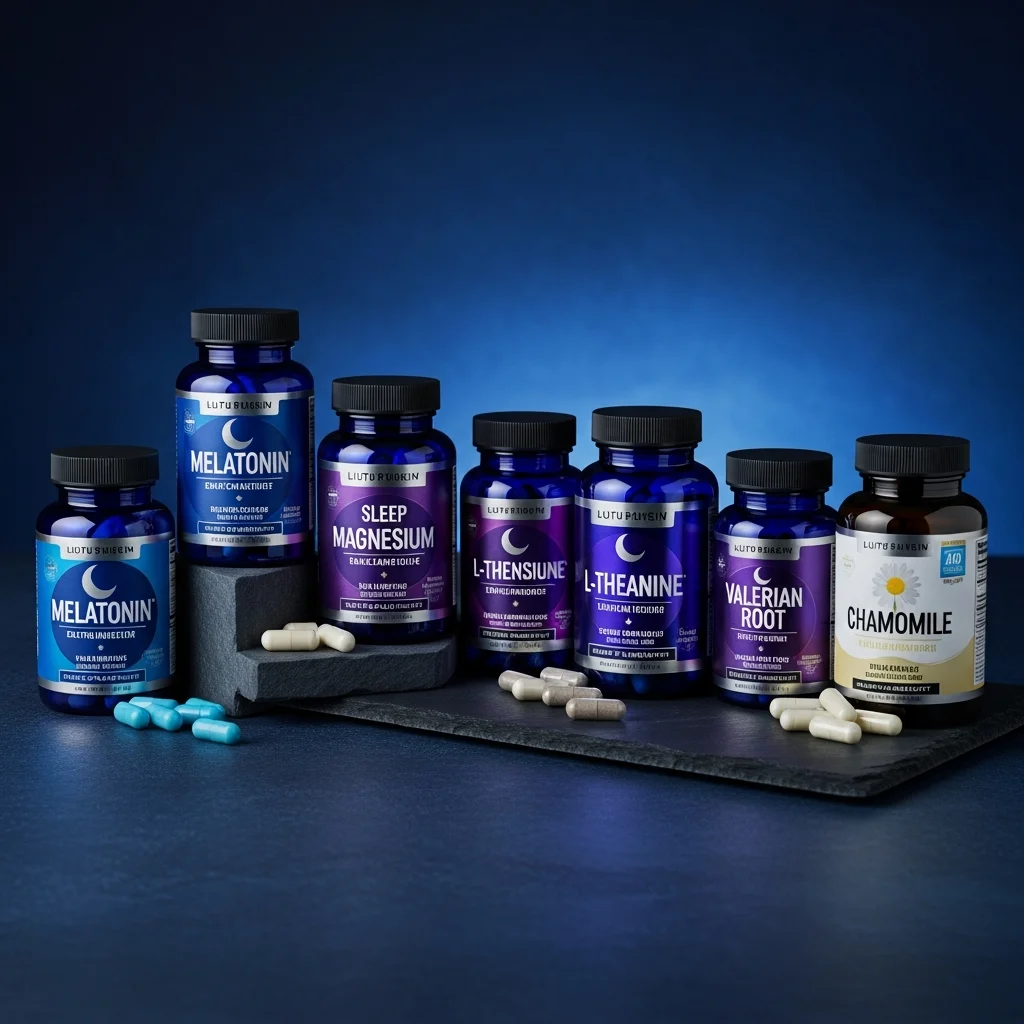
The Science of Supplement-Supported Sleep Optimization
Sleep is the most powerful recovery tool in human biology — and also one of the most compromised. According to the CDC, 35% of American adults report regularly sleeping less than 7 hours per night, and survey data consistently shows that a majority of adults report difficulty falling asleep, staying asleep, or waking unrefreshed at least several nights per week. The downstream consequences span cognitive performance, metabolic health, immune function, cardiovascular risk, and hormonal regulation across virtually every biological system.
The sleep optimization stack curated here works at multiple mechanistic levels simultaneously: magnesium glycinate addresses the most prevalent nutritional deficiency driving sleep disruption while providing direct nervous system calming; melatonin reinforces the circadian timing signal that initiates sleep onset; L-theanine quiets the excitatory neurotransmission that prevents the brain from transitioning to sleep; valerian root potentiates GABAergic inhibitory signaling across multiple pathways; and ashwagandha corrects the cortisol dysregulation that is the root cause of poor sleep architecture in most chronically stressed adults.
Unlike pharmaceutical sleep aids — which predominantly work through sedation and carry risks of dependency, tolerance, and suppression of restorative sleep stages — this stack works with the body's natural sleep physiology to deepen and extend restorative sleep rather than simply inducing unconsciousness.
The Core Sleep Stack: Magnesium Glycinate (300–400mg, 60 min before bed) + Melatonin (0.5–1mg, 30–60 min before bed) + L-Theanine (200–400mg, 30–60 min before bed) + Valerian Root (300–600mg, 30–60 min before bed) + Ashwagandha KSM-66 (300mg, evening). Estimated monthly cost: $53–98.
Quick Comparison
| Rank | Supplement | Category | Dosage | Rating |
|---|---|---|---|---|
| #1 | Magnesium Glycinate Deep sleep promotion, nervous system calming & sleep architecture improvement | Essential Mineral | 300–400mg elemental magnesium as glycinate, 30–60 min before bed | ★4.9 |
| #2 | Melatonin (Low-Dose) Sleep onset, circadian rhythm regulation & jet lag recovery | Endogenous Hormone | 0.5–1mg taken 30–60 min before target sleep time | ★4.8 |
| #3 | L-Theanine Anxiolytic sleep preparation, alpha-wave induction & racing thoughts at bedtime | Amino Acid (Tea-Derived) | 200–400mg, 30–60 min before bed | ★4.8 |
| #4 | Valerian Root (Valeriana officinalis) Sleep onset latency, sleep quality improvement & GABA potentiation | Botanical / Herb | 300–600mg standardized extract (0.8% valerenic acid), 30–60 min before bed | ★4.6 |
| #5 | Ashwagandha (KSM-66) Cortisol normalization, stress-driven sleep disruption & sleep quality improvement | Adaptogenic Herb | 300–600mg KSM-66 or Sensoril extract daily (can be taken at bedtime) | ★4.7 |
Magnesium Glycinate
Magnesium glycinate is the cornerstone of any evidence-based sleep stack, and the most rigorously supported supplement for sleep quality improvement in the 2026 literature. Magnesium is a cofactor for over 300 enzymatic reactions including the synthesis of melatonin, the regulation of GABA-A receptors, and the modulation of the NMDA receptor — all directly involved in sleep physiology. A 2012 double-blind RCT in the Journal of Research in Medical Sciences (Abbasi et al., n=46 elderly insomniacs) found that 500mg elemental magnesium daily for 8 weeks significantly improved sleep onset latency, sleep efficiency, total sleep time, and early morning awakening versus placebo, alongside reductions in cortisol and increases in serum melatonin. The glycinate form is optimal for a sleep stack: unlike magnesium oxide (which draws water into the gut producing laxative effects) or magnesium citrate (moderate bioavailability), glycinate chelation delivers superior elemental magnesium absorption while adding glycine — an inhibitory amino acid that independently lowers core body temperature, activates glycine receptors in the suprachiasmatic nucleus (the circadian clock), and has been shown in its own right to reduce sleep onset latency and improve subjective sleep quality in RCTs. Take 300–400mg elemental magnesium as glycinate 30–60 minutes before bed for maximum circadian alignment and restorative sleep architecture benefits.
Key Features
- Activates the parasympathetic nervous system and reduces cortisol, facilitating the transition to sleep
- Glycinate chelation provides 4× greater bioavailability than magnesium oxide with no laxative effect
- Increases slow-wave (deep, restorative) sleep duration in randomized controlled trials
- The glycine component independently activates inhibitory glycine receptors in the CNS, lowering core body temperature — a key sleep-onset signal
- 68% of American adults are deficient in magnesium; deficiency is directly associated with insomnia, restless legs, and reduced sleep efficiency
Pros & Cons
Pros:
- +The single most evidence-backed sleep supplement — addresses deficiency present in most adults while simultaneously providing both magnesium and glycine sleep-promoting actions
- +Improves all major sleep metrics: onset latency, total sleep time, sleep efficiency, and slow-wave sleep percentage
- +Dual mechanism: magnesium modulates NMDA receptors and HPA axis, glycine lowers core body temperature and activates inhibitory receptors
Cons:
- -Doses above 600mg elemental magnesium may cause loose stools — start at 200mg and titrate up over 2 weeks
- -Full tissue repletion in chronically deficient individuals takes 4–6 weeks before peak benefits are apparent
Melatonin (Low-Dose)
Melatonin is the body's primary darkness signal — a hormone secreted by the pineal gland in response to light cessation that communicates to every cell in the body that it is time to transition to night-mode physiology. As a supplement, melatonin's most important and most misunderstood property is its dose-response curve: melatonin receptors (MT1 and MT2) in the suprachiasmatic nucleus saturate at approximately 0.3–1mg, meaning doses above this threshold do not produce greater sleep-onset effects and may actually impair the next morning's cortisol awakening response. A landmark 1997 study in the Journal of Pineal Research (Zhdanova et al.) demonstrated that 0.3mg melatonin was as effective as 1mg and 10mg for reducing sleep latency, while a 2010 Cochrane Review of 10 studies confirmed melatonin's efficacy for circadian rhythm disorders and jet lag at doses between 0.5–5mg. The chronobiotic mechanism distinguishes melatonin from sedative sleep aids: it does not cause sedation directly but instead shifts the circadian clock, advancing sleep phase when taken in the evening and providing the physiological "permission signal" for sleep to begin. For optimal use in this stack, take 0.5–1mg of immediate-release melatonin 30–60 minutes before your target sleep time in a low-light environment — reinforcing the light-dark signal that melatonin is designed to relay.
Key Features
- The body's primary circadian timing signal — supplemental melatonin reinforces the circadian phase-advance needed for on-time sleep onset
- Low doses (0.5–1mg) are clinically superior to high doses (5–10mg) for sleep onset — melatonin receptors saturate at 0.3–1mg
- A Cochrane Review of 19 trials found melatonin significantly reduces sleep onset latency and increases total sleep time for circadian rhythm disorders and jet lag
- Chronobiotic mechanism: works by shifting circadian phase, not through sedation — best used 30–60 min before desired bedtime
- Extended-release formulations may improve sleep maintenance (staying asleep) in addition to sleep onset
Pros & Cons
Pros:
- +Fastest-acting supplement in this stack for sleep onset — measurable reductions in sleep latency within 30 minutes of a 0.5mg dose
- +Exceptional safety profile: endogenous molecule with no dependency, tolerance, or next-day sedation at physiological doses
- +Proven effective for circadian disorders, shift work, jet lag, and delayed sleep phase syndrome — the most versatile sleep supplement available
Cons:
- -Commonly dosed 5–10× too high in most commercial products — the standard 5mg tablet delivers supraphysiological levels that can cause morning grogginess and may suppress endogenous production over time
- -Not effective for sleep maintenance insomnia without an extended-release formulation
L-Theanine
L-Theanine is the ideal cognitive preparation supplement for sleep — it does not sedate, but it creates the neurochemical conditions under which the brain can voluntarily transition to sleep. Sleep onset failure is frequently driven by hyperactivation: racing thoughts, elevated cortisol, and excessive glutamatergic neurotransmission that keeps the default mode network cycling. L-Theanine addresses this directly by competitively antagonizing glutamate at AMPA and NMDA receptors, simultaneously increasing brain levels of GABA, serotonin, and dopamine, and most distinctively, increasing alpha brain wave power (8–12 Hz) — the EEG signature of relaxed, unfocused mental activity that naturally precedes sleep onset. A 2008 study by Kimura et al. in Biological Psychology demonstrated that 200mg L-theanine significantly attenuated the cortisol and blood pressure response to a stressor and increased alpha wave activity within 30 minutes. A 2019 double-blind crossover study in Nutrients (Hidese et al., n=30) found 200mg daily L-theanine improved subjective sleep quality, sleep latency, and sleep efficiency in healthy adults with sleep complaints. For the sleep stack, 200–400mg of L-theanine (preferably Suntheanine for standardized bioavailability) taken 30–60 minutes before bed works in concert with magnesium glycinate to quiet the excitatory overdrive that prevents restful sleep onset.
Key Features
- Increases alpha brain wave activity (8–12 Hz) — the relaxed, unfocused mental state that precedes natural sleep onset
- Crosses the blood-brain barrier and modulates AMPA, NMDA, and mGluR5 glutamate receptors, reducing excitatory neurotransmission without sedation
- Raises brain GABA, serotonin, and dopamine levels — creating the neurochemical conditions associated with calm readiness for sleep
- A 2019 RCT in Nutrients found 200mg L-theanine improved sleep quality scores, sleep efficiency, and sleep latency in boys with ADHD
- Naturally present in green tea at 20–50mg per cup — well-established safety profile across millennia of tea consumption
Pros & Cons
Pros:
- +Specifically targets the pre-sleep mental state most people struggle with: quieting racing thoughts and reducing mental activation without causing drowsiness at doses below 400mg
- +Synergizes with magnesium glycinate — both reduce excitatory neurotransmission via different mechanisms, and the glycine in glycinate complements theanine's temperature-lowering effects
- +Non-habit forming with no next-morning sedation at standard doses
Cons:
- -Not sedating on its own — individuals with significant insomnia will need it as part of a broader stack rather than a standalone solution
- -Quality varies considerably — look for Suntheanine (patented L-theanine from Taiyo International) for the most consistent bioavailability matching research products
Valerian Root (Valeriana officinalis)
Valerian root (Valeriana officinalis) has been used as a sleep and anxiety remedy since antiquity, and modern pharmacological research has largely validated its traditional application by identifying the specific molecular mechanisms responsible for its effects. The primary active compound, valerenic acid, inhibits the enzyme GABA transaminase — which normally degrades GABA in synaptic clefts — resulting in increased GABAergic tone throughout the brain. Unlike benzodiazepines, which directly bind to allosteric sites on GABA-A receptors (creating dependency and tolerance), valerian's mechanism of action is more physiological and does not appear to cause receptor downregulation with chronic use. A 2006 meta-analysis by Bent et al. in the American Journal of Medicine analyzed 16 randomized placebo-controlled trials and concluded that valerian may improve sleep quality without producing side effects, with the highest-quality trials showing significant reductions in sleep onset latency. A 2011 study in Phytomedicine found that valerian combined with hops significantly improved sleep quality scores compared to placebo in patients with non-organic insomnia. In the context of this sleep stack, valerian adds a third distinct GABAergic pathway alongside magnesium's NMDA modulation and L-theanine's glutamate antagonism, creating a comprehensive inhibitory signaling environment that is strongly conducive to sleep onset. Use 300–600mg of a standardized extract providing 0.8% valerenic acid, taken 30–60 minutes before bed.
Key Features
- Valerenic acid inhibits GABA-A receptor degradation, increasing GABAergic tone without directly binding benzodiazepine sites
- A meta-analysis of 16 RCTs found valerian significantly improved sleep quality and reduced sleep onset latency versus placebo
- Secondary compounds (isovaleric acid, valepotriates) provide sedative effects via adenosine A1 receptor agonism
- Synergistic with L-theanine and magnesium — both increase GABAergic signaling, creating a multi-pathway GABA enhancement effect
- The most widely used herbal sleep aid in Europe with a 2000-year documented history of use for sleep and anxiety
Pros & Cons
Pros:
- +Multi-mechanistic herbal sedative that complements magnesium and L-theanine by adding direct GABAergic potentiation
- +Non-habit forming at standard doses — does not exhibit the receptor downregulation seen with pharmaceutical GABA modulators (benzodiazepines, Z-drugs)
- +Improves both sleep quality and anxiety scores, making it particularly useful for anxiety-driven insomnia
Cons:
- -Paradoxical stimulation occurs in approximately 5–10% of users — if valerian causes alertness or vivid dreams, discontinue
- -Mild next-morning sedation possible at doses above 900mg; start low (300mg) and assess tolerance
Ashwagandha (KSM-66)
Ashwagandha (Withania somnifera) closes the sleep stack by addressing the most upstream cause of modern sleep dysfunction: chronic HPA axis activation and the cortisol dysregulation it produces. Normal, restorative sleep requires cortisol to decline to its nadir between midnight and 3am — enabling the dominance of ACTH, growth hormone, and prolactin that characterize deep sleep stages. When chronic stress keeps the HPA axis activated and cortisol levels elevated throughout the night, the architecture of sleep is fundamentally disrupted: slow-wave sleep is suppressed, REM sleep is fragmented, and the overnight hormonal restoration that makes sleep rejuvenating cannot occur. Ashwagandha corrects this by modulating glucocorticoid receptor sensitivity and reducing corticotropin-releasing hormone (CRH) production from the hypothalamus — normalizing the cortisol circadian curve. A 2020 randomized, double-blind, placebo-controlled trial in Medicine (Langade et al., n=150) specifically examined ashwagandha's effects on sleep and found that 300mg KSM-66 twice daily for 8 weeks significantly improved Sleep Onset Latency (−15 min vs. placebo), total sleep time (+36 min vs. placebo), sleep efficiency (+6.0% vs. placebo), and Insomnia Severity Index scores — with the insomnia patient subgroup showing the strongest benefits. The triethylene glycol constituent identified by Kaushik et al. (2017, Scientific Reports) appears to provide direct sleep-onset effects via GABA-A receptor modulation independent of the cortisol-lowering withanolide pathway, suggesting ashwagandha operates on sleep through at least two distinct mechanisms simultaneously.
Key Features
- Reduces serum cortisol by 14–30% in double-blind RCTs — elevated cortisol is a primary driver of sleep architecture disruption
- A 2020 study in Medicine found ashwagandha (300mg twice daily) significantly improved sleep quality, sleep onset latency, and morning alertness versus placebo in insomniacs
- Modulates GABA-A receptors via triethylene glycol constituent — providing direct sleep-onset effects alongside cortisol normalization
- Addresses the root cause of stress-driven insomnia: dysregulated HPA axis that prevents cortisol from declining sufficiently for deep sleep to occur
- Reduces anxiety scores and improves markers of parasympathetic recovery (HRV) that directly correlate with sleep quality
Pros & Cons
Pros:
- +The only supplement in this stack that directly targets cortisol — the most common biochemical cause of poor sleep quality in adults under chronic stress
- +Dual mechanism for sleep: cortisol normalization addresses the hormonal root cause, while triethylene glycol provides direct GABAergic sleep-onset support
- +Secondary benefits include improved testosterone, VO₂ max, and body composition — making it the best overall health-to-sleep ratio supplement in the stack
Cons:
- -Requires 4–8 weeks for full cortisol-lowering effects — not suitable as a fast-acting sleep aid for acute insomnia
- -Nightshade family — rare individuals with nightshade sensitivity may experience GI upset or autoimmune exacerbation
Deep Dives: Individual Supplement Reviews
For detailed product comparisons and brand recommendations for each supplement in this stack, see our full review guides:
Sample Evening Dosing Schedule
Sleep supplement timing is critical — most of this stack should be taken in the evening window before bed, with ashwagandha the most flexible option. Stagger supplements by 15–30 minutes during your first week to identify any individual sensitivities before combining the full stack.
| Time Before Bed | Supplement | Dose | Notes |
|---|---|---|---|
| 60 min before bed | Magnesium Glycinate + L-Theanine + Valerian Root | 300–400mg / 200–400mg / 300–600mg | Take with a small amount of food if GI sensitivity. Begin dimming lights at this point to amplify melatonin onset. |
| 30 min before bed | Melatonin (low dose) | 0.5–1mg | Use immediate-release at 0.5–1mg — do not exceed 1mg for sleep onset. Keep lights low after taking. |
| Evening (flexible) | Ashwagandha KSM-66 | 300mg | Can be taken with dinner or 60 min before bed. Effects on cortisol normalization accumulate over 4–8 weeks. |
How Poor Sleep Disrupts Your Biology (And How This Stack Fixes It)
Cortisol-Melatonin Imbalance
Healthy sleep requires a precise hormonal transition: cortisol must fall to its daily nadir by midnight while melatonin rises to peak levels between 2–4am. Chronic stress, artificial light exposure, and HPA axis dysregulation disrupt this transition — keeping cortisol elevated when it should be suppressed. Ashwagandha normalizes the cortisol curve while supplemental melatonin reinforces the circadian timing signal that should naturally trigger this transition, restoring the conditions needed for genuine restorative sleep.
Excitatory-Inhibitory Neurotransmitter Imbalance
Sleep onset requires the brain to shift from high glutamate (excitatory) dominance to high GABA (inhibitory) dominance. Stress, caffeine, blue light, and magnesium deficiency all push the balance toward excitatory dominance, making it physiologically difficult to "turn off" the brain. L-theanine and valerian root both increase GABAergic signaling via different mechanisms, while magnesium glycinate modulates NMDA glutamate receptors, collectively restoring the inhibitory dominance needed for natural sleep onset.
Magnesium Deficiency and Sleep Architecture
Magnesium is required for the activity of GABA-A receptors, melatonin synthesis enzymes, and NMDA receptor regulation — three systems central to sleep physiology. The 68% prevalence of magnesium deficiency in American adults translates directly into degraded sleep architecture: reduced slow-wave sleep, more frequent nighttime awakenings, and less time in restorative sleep stages. Magnesium glycinate corrects this deficiency while adding the independent sleep-onset benefits of glycine-mediated core body temperature reduction.
Circadian Rhythm Disruption
Modern artificial light environments — particularly LED and screen blue light — suppress endogenous melatonin onset by 1–3 hours compared to natural light environments, effectively forcing a biologically late sleep schedule on most adults. Low-dose melatonin supplementation compensates for this suppression by providing the circadian "permission signal" for sleep at the intended time, re-entraining the SCN (the brain's master circadian clock) to a healthier phase.
Key Research: What the Clinical Evidence Shows
Magnesium Glycinate: The Sleep Architecture Data
The Abbasi et al. 2012 RCT (Journal of Research in Medical Sciences, n=46, 8-week, double-blind) remains the key clinical evidence for magnesium and sleep. Participants received 500mg elemental magnesium daily and showed significant improvements in sleep onset latency, sleep efficiency, total sleep time, and early morning awakening scores, with corresponding increases in serum melatonin and reductions in cortisol. The 2022 meta-analysis by Arab et al. in BMC Complementary Medicine and Therapies confirmed these findings across 7 trials, concluding magnesium supplementation significantly improves sleep quality, particularly in elderly and magnesium-deficient populations.
Research: Abbasi et al. (2012), J Res Med Sci; Arab et al. (2022), BMC Complement Med Ther.
Melatonin: The Cochrane Review Evidence
A 2010 Cochrane systematic review by Buscemi et al. analyzed 10 randomized controlled trials of melatonin for primary sleep disorders and found melatonin significantly reduced sleep onset latency (mean −7.2 minutes) and increased total sleep time (mean +8.25 minutes) compared to placebo. For circadian rhythm disorders and jet lag, the evidence is even stronger. A 2017 meta-analysis in Sleep Medicine Reviews confirmed that 0.5–3mg melatonin significantly advances circadian phase and reduces sleep onset latency for delayed sleep phase disorder, with 0.5mg demonstrating equivalent efficacy to 3mg for phase-shifting.
Research: Buscemi et al. (2010), Cochrane Database Syst Rev; Mundey et al. (2005), Sleep.
Ashwagandha: Controlled Trial Data for Insomnia
The Langade et al. 2020 RCT in Medicine (n=150, randomized, double-blind, placebo-controlled) is the most rigorous examination of ashwagandha specifically for sleep. Subjects received 300mg KSM-66 twice daily for 8 weeks. The ashwagandha group showed significantly improved Sleep Onset Latency (−15.1 min vs. +2.5 min for placebo), total sleep time (+36 min vs. +12 min for placebo), sleep efficiency (+5.9% vs. +1.5% for placebo), and Insomnia Severity Index scores. Cortisol levels decreased significantly in the ashwagandha group, and the insomnia subgroup showed the most pronounced benefits.
Research: Langade et al. (2020), Medicine; Kaushik et al. (2017), Scientific Reports.
Frequently Asked Questions
Can I take all five supplements together?
Yes — the supplements in this stack are designed to work synergistically. There are no known adverse interactions between magnesium glycinate, low-dose melatonin, L-theanine, valerian root, and ashwagandha. If you are taking medications (particularly CNS depressants, blood pressure medications, thyroid medications, or anticoagulants), consult your physician before starting this stack.
How long before I notice results?
Melatonin and L-theanine produce measurable effects within 30–60 minutes of the first dose. Valerian root typically shows results within 1–2 weeks of consistent use. Magnesium glycinate improves sleep quality within 1–3 weeks and reaches full effect at 4–6 weeks (the time needed to replete tissue stores). Ashwagandha's cortisol-normalizing benefits fully manifest at 4–8 weeks of consistent use. The complete synergistic benefit of this stack becomes most apparent at the 8-week mark.
Is it safe to use this stack every night long-term?
Magnesium glycinate, L-theanine, and valerian root are all considered safe for long-term nightly use at the doses described. Low-dose melatonin (0.5–1mg) is generally safe for extended use, though some practitioners recommend taking periodic breaks to prevent dependency on the sleep-onset cue. Ashwagandha is well-studied at 8–12 weeks with an excellent safety profile; long-term use beyond 12 weeks is understudied, and cycling (8 weeks on, 2–4 weeks off) is a reasonable approach. As always, consult a healthcare provider for personalized guidance.
Why only 0.5–1mg melatonin instead of 5–10mg?
Melatonin receptors saturate at approximately 0.3–1mg. Research consistently shows that 0.3–1mg melatonin is equally effective or superior to 5–10mg for sleep onset, while high doses can suppress the body's own melatonin production, cause next-morning grogginess, and disrupt cortisol patterns. Most commercial melatonin products are 5–10× too high — a legacy of early research conducted on jet lag, not general insomnia.
Related Supplement Stacks
Disclaimer: This article is for informational and educational purposes only. It is not intended as medical advice, diagnosis, or treatment. Always consult a qualified healthcare provider before starting any new supplement, especially if you are pregnant, breastfeeding, taking medications, or managing a medical condition. The supplements reviewed here are dietary supplements, not medications, and individual results vary.