Anti-Inflammatory Supplement Stack 2026
The 5 most evidence-backed supplements for taming chronic inflammation — targeting NF-κB signaling, cytokine production, and enzymatic inflammatory pathways with Curcumin, Omega-3 Fish Oil, Boswellia Serrata, Ginger Root, and Quercetin
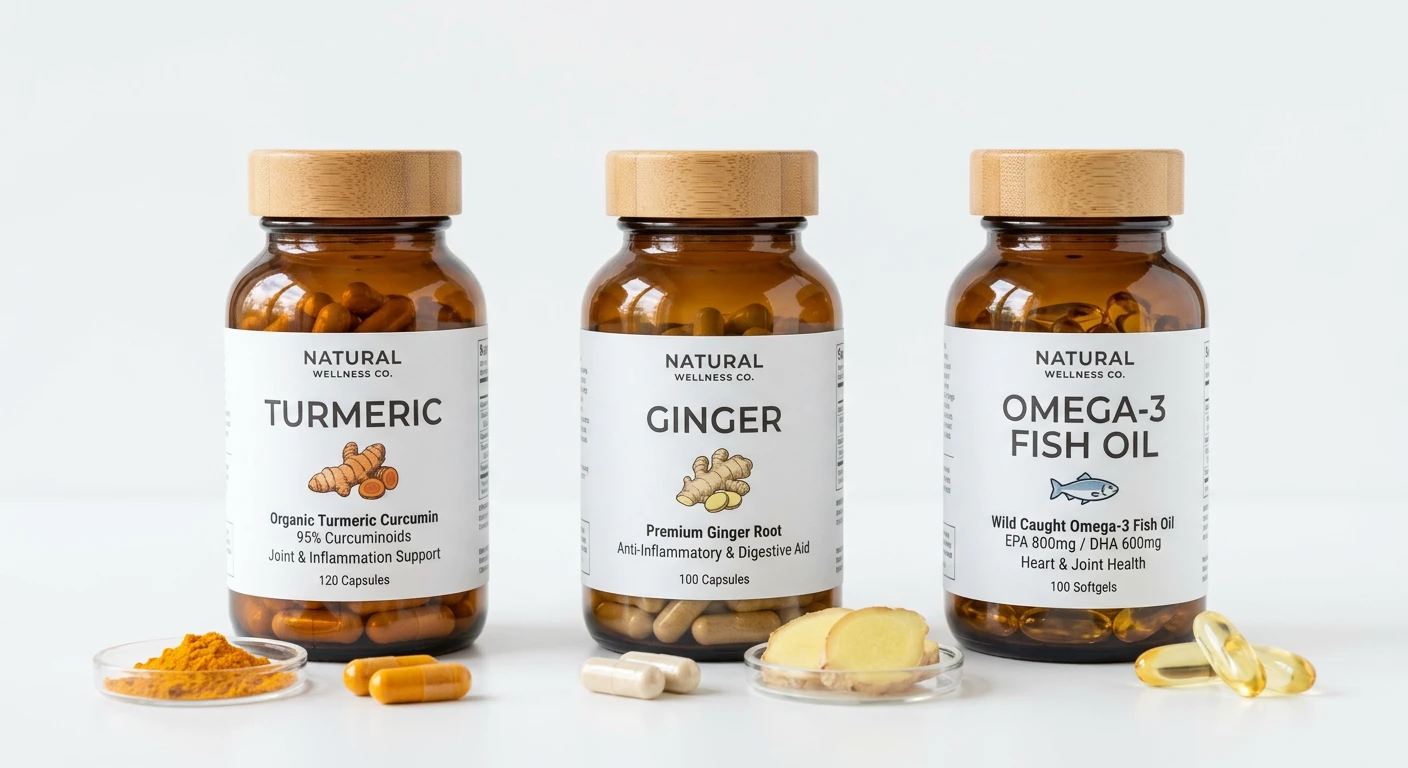
Understanding Chronic Inflammation — And Why It's Different From an Injury
Acute inflammation — the swelling and redness around a sprained ankle — is a healthy, self-limiting immune response that resolves within days. Chronic, low-grade inflammation is a fundamentally different phenomenon: a persistent, sub-clinical immune activation that can run for years without an obvious injury or infection, quietly driven by excess visceral fat, chronic psychological stress, poor sleep, a pro-inflammatory diet, and age-related cellular senescence.
At the molecular level, chronic inflammation centers on NF-κB (nuclear factor kappa B), a transcription factor that, once persistently activated, drives the continuous production of pro-inflammatory cytokines — TNF-α, IL-1β, and IL-6 — into systemic circulation. These circulating cytokines are not confined to a single tissue: elevated systemic cytokine levels are directly implicated in joint cartilage degradation and stiffness, blood vessel wall dysfunction, insulin resistance, and — via cytokine signaling across the blood-brain barrier and microglial activation — cognitive fog and accelerated age-related cognitive decline.
This stack targets chronic inflammation at multiple distinct points along this cascade — transcriptional (NF-κB), enzymatic (COX-1/2, 5-LOX), resolution-phase (specialized pro-resolving mediators), and cellular (mast cells, senescent cells) — because no single compound addresses every mechanism. Combining agents with complementary, non-redundant mechanisms produces broader pathway coverage than maximizing the dose of any one ingredient alone.
The Anti-Inflammatory Stack 2026: Curcumin (500–1,000mg, enhanced absorption) + Omega-3 Fish Oil (2,000–3,000mg EPA+DHA) + Boswellia Serrata (300–500mg, AKBA-standardized) + Ginger Root (500–1,000mg) + Quercetin (500–1,000mg, with bromelain). Estimated monthly cost: $82–148.
Stack at a Glance
| # | Supplement | Category | Dose & Timing | Rating |
|---|---|---|---|---|
| #1 | Curcumin (with Piperine or Phospholipid Delivery) NF-κB inhibition, systemic cytokine reduction & joint comfort | Polyphenol (Curcuma longa) | 500–1,000mg curcuminoids (enhanced-absorption formula) With a meal containing fat, morning or midday | ★4.9 |
| #2 | Omega-3 Fish Oil (EPA/DHA) Resolvin/protectin production, triglyceride reduction & cognitive anti-inflammatory support | Marine Fatty Acid | 2,000–3,000mg combined EPA+DHA With meals, split into two doses (morning and evening) to reduce reflux | ★4.8 |
| #3 | Boswellia Serrata (AKBA-Standardized) Leukotriene inhibition, joint comfort & cartilage-preserving activity | Botanical Extract (Indian Frankincense) | 300–500mg standardized to 30%+ boswellic acids (including AKBA) With meals, morning and evening | ★4.7 |
| #4 | Ginger Root Extract COX/LOX dual inhibition, muscle soreness recovery & digestive-inflammatory support | Botanical (Zingiber officinale) | 500–1,000mg standardized extract (or 1–2g dried root equivalent) With meals, morning and/or evening | ★4.6 |
| #5 | Quercetin Mast cell stabilization, antioxidant defense & senescent-cell-associated inflammation reduction | Flavonoid (Mast Cell & Cytokine Modulator) | 500–1,000mg (with bromelain or vitamin C for enhanced absorption) Between meals or with a light snack, split into two doses | ★4.6 |
Curcumin (with Piperine or Phospholipid Delivery)
Curcumin, the primary bioactive polyphenol in turmeric (Curcuma longa), is the foundational supplement in any anti-inflammatory stack because its mechanism of action sits further upstream than nearly any other natural compound studied for chronic inflammation. Chronic, low-grade inflammation — the kind implicated in joint discomfort, cardiovascular risk, cognitive decline, and metabolic dysfunction — is driven largely by the persistent activation of NF-κB, a transcription factor that, once triggered by oxidative stress, poor diet, excess adiposity, or chronic psychological stress, migrates into the cell nucleus and switches on the genes encoding TNF-α, IL-1β, IL-6, and COX-2. Curcumin directly inhibits IκB kinase (IKK), the enzyme required to activate NF-κB, effectively closing the transcriptional gate before pro-inflammatory cytokines are ever produced. This mechanism is supported by a substantial clinical literature: Sahebkar et al.'s 2017 meta-analysis in the Journal of Medicinal Food, pooling 8 randomized controlled trials, found curcumin supplementation produced a statistically significant reduction in serum C-reactive protein — the standard clinical biomarker of systemic inflammation — with the largest effects observed in individuals with elevated baseline CRP. For joint-specific outcomes, a 2014 RCT by Panahi et al. in Phytotherapy Research (n=117, knee osteoarthritis, bioavailability-enhanced curcuminoid formula) found pain and functional improvements statistically comparable to diclofenac, a standard NSAID, but without the gastrointestinal irritation associated with long-term NSAID use. The critical caveat for curcumin supplementation is bioavailability: unmodified curcumin is rapidly glucuronidated and eliminated by the liver, producing minimal detectable blood levels from turmeric spice or basic curcumin powder alone. Enhanced-absorption formulations — piperine (black pepper extract) co-administration, phospholipid complexes like Meriva, or the BCM-95 essential-oil-enhanced extract — are necessary to achieve the blood concentrations used in the clinical trials cited above. Take 500–1,000mg of an enhanced-absorption curcuminoid formula with a fat-containing meal to further support absorption.
Key Features
- Curcumin directly inhibits nuclear factor kappa B (NF-κB) — the master transcription factor that switches on the genes for TNF-α, IL-1β, IL-6, and other pro-inflammatory cytokines — making it the single most upstream anti-inflammatory mechanism in this stack
- A 2017 meta-analysis in the Journal of Medicinal Food (Sahebkar et al., 8 RCTs) found curcumin supplementation significantly reduced serum C-reactive protein (CRP) versus placebo, with larger effects in populations with elevated baseline inflammation
- Also inhibits COX-2 and 5-LOX enzymes — the same inflammatory pathways targeted by NSAIDs — giving curcumin a dual cytokine-suppressing and eicosanoid-modulating mechanism without the GI or cardiovascular risk profile of chronic NSAID use
- Native curcumin has notoriously poor oral bioavailability (rapid glucuronidation in the liver); enhanced formulations — piperine co-administration (Bioperine, up to 2,000% absorption increase), phospholipid complexes (Meriva), or BCM-95 — are required for clinically relevant blood levels
- A 2014 RCT in Phytotherapy Research (Panahi et al., n=117, knee osteoarthritis) found a bioavailability-enhanced curcuminoid formula reduced pain and improved function comparably to diclofenac, with a superior gastrointestinal safety profile
Pros & Cons
Pros:
- +The most upstream and mechanistically comprehensive anti-inflammatory compound in the stack — NF-κB inhibition addresses the root transcriptional driver of chronic inflammation rather than a single downstream pathway
- +Extensive clinical evidence across CRP reduction, osteoarthritis pain and function, and general inflammatory marker improvement, with meta-analytic support rather than isolated small trials
- +Comparable efficacy to NSAIDs for joint pain in head-to-head trials, without the GI ulceration or cardiovascular risk associated with long-term NSAID use
Cons:
- -Absorption is the single biggest variable in efficacy — low-cost, non-enhanced turmeric or curcumin powder without piperine, phospholipid, or nanoparticle delivery produces minimal measurable blood levels and correspondingly weak clinical effect
- -High doses (above 1,000mg curcuminoids daily) may cause mild GI upset in some users, and piperine-containing formulas can increase the absorption (and blood levels) of certain prescription medications — separate dosing from medications by 2+ hours if uncertain
Omega-3 Fish Oil (EPA/DHA)
Omega-3 fish oil occupies a mechanistically distinct and complementary role in the anti-inflammatory stack: where curcumin, boswellia, and ginger primarily inhibit the initiation of inflammatory signaling, EPA and DHA are the direct biosynthetic precursors to specialized pro-resolving mediators (SPMs) — resolvins, protectins, and maresins — a family of lipid signaling molecules discovered by Charles Serhan and colleagues that actively terminate and resolve inflammation once it has been triggered, rather than merely blocking its onset. This "active resolution" paradigm represents a fundamental shift in understanding chronic inflammation: unresolved inflammation, not just excessive inflammation, is now recognized as a primary driver of conditions ranging from cardiovascular disease to joint degeneration to neuroinflammatory cognitive decline. Beyond SPM production, omega-3 fatty acids competitively displace arachidonic acid — an omega-6 fatty acid and the direct precursor to pro-inflammatory prostaglandins and leukotrienes — within cell membrane phospholipids, directly reducing the raw material available for inflammatory eicosanoid synthesis via the same COX and LOX enzymatic pathways that curcumin and boswellia also modulate. The clinical evidence is extensive: a 2021 meta-analysis in Frontiers in Immunology confirmed that omega-3 supplementation significantly reduces circulating TNF-α, IL-6, and CRP across diverse inflammatory conditions, with the most pronounced effects at doses above 2g/day combined EPA+DHA — notably higher than the 250–500mg doses found in many general-health fish oil products. For cognitive and joint-focused anti-inflammatory goals specifically, DHA's role as a structural component of neuronal membranes and its documented influence on microglial activation state make it directly relevant to neuroinflammatory processes implicated in age-related cognitive decline, while EPA's eicosanoid-modulating activity is more directly tied to joint and systemic inflammatory markers. For the 2026 anti-inflammatory stack, target 2,000–3,000mg combined EPA+DHA daily from a triglyceride-form, third-party-tested product, split into two doses with meals.
Key Features
- EPA and DHA are the direct metabolic precursors to specialized pro-resolving mediators (SPMs) — resolvins, protectins, and maresins — signaling molecules that actively terminate inflammation rather than merely blocking its initiation, a distinct and complementary mechanism to curcumin's NF-κB inhibition
- Omega-3s competitively displace arachidonic acid (an omega-6 fatty acid) in cell membrane phospholipids, reducing the substrate available for pro-inflammatory prostaglandin and leukotriene synthesis via the COX and LOX pathways
- A 2021 meta-analysis in Frontiers in Immunology confirmed omega-3 supplementation significantly reduces circulating TNF-α, IL-6, and CRP across multiple inflammatory conditions, with dose-dependent effects most pronounced above 2g/day combined EPA+DHA
- DHA is a critical structural component of neuronal membranes and is directly implicated in modulating microglial activation — the resident immune cells of the brain — connecting omega-3 status to cognitive and neuroinflammatory outcomes
- The modern Western diet's omega-6 to omega-3 ratio (commonly 15:1 to 20:1, versus an evolutionary ratio closer to 1:1 to 4:1) is itself a driver of baseline inflammatory tone — supplementation directly corrects this ratio at the cellular membrane level
Pros & Cons
Pros:
- +Uniquely active resolution mechanism: unlike curcumin, boswellia, and ginger, which primarily inhibit inflammatory pathway activation, omega-3-derived resolvins and protectins actively resolve and clear existing inflammation — a complementary "off switch" that inhibitory compounds alone cannot provide
- +Dual benefit profile spanning systemic inflammation, cardiovascular triglyceride reduction (an FDA-recognized benefit at prescription-strength doses), and cognitive/neuroinflammatory support — the broadest evidence base of any single supplement in this stack
- +Strong dose-response relationship with decades of RCT data across cardiovascular, rheumatologic, and neurological research contexts
Cons:
- -Fishy aftertaste and reflux are common complaints, particularly with ethyl-ester forms or lower-quality oils that have begun to oxidize — enteric-coated softgels or high-quality triglyceride-form oil substantially reduces this
- -Doses above 3g/day combined EPA+DHA may mildly increase bleeding time; use caution or consult a physician if combined with anticoagulant/antiplatelet medications or curcumin (both have mild blood-thinning activity)
Boswellia Serrata (AKBA-Standardized)
Boswellia serrata, the resin extract of the Indian frankincense tree, contributes a mechanistically distinct and clinically important pathway to the anti-inflammatory stack: selective inhibition of 5-lipoxygenase (5-LOX), the enzyme responsible for converting arachidonic acid into leukotrienes — a family of highly potent pro-inflammatory mediators involved in joint inflammation, airway inflammation, and vascular permeability. This is mechanistically distinct from the COX-2/NF-κB axis targeted by curcumin and the eicosanoid-substrate-competition mechanism of omega-3 fatty acids, meaning boswellia closes a specific enzymatic gate that the other two primary stack components do not directly address. The most potent and extensively studied active constituent is 3-O-acetyl-11-keto-β-boswellic acid (AKBA), which demonstrates the strongest 5-LOX inhibitory activity among the various boswellic acids present in the crude resin. The clinical evidence for joint-specific outcomes is consistent and, notably, faster-acting than several other botanicals in this category: a 2020 systematic review and meta-analysis in Phytotherapy Research, pooling 7 randomized controlled trials in osteoarthritis populations, found Boswellia serrata extract produced statistically significant improvements in both pain and functional outcome scores versus placebo, with some individual trials reporting measurable symptom improvement within 5–7 days of initiating supplementation — considerably faster than the 4–8 week timelines typical of curcumin and omega-3's systemic anti-inflammatory effects. Perhaps most clinically significant, preclinical research has found boswellic acids inhibit matrix metalloproteinases (including MMP-3), enzymes responsible for degrading cartilage matrix components — suggesting boswellia may offer cartilage-protective activity, a meaningful distinction from long-term NSAID use, which has been associated in some research with accelerated cartilage matrix breakdown. Because AKBA and total boswellic acid content varies enormously between commercial extracts, select a product explicitly standardized to a guaranteed AKBA percentage or total boswellic acid content of 30% or higher to approximate the material used in supporting clinical trials.
Key Features
- Boswellic acids — particularly 3-O-acetyl-11-keto-β-boswellic acid (AKBA), the most potent and well-studied of the group — selectively inhibit 5-lipoxygenase (5-LOX), the enzyme responsible for converting arachidonic acid into pro-inflammatory leukotrienes, a pathway distinct from the COX pathway targeted by NSAIDs and curcumin
- A 2020 systematic review and meta-analysis in Phytotherapy Research (7 RCTs, osteoarthritis populations) found Boswellia serrata extract produced statistically significant improvements in pain and function scores versus placebo, with effects apparent within as little as 5–7 days in some trials
- Unlike NSAIDs, which can accelerate cartilage matrix degradation with long-term use, boswellic acids have been shown in preclinical research to inhibit cartilage-degrading enzymes (including matrix metalloproteinases like MMP-3), suggesting a cartilage-protective rather than cartilage-neutral or degrading profile
- The leukotriene-inhibiting mechanism is complementary to curcumin's NF-κB/COX-2 inhibition and omega-3's eicosanoid substrate competition — together the stack covers three distinct enzymatic and transcriptional nodes in the inflammatory cascade
- AKBA content varies enormously between commercial extracts (from under 1% to over 30%); standardization to a guaranteed AKBA or total boswellic acid percentage is essential for reproducing clinical trial dosing
Pros & Cons
Pros:
- +One of the faster-acting botanicals in the stack for joint-specific symptoms, with some RCTs reporting measurable improvement within a week — useful for individuals prioritizing near-term joint comfort alongside the longer-timeline systemic benefits of curcumin and omega-3
- +Distinct 5-LOX/leukotriene mechanism fills a gap the other stack components do not directly address, providing broader enzymatic pathway coverage than a curcumin-or-omega-3-only approach
- +Emerging evidence for cartilage-protective rather than merely symptom-masking activity is a meaningful differentiator from long-term NSAID use in joint-focused inflammation management
Cons:
- -Product quality and standardization vary dramatically — low-AKBA, non-standardized "boswellia extract" products are common and unlikely to reproduce the effects seen in clinical trials using 30%+ standardized material
- -Evidence base, while positive, is smaller in total RCT volume than curcumin or omega-3 — appropriate expectations should account for a less extensively replicated literature
Ginger Root Extract
Ginger root (Zingiber officinale) rounds out the enzymatic-inhibition arm of the anti-inflammatory stack with a dual COX/LOX inhibition profile that overlaps with, and reinforces, both curcumin's COX-2 activity and boswellia's 5-LOX activity — while adding a favorable tolerability and safety margin that makes it an accessible addition even for individuals who are more sensitive to stronger anti-inflammatory botanicals or who cannot tolerate NSAIDs. Ginger's bioactive gingerols (found predominantly in fresh ginger) and shogaols (formed as gingerols dehydrate during drying or extended storage) inhibit both the cyclooxygenase (COX-1/COX-2) and lipoxygenase (5-LOX) enzymatic pathways simultaneously — the same two pathways targeted individually by curcumin and boswellia, respectively — giving ginger a genuinely broad but comparatively milder inhibitory profile across the arachidonic acid cascade. The clinical evidence, while more modest in effect size than curcumin or boswellia, is consistent: a 2015 meta-analysis in Arthritis by Bartels et al., pooling 5 randomized controlled trials in osteoarthritis populations, found ginger extract produced a statistically significant reduction in pain compared to placebo, alongside a favorable safety profile relative to pharmaceutical comparators. Ginger's anti-inflammatory relevance extends beyond joint health specifically: a well-designed 2010 RCT in the Journal of Pain by Black et al. (n=74) found that daily ginger supplementation significantly reduced muscle pain and soreness following eccentric, exercise-induced muscle damage compared to placebo — relevant for anyone using this stack partly to manage exercise-related inflammatory recovery rather than joint-specific concerns alone. Ginger also demonstrates antioxidant activity, with preclinical research suggesting activation of the Nrf2 pathway — the body's master regulator of endogenous antioxidant enzyme production — providing a secondary, complementary mechanism alongside its direct COX/LOX enzyme inhibition. For the 2026 anti-inflammatory stack, 500–1,000mg of a standardized ginger extract (or 1–2g dried root equivalent) taken with meals provides broad-spectrum pathway support alongside the more targeted, higher-potency curcumin and boswellia components.
Key Features
- Gingerols and shogaols, ginger's primary bioactive compounds, inhibit both COX-1/COX-2 and 5-LOX enzymatic pathways simultaneously — a dual-inhibition profile shared with few single-ingredient natural compounds, giving ginger broad but comparatively mild pathway coverage
- A 2015 meta-analysis in Arthritis (Bartels et al., 5 RCTs, osteoarthritis) found ginger extract produced a statistically significant, though modest, reduction in pain compared to placebo, with effect sizes generally smaller than curcumin or boswellia but a very favorable safety and tolerability profile
- A well-documented 2010 RCT in the Journal of Pain (Black et al., n=74, exercise-induced muscle damage) found daily ginger supplementation significantly reduced muscle pain following eccentric exercise versus placebo — relevant for exercise-related inflammatory soreness beyond joint-specific applications
- Ginger additionally exerts antioxidant activity by upregulating the body's endogenous antioxidant response (via Nrf2 pathway activation in preclinical models), providing a secondary mechanism that complements its direct enzyme-inhibiting anti-inflammatory activity
- Long history of use for gastrointestinal comfort and nausea, meaning ginger provides a favorable digestive-tolerability profile that pairs well with fat-soluble stack components like curcumin and fish oil that are best absorbed with meals
Pros & Cons
Pros:
- +Excellent safety and tolerability profile, including in populations who cannot tolerate NSAIDs or who are sensitive to stronger botanicals — an accessible entry point into anti-inflammatory supplementation
- +Dual COX/LOX inhibition provides some mechanistic overlap and reinforcement with both curcumin (COX-2/NF-κB) and boswellia (5-LOX), functioning as a mild broad-spectrum complement to the stack's more targeted, higher-potency components
- +Documented benefit for exercise-induced muscle soreness broadens ginger's utility beyond joint and systemic inflammation to active recovery contexts
Cons:
- -Effect sizes in clinical trials are generally more modest than curcumin or boswellia for joint-specific outcomes — ginger functions best as a complementary, broad-coverage addition to the stack rather than a primary joint-comfort driver
- -High doses (above 2g dried root equivalent) may increase mild bleeding risk and can cause heartburn or GI upset in sensitive individuals
Quercetin
Quercetin, a flavonoid abundant in onions, apples, and berries, completes the anti-inflammatory stack by addressing two mechanisms that curcumin, omega-3, boswellia, and ginger do not directly target: mast cell stabilization and senescent-cell-associated inflammation. Mast cells and basophils, upon activation, release histamine and a cascade of additional pro-inflammatory mediators; quercetin stabilizes these cells' membranes, reducing mediator release in a manner that dampens both classically allergic inflammatory responses and the lower-grade histamine-related contribution to general systemic inflammatory tone. The clinical evidence for quercetin's general anti-inflammatory activity is meaningful, if more population-dependent than some other stack components: a 2016 systematic review in Nutrients found quercetin supplementation significantly reduced circulating CRP and IL-6 specifically in individuals with elevated baseline inflammation, while effects were more modest in metabolically healthy populations — a pattern consistent with quercetin functioning as an inflammatory-tone normalizer rather than a universal suppressant, and suggesting it may offer the greatest benefit to those with the highest existing inflammatory burden. A newer and increasingly prominent area of quercetin research concerns cellular senescence: as cells age, a subset enters a "senescent" but non-dividing state and begin secreting a chronic pro-inflammatory cocktail of cytokines known as the senescence-associated secretory phenotype (SASP) — a mechanism increasingly implicated in age-related low-grade systemic inflammation ("inflammaging"). Quercetin, particularly in combination with the drug dasatinib in the "D+Q" senolytic protocol studied by Mayo Clinic researchers and others, has shown early evidence of helping clear these senescent cells, though this combination-protocol evidence should be distinguished from quercetin taken alone as a dietary supplement. Quercetin additionally functions as a potent direct antioxidant, scavenging free radicals and reducing the oxidative stress that itself is a trigger for NF-κB activation — creating a mechanistic feedback loop that reinforces curcumin's direct transcriptional inhibition. Because native quercetin has limited oral bioavailability, select a formula combined with bromelain or vitamin C, or a phytosome-complexed form, and take 500–1,000mg daily between meals.
Key Features
- Quercetin stabilizes mast cells and basophils, reducing the release of histamine and other pro-inflammatory mediators — a mechanism that overlaps with allergic-type inflammation but also contributes to general systemic inflammatory tone, distinct from the enzyme-inhibition mechanisms of curcumin, boswellia, and ginger
- A 2016 systematic review in Nutrients confirmed quercetin supplementation significantly reduces circulating inflammatory markers (including CRP and IL-6) in individuals with elevated baseline inflammation, with more modest effects in metabolically healthy populations — consistent with quercetin acting as an inflammatory-tone normalizer rather than a blanket suppressant
- Emerging senolytic research (quercetin combined with dasatinib in the "D+Q" protocol studied by the Mayo Clinic and others) suggests quercetin helps clear senescent ("zombie") cells that secrete a chronic pro-inflammatory signature known as the senescence-associated secretory phenotype (SASP) — an aging-related inflammatory mechanism distinct from acute or diet-driven inflammation
- Potent direct antioxidant activity via free-radical scavenging and upregulation of endogenous antioxidant enzymes, reducing the oxidative stress that itself triggers NF-κB activation — creating mechanistic synergy with curcumin's direct NF-κB inhibition
- Native quercetin has limited oral bioavailability; co-administration with bromelain (a pineapple-derived enzyme) or vitamin C, or use of a phytosome-complexed form, meaningfully improves absorption and blood levels
Pros & Cons
Pros:
- +Addresses inflammatory mechanisms — mast cell/histamine modulation and senescent-cell-associated inflammation — that none of the other four stack components directly target, providing the broadest possible mechanistic coverage across the full stack
- +Particularly relevant for individuals whose inflammatory burden has an allergic, histamine-related, or age-related cellular senescence component, complementing the joint- and systemic-inflammation focus of curcumin, boswellia, and ginger
- +Naturally occurring in a wide variety of foods (onions, apples, berries, capers), meaning supplementation reinforces rather than replaces an already-accessible dietary anti-inflammatory strategy
Cons:
- -Bioavailability without an absorption enhancer (bromelain, vitamin C, or phytosome technology) is relatively poor, similar to unmodified curcumin — plain quercetin dihydrate at low doses may underdeliver relative to clinical trial dosing
- -The senolytic evidence base, while promising, is earlier-stage and derived substantially from combination protocols (with dasatinib) rather than quercetin monotherapy — approach senescence-related claims for quercetin alone with appropriate caution pending more direct human trial data
Morning vs. Evening: The Complete Daily Protocol
All five supplements are best taken with food — several are fat-soluble (curcumin, omega-3) and absorb more efficiently alongside a meal containing dietary fat, while others (boswellia, ginger) are simply better tolerated with food in the stomach. Splitting doses across morning and evening meals also produces steadier blood levels than one large daily dose, which matters most for the shorter-half-life compounds in this stack.
| Time | Supplement | Dose | Notes |
|---|---|---|---|
| Morning (with breakfast) | Curcumin (enhanced-absorption) | 500mg | Take with a fat-containing meal for absorption. |
| Omega-3 Fish Oil | 1,000–1,500mg EPA+DHA | Split daily total across morning/evening to reduce reflux. | |
| Boswellia Serrata | 150–250mg | AKBA-standardized extract, with food. | |
| Ginger Root | 250–500mg | Doubles as digestive support alongside breakfast. | |
| Evening (with dinner) | Curcumin (enhanced-absorption) | 500mg | Second dose maintains steadier blood levels overnight. |
| Omega-3 Fish Oil | 1,000–1,500mg EPA+DHA | With dinner; triglyceride form preferred for absorption. | |
| Boswellia Serrata | 150–250mg | Second dose sustains 5-LOX inhibition through the night. | |
| Quercetin (with bromelain) | 500–1,000mg | Between meals or with a light evening snack. |
Give the full stack 4–8 weeks of consistent daily use before assessing effect — curcumin, omega-3, and quercetin all work through gradual, cumulative mechanisms (cytokine reduction, membrane fatty acid remodeling), while boswellia and ginger may produce noticeable joint-comfort improvement somewhat sooner.
The Physiology of Chronic Inflammation: Five Mechanisms This Stack Addresses
1. NF-κB Transcriptional Activation (Curcumin)
NF-κB is the master switch of the inflammatory response: once activated by oxidative stress, excess visceral fat, or chronic psychological stress, it migrates to the cell nucleus and turns on the genes for TNF-α, IL-1β, IL-6, and COX-2. Curcumin inhibits IκB kinase (IKK), the enzyme required to activate NF-κB — closing the transcriptional gate before pro-inflammatory cytokines are ever produced, the most upstream mechanism in this entire stack.
2. Systemic Cytokine Circulation & Joint Health
Once produced, cytokines like TNF-α and IL-6 circulate systemically and bind receptors in joint synovial tissue, accelerating cartilage matrix breakdown and driving the pain and stiffness of joint inflammation. Boswellia's 5-LOX inhibition and preclinical cartilage-protective activity, alongside curcumin's cytokine-suppressing effect, directly target this joint-specific consequence of systemic inflammation.
3. Eicosanoid Pathway Balance (Omega-3 & Ginger)
Arachidonic acid, an omega-6 fatty acid abundant in Western diets, is the raw material for pro-inflammatory prostaglandins and leukotrienes via the COX and LOX enzymes. Omega-3 fatty acids competitively displace arachidonic acid in cell membranes, while ginger's gingerols and shogaols directly inhibit both the COX and LOX enzymes themselves — together reducing both the substrate and the enzymatic conversion driving this pathway.
4. Active Resolution vs. Passive Inhibition (Omega-3)
Most anti-inflammatory compounds work by inhibiting inflammatory pathway activation. EPA and DHA are unique in this stack for also serving as precursors to resolvins, protectins, and maresins — specialized pro-resolving mediators that actively terminate and clear existing inflammation rather than simply blocking new inflammatory signals, an active resolution mechanism increasingly recognized as essential for fully resolving chronic low-grade inflammation.
5. Neuroinflammation & Cognitive Effects
Circulating pro-inflammatory cytokines can cross or signal across the blood-brain barrier, activating microglia — the brain's resident immune cells — in a process implicated in brain fog and accelerated age-related cognitive decline. DHA is a structural component of neuronal membranes and modulates microglial activation state, while curcumin's antioxidant and NF-κB-inhibiting activity has been studied for its potential to reduce neuroinflammatory markers — connecting this stack's systemic anti-inflammatory action to cognitive protection.
Dietary Synergies & Lifestyle Factors
Supplements amplify an anti-inflammatory diet and lifestyle — they do not replace one. A Mediterranean-style, anti-inflammatory dietary pattern rich in extra-virgin olive oil (a source of the NF-κB-inhibiting compound oleocanthal), fatty fish, colorful vegetables and berries (additional dietary flavonoids alongside supplemental quercetin), nuts, and legumes, while minimizing refined carbohydrates, industrial seed oils high in omega-6, and processed meats, directly lowers the omega-6-to-omega-3 ratio and baseline inflammatory tone that this stack is working to correct.
Beyond diet, several lifestyle factors independently drive or reduce chronic inflammation: visceral adipose tissue is itself metabolically active and secretes pro-inflammatory cytokines directly into circulation, meaning weight management is one of the highest-leverage anti-inflammatory interventions available. Chronic sleep restriction elevates CRP and IL-6 independent of diet; regular moderate exercise (as opposed to chronic overtraining, which can itself elevate inflammatory markers) has a well-documented anti-inflammatory effect over time; and chronic psychological stress sustains cortisol and sympathetic nervous system activation that reinforces NF-κB signaling.
None of the five supplements in this stack can fully compensate for a consistently pro-inflammatory diet, chronic sleep debt, or unmanaged stress — they are most effective, and the clinical trial evidence cited throughout this guide is most applicable, when layered onto a baseline of reasonable dietary and lifestyle habits rather than used as a substitute for them.
Key Clinical Evidence
Curcumin: CRP Reduction and Osteoarthritis Outcomes
Sahebkar et al. (2017, Journal of Medicinal Food, meta-analysis of 8 RCTs): curcumin supplementation significantly reduced serum CRP versus placebo. Panahi et al. (2014, Phytotherapy Research, n=117, knee osteoarthritis): bioavailability-enhanced curcuminoids produced pain and function improvements comparable to diclofenac with a superior GI safety profile.
Research: Sahebkar et al. (2017), J Med Food; Panahi et al. (2014), Phytother Res.
Omega-3: Inflammatory Marker Reduction
A 2021 meta-analysis in Frontiers in Immunology confirmed omega-3 supplementation significantly reduces circulating TNF-α, IL-6, and CRP across inflammatory conditions, with dose-dependent effects most pronounced above 2g/day combined EPA+DHA.
Research: Frontiers in Immunology (2021), meta-analysis.
Boswellia: Osteoarthritis Pain and Function
A 2020 systematic review and meta-analysis in Phytotherapy Research (7 RCTs, osteoarthritis populations) found Boswellia serrata extract produced statistically significant improvements in pain and function versus placebo, with effects apparent within 5–7 days in some trials.
Research: Phytotherapy Research (2020), systematic review.
Ginger: Pain Reduction and Muscle Recovery
Bartels et al. (2015, Arthritis, meta-analysis of 5 RCTs, osteoarthritis): ginger extract produced a statistically significant, modest reduction in pain versus placebo. Black et al. (2010, Journal of Pain, n=74): daily ginger supplementation significantly reduced muscle pain following eccentric, exercise-induced muscle damage.
Research: Bartels et al. (2015), Arthritis; Black et al. (2010), J Pain.
Quercetin: Inflammatory Markers and Cellular Senescence
A 2016 systematic review in Nutrients confirmed quercetin supplementation significantly reduces circulating CRP and IL-6 in individuals with elevated baseline inflammation. Early senolytic research (Mayo Clinic and others) suggests quercetin, particularly in combination protocols, helps clear senescent cells contributing to the senescence-associated secretory phenotype (SASP).
Research: Nutrients (2016), systematic review; Mayo Clinic senolytic research program.
Related Guides & Individual Supplement Reviews
For in-depth brand comparisons, dosage guidance, and product picks for the key supplements in this stack:
Frequently Asked Questions
How is chronic inflammation different from the inflammation I feel after an injury?
Acute inflammation after an injury is a healthy, self-limiting response that resolves in days. Chronic, low-grade inflammation is a persistent, often symptomless immune activation driven by factors like excess visceral fat, chronic stress, poor sleep, and a pro-inflammatory diet — it can run for years, gradually contributing to joint stiffness, cardiovascular risk, insulin resistance, and cognitive fog without ever presenting as an obvious acute flare-up.
How long does this stack take to work?
Within 1–2 weeks: Boswellia and ginger may produce early, measurable joint-comfort improvement in some individuals. 4–8 weeks: Curcumin's cytokine and CRP reduction, omega-3's membrane fatty acid remodeling and resolvin production, and quercetin's inflammatory marker normalization all require sustained daily use to reach their full, clinically meaningful magnitude. Evaluate the complete stack at the 6–8 week mark.
Do I need all five supplements, or can I start with fewer?
If budget or simplicity is a priority, curcumin and omega-3 fish oil have the deepest and broadest clinical evidence base and are the strongest starting point. Boswellia and ginger add joint-specific and faster-acting benefit; quercetin adds the most distinct additional mechanism (mast cell stabilization and senescent-cell-related inflammation) but is reasonable to add after establishing tolerance to the core two.
Can I combine this stack with NSAIDs or prescription anti-inflammatory medication?
Several components of this stack (curcumin, omega-3, ginger) have mild blood-thinning activity that can be additive with each other and with anticoagulant or antiplatelet medications, and curcumin/boswellia can theoretically interact with drugs metabolized through certain liver enzyme pathways. If you take NSAIDs regularly, blood thinners, or any prescription medication, discuss this stack with your physician or pharmacist before combining them, particularly before any planned surgery.
Is diet really as important as the supplements themselves?
Yes — the clinical trials supporting these supplements were largely conducted in participants who were not simultaneously eating a heavily pro-inflammatory diet high in refined carbohydrates, industrial seed oils, and processed meats. A Mediterranean-style anti-inflammatory diet lowers baseline inflammatory tone and the omega-6-to-omega-3 ratio in a way that directly amplifies, rather than competes with, everything this stack is designed to do. Supplements work best as an addition to, not a replacement for, sound dietary and lifestyle fundamentals.
Disclaimer: As an Amazon Associate, we earn from qualifying purchases at no extra cost to you. The information provided is for educational purposes only and is not medical advice. These supplements support the body's normal inflammatory response and joint comfort but do not prevent, treat, or cure arthritis, autoimmune disease, or any other medical condition. Curcumin, omega-3, and ginger have mild blood-thinning activity — consult a physician before combining with anticoagulant or antiplatelet medications or before surgery. Consult a qualified healthcare provider before starting any supplement regimen, especially if pregnant, breastfeeding, or taking prescription medications.