Beginner's Guide to Adaptogens
How Ashwagandha, Rhodiola, Ginseng, Holy Basil, and Schisandra help regulate the stress response, sharpen focus, and restore balance — with the mechanisms, clinical research, standardized extracts, and safety guidance you need to use them well
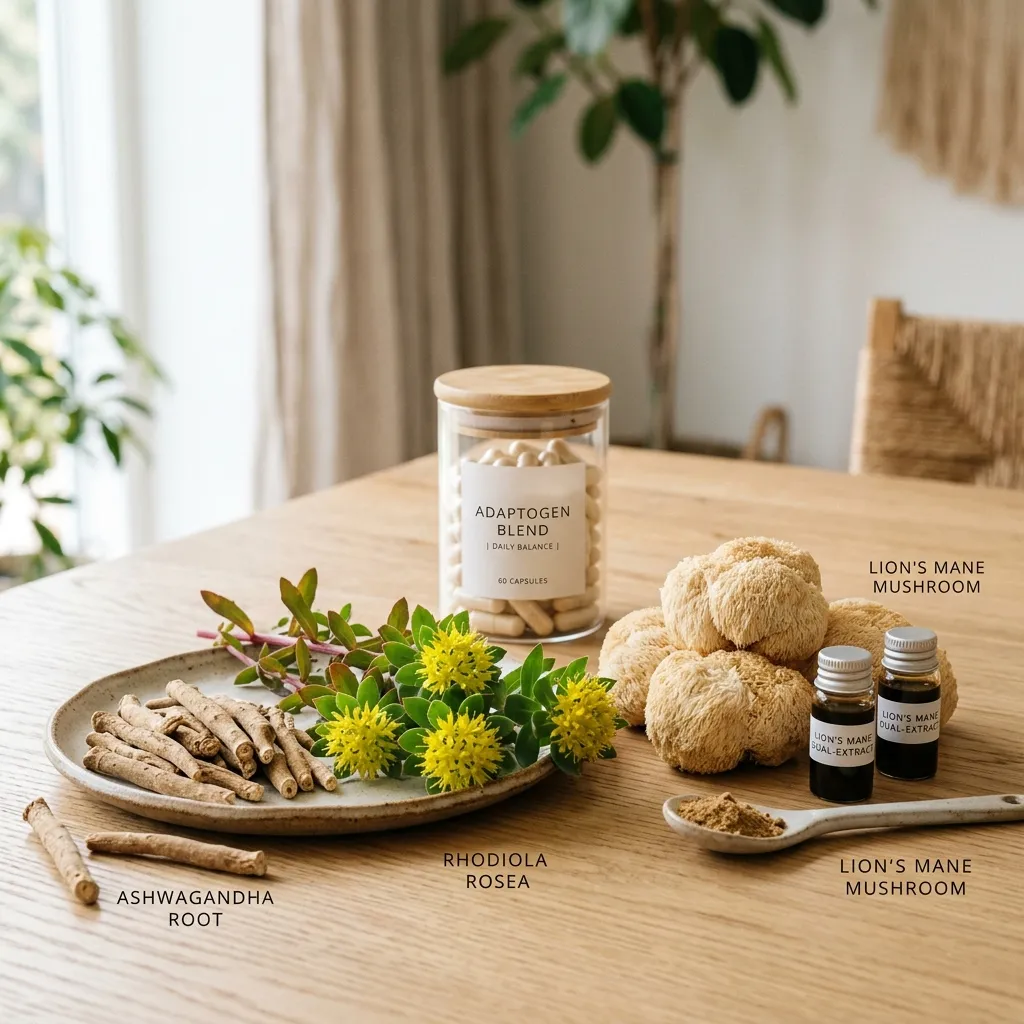
What Are Adaptogens?
Adaptogens are a class of herbs, roots, and mushrooms that increase the body's non-specific resistance to physical, chemical, and biological stress. The term was coined in 1947 by Soviet toxicologist Nikolai Lazarev and developed by Israel Brekhman, who set out to find plant substances that could help soldiers, athletes, and cosmonauts sustain performance under extreme demands. Modern pharmacology has since moved from folklore to mechanism: adaptogens are now understood to act on the systems that govern how we sense and respond to stress.
In a widely cited 2010 review in Pharmaceuticals, Panossian and Wikman described adaptogens as agents that modulate the “stress-response system” — the neuroendocrine-immune network that includes the hypothalamic-pituitary-adrenal (HPA) axis, the sympathetic-adrenal system, and stress-activated signaling molecules such as cortisol, nitric oxide, and heat shock proteins (Hsp70). Rather than pushing a single pathway up or down, adaptogens appear to blunt an exaggerated stress response while supporting recovery — a biphasic, hormetic profile in which a mild, beneficial stimulus of stress-defense pathways leaves the organism more resilient to later challenges.
The Three Classic Criteria for an Adaptogen:
- Non-toxic — safe at normal therapeutic doses with minimal disruption to normal physiology
- Non-specific — increases resistance to a broad range of stressors, not one organ or disease
- Normalizing — pushes dysregulated functions back toward homeostasis, whether over- or under-active
Honest caveat: “adaptogen” is a pharmacological concept, not a regulatory category. Evidence quality varies widely by herb, and the strongest data exist for Ashwagandha and Rhodiola.
How Adaptogens Work: The Science of Stress Resilience
To understand why adaptogens matter, it helps to understand what chronic stress does to the body. The mechanisms below explain most of the clinical effects reported in the research.
HPA Axis Regulation and Cortisol
When you perceive a threat, the hypothalamus releases corticotropin-releasing hormone (CRH), prompting the pituitary to release ACTH, which signals the adrenal glands to produce cortisol. In acute stress this is adaptive. Under chronic stress, however, the axis can become dysregulated — with persistently elevated cortisol, a blunted diurnal rhythm, or impaired negative feedback. Sustained hypercortisolemia is associated with disrupted sleep, visceral fat gain, impaired memory (via hippocampal effects), immune suppression, and mood disturbance. Several adaptogens — most robustly Ashwagandha — have been shown in randomized controlled trials to lower serum cortisol and perceived stress scores.
Stress-Activated Protein Kinase (JNK) and Cortisol Signaling
Panossian's work on Rhodiola and Eleutherococcus suggests adaptogens modulate stress-mediated signaling — including downregulation of stress-activated protein kinase (JNK) and its upstream mediators — which dampens excessive cortisol and inflammatory cytokine output while preserving the ability to mount a normal response.
GABAergic and Monoaminergic Modulation
Withanolides in Ashwagandha and other constituents appear to interact with GABA-A receptors, supporting a calming, anxiolytic effect. Rhodiola's salidroside and rosavins influence serotonin, dopamine, and norepinephrine turnover — a proposed basis for its effects on mental fatigue and mood.
Mitochondrial Efficiency and Antioxidant Defense
Adaptogens such as Rhodiola, Schisandra, and Ginseng have been shown in preclinical and some human studies to support ATP production and to upregulate endogenous antioxidant enzymes, reducing oxidative damage during physical and mental exertion. This is the proposed basis for their anti-fatigue and endurance effects.
Neuroprotection and Immune Modulation
Multiple adaptogens show anti-inflammatory activity (reduced NF-κB signaling, lower CRP and IL-6 in some trials) and support neuronal resilience. Because cortisol is immunosuppressive, tempering the stress response also helps preserve immune function — a link explored in our Immune Defense Guide 2026.
The Five Foundational Adaptogens
Each herb below has a distinct profile. Ashwagandha tends to calm and support sleep, Rhodiola energizes and fights mental fatigue, Panax Ginseng supports energy and cognition, Holy Basil is a gentle everyday stress balancer, and Schisandra supports endurance and liver detoxification pathways.
1. Ashwagandha (Withania somnifera) — The Calming Adaptogen
Best for: chronic stress, anxiety, sleep quality, cortisol, and recovery
Ashwagandha has been used in Ayurvedic medicine for over 3,000 years and is the most clinically studied adaptogen. Its principal bioactives are the withanolides (notably withaferin A and withanolide A), which modulate GABAergic signaling, reduce HPA axis activity, and exert anti-inflammatory effects.
Research Support:
- Cortisol and Perceived Stress: In a double-blind, placebo-controlled trial of 64 chronically stressed adults (Chandrasekhar et al., Indian Journal of Psychological Medicine, 2012), 300mg of high-concentration full-spectrum root extract taken twice daily for 60 days reduced serum cortisol by roughly 28% and produced significantly greater reductions in Perceived Stress Scale scores than placebo.
- Sleep: A 2019 randomized trial of Shoden extract (Langade et al., Cureus) in adults with insomnia reported significant improvements in sleep onset latency, total sleep time, and sleep efficiency versus placebo. A 2020 meta-analysis found a small-to-moderate overall benefit on sleep, strongest in people with insomnia and at doses of 600mg/day or more.
- Anxiety: A 2014 systematic review in the Journal of Alternative and Complementary Medicine (Pratte et al.) concluded that the five human trials reviewed showed Ashwagandha outperforming placebo on anxiety and stress outcome measures, while noting small sample sizes and methodological limitations.
- Strength and Recovery: A 2015 RCT (Wankhede et al., Journal of the International Society of Sports Nutrition) in resistance-trained men found 600mg/day for 8 weeks improved muscle strength and size gains and lowered exercise-induced muscle damage markers versus placebo.
Recommended Standardized Extracts:
- • KSM-66® — full-spectrum root-only extract standardized to at least 5% withanolides; the most widely studied branded form, typically 300mg twice daily or 600mg total
- • Shoden® — standardized to 35% withanolide glycosides (a high-potency extract); studied at 120–240mg once daily, with sleep and cortisol data
- • Sensoril® — root-and-leaf extract standardized to approximately 10% withanolide glycosides; studied at 125–250mg twice daily and often more sedating
Typical dose: 300–600mg of standardized root extract daily (branded extract doses vary — follow the studied dose for your product).
Best taken: With food. Evening dosing suits those targeting sleep; morning or split dosing suits daytime stress.
Cautions: Avoid during pregnancy. Rare cases of liver injury have been reported — stop and seek care for jaundice, dark urine, or persistent nausea. May increase thyroid hormone levels (relevant for hyperthyroidism or thyroid medication) and may add to the effect of sedatives, immunosuppressants, and diabetes or blood pressure medications.
2. Rhodiola Rosea (Golden Root) — The Energizing Adaptogen
Best for: mental fatigue, burnout, focus under pressure, and physical endurance
Native to the cold, high-altitude regions of Scandinavia, Siberia, and the Arctic, Rhodiola rosea was a mainstay of Russian and Scandinavian folk medicine and the subject of extensive Soviet-era research. Its key constituents are the rosavins (rosavin, rosarin, rosin — unique to R. rosea) and salidroside, which influence monoamine neurotransmitters, opioid peptides, and the stress-activated JNK pathway.
Research Support:
- Fatigue in Stressed Workers: A double-blind, placebo-controlled trial of 56 physicians on night duty (Darbinyan et al., Phytomedicine, 2000) found that a low dose of a Rhodiola extract (SHR-5) improved performance on complex perceptual and cognitive tests, with a clear reduction in fatigue versus placebo.
- Stress-Related Burnout: A 2009 randomized trial (Olsson et al., Planta Medica) in people with stress-related fatigue found that 576mg/day of SHR-5 for 28 days significantly improved attention and reduced cortisol response, with improvements in self-reported fatigue.
- Systematic Review: Systematic reviews (Hung et al., Phytomedicine, 2011; Ishaque et al., BMC Complementary and Alternative Medicine, 2012) concluded there is some evidence that Rhodiola may reduce fatigue, though the authors called for larger, better-designed trials.
- Mood: A small randomized trial (Darbinyan et al., Nordic Journal of Psychiatry, 2007) reported improvements in mild-to-moderate depressive symptoms with Rhodiola extract; evidence remains preliminary and is not a substitute for clinical care.
Recommended Standardized Extracts:
- • 3% rosavins + 1% salidroside — the classic ratio found in natural R. rosea root; a profile that also confirms the correct species
- • SHR-5 — the branded extract used in most Scandinavian clinical trials (standardized to roughly 3% rosavins and 0.8–1% salidroside)
- • Avoid products listing only salidroside — salidroside occurs in other Rhodiola species, so a rosavin content is the marker of true R. rosea
Typical dose: 200–600mg of standardized extract daily; start at 100–200mg and increase gradually.
Best taken: Morning, on an empty stomach or before lunch. Rhodiola can be stimulating, so avoid taking it late in the day.
Cautions: May cause jitteriness, dry mouth, or vivid dreams. Use caution with bipolar disorder (risk of triggering agitation or mania), and consult a clinician if taking antidepressants or stimulants.
3. Panax Ginseng — The Energy and Cognition Adaptogen
Best for: energy, working memory, mental performance, and physical stamina
Asian ginseng (Panax ginseng) has been valued in traditional Chinese and Korean medicine for more than two millennia. Its main actives are the ginsenosides (Rb1, Rg1, Rg3, and others), which influence nitric oxide signaling, glucose metabolism, HPA axis feedback, and neuronal energy metabolism. American ginseng (Panax quinquefolius) is a related, generally “cooler” species with a higher proportion of Rb1 ginsenosides and distinct evidence for postprandial glucose and fatigue.
Research Support:
- Cognition: A double-blind, placebo-controlled crossover trial (Reay et al., Journal of Psychopharmacology, 2005) found that 200mg of Panax ginseng improved performance on serial-subtraction tasks and reduced subjective mental fatigue during sustained cognitive demand; a 2010 follow-up reported similar effects on fatigue and blood glucose.
- Cancer-Related Fatigue: A 2013 randomized trial (Barton et al., Journal of the National Cancer Institute) found that 2,000mg/day of American ginseng for 8 weeks improved cancer-related fatigue versus placebo.
- Systematic Review of Cognition: A 2010 systematic review (Geng et al., Journal of Clinical Pharmacy and Therapeutics) concluded that ginseng shows promise for cognitive performance but that evidence in healthy adults is mixed and limited by short trials.
- Blood Glucose: Vuksan et al. found in a series of trials that American ginseng taken shortly before a glucose load reduced postprandial glycemia in both healthy and type 2 diabetic participants.
Recommended Standardized Extracts:
- • Standardized to 4–7% total ginsenosides — the typical range in clinical products
- • G115 — a well-studied standardized P. ginseng extract (4% ginsenosides) used in many European trials
- • Korean Red Ginseng (steamed root) — enriched in rare ginsenosides such as Rg3; look for a clearly stated age (6-year root) and ginsenoside content
- • COLD-fX® — a proprietary extract of P. quinquefolius studied for immune and respiratory outcomes
Typical dose: 200–400mg of standardized P. ginseng extract daily; 1–3g of ground root; American ginseng is typically studied at 200–2,000mg.
Best taken: Morning or early afternoon — ginseng can interfere with sleep. Consider 2–3 weeks on, 1–2 weeks off.
Cautions: Can lower blood glucose (adjust diabetes medications under supervision), may reduce the effect of warfarin, and can interact with MAOIs and stimulants. May cause insomnia, headache, or elevated blood pressure in sensitive individuals.
4. Holy Basil / Tulsi (Ocimum tenuiflorum) — The Everyday Balancer
Best for: mild everyday stress, mood, blood sugar balance, and gentle daily use
Revered in India as the “Queen of Herbs,” Tulsi has been used for millennia as a daily tonic. Its bioactives include the phenolic compounds eugenol, rosmarinic acid, and ursolic acid, plus flavonoids such as apigenin. These compounds contribute to anti-inflammatory, antioxidant, and cortisol-modulating effects, and animal studies show adaptogenic activity against physical and chemical stressors.
Research Support:
- Systematic Review: A 2017 systematic review in Evidence-Based Complementary and Alternative Medicine (Jamshidi & Cohen) examined 24 human studies and concluded that Tulsi appears to have beneficial effects on metabolic, immune, and psychological stress parameters, while noting that most studies were small and of limited quality.
- Stress and Cognition: An 8-week randomized trial (Saxena et al., 2012) of Ocimum sanctum extract found significant reductions in self-reported stress, sleep problems, and forgetfulness versus placebo, with mild side effects.
- Glycemic Control: Small clinical trials suggest reductions in fasting and postprandial glucose with Tulsi leaf extract; the effect is modest and should not replace diabetes care.
Recommended Forms:
- • OciBest® — a standardized extract of Ocimum sanctum used in stress-focused clinical work
- • Extracts standardized to ursolic acid (commonly 2% or higher) — a measurable marker compound
- • Tulsi tea — 2–3 cups daily is a gentle option and the traditional preparation, though far less concentrated than capsules
Typical dose: 300–600mg of standardized leaf extract daily, up to 1,200mg in some trials; or 2–3 cups of tea.
Cautions: May slow blood clotting and lower blood sugar; use caution with anticoagulants, diabetes medications, and before surgery. Animal studies raise fertility concerns, so avoid when trying to conceive, and avoid during pregnancy and breastfeeding.
5. Schisandra Berry (Schisandra chinensis) — The Five-Flavor Endurance Berry
Best for: mental stamina, physical endurance, and liver and antioxidant support
Known in Chinese medicine as wu wei zi (“five-flavor fruit”) because it is sweet, sour, salty, bitter, and pungent, Schisandra was among the plants Soviet researchers studied as a stimulant of stamina and concentration. Its distinctive constituents are the dibenzocyclooctadiene lignans (schisandrin A, B, and C, gomisin A), which upregulate antioxidant enzymes, support the liver's detoxification pathways, and protect against oxidative stress.
Research Support:
- Pharmacology Review: Panossian and Wikman (Phytomedicine, 2008) reviewed the pharmacology of Schisandra chinensis, describing effects on physical work capacity, mental performance, and the stress-response system, along with hepatoprotective activity.
- Mental and Physical Performance: Small human studies report improved attention, accuracy, and endurance in healthy adults, and reduced fatigue under demanding workloads; the human evidence is smaller and older than for Ashwagandha or Rhodiola.
- Liver Support: Schisandra lignans have been used in China to lower elevated liver enzymes, and animal and small clinical data support a hepatoprotective role, but robust modern RCTs are still needed.
Recommended Forms:
- • Berry extracts standardized to at least 9% schisandrins (lignans)
- • Whole dried berry powder — traditional, typically 1.5–6g daily
- • Tincture or tea — a milder option for beginners
Typical dose: 500–2,000mg of standardized berry extract daily (or 1.5–6g of powder), taken in the morning or early afternoon.
Cautions: May cause heartburn or stomach upset. Schisandra can inhibit CYP3A4 and P-glycoprotein, potentially raising blood levels of drugs such as tacrolimus and certain statins — consult a pharmacist if you take narrow-therapeutic-index drugs. Avoid during pregnancy.
Adaptogen Comparison at a Glance
| Adaptogen | Primary Effect | Key Actives | Typical Dose | Timing |
|---|---|---|---|---|
| Ashwagandha | Calming; lowers cortisol; sleep | Withanolides | 300–600mg | Evening or split |
| Rhodiola Rosea | Energizing; anti-fatigue; focus | Rosavins, salidroside | 200–600mg | Morning |
| Panax Ginseng | Energy; cognition; stamina | Ginsenosides | 200–400mg | Morning / early afternoon |
| Holy Basil (Tulsi) | Gentle stress balance; mood | Eugenol, ursolic acid | 300–600mg or tea | Any time |
| Schisandra | Endurance; liver and antioxidant support | Schisandrins (lignans) | 500–2,000mg | Morning / early afternoon |
Practical Guidelines: How to Take Adaptogens Safely and Effectively
Adaptogens are not stimulants or sedatives that work in an hour. Most clinical benefits appear after consistent use, so patience and good technique matter more than high doses.
How to Take Them
- • Start low, go slow. Begin with the lowest studied dose for 1–2 weeks, then increase if needed.
- • Be consistent. Effects on cortisol, sleep, and fatigue in clinical trials generally emerged after 4–8 weeks of daily use, though Rhodiola and Ginseng can show effects sooner.
- • Buy standardized extracts. Choose products that state the plant part, extract ratio, and marker compounds, and look for third-party testing (USP, NSF, ConsumerLab) to guard against adulteration and contamination.
- • Match timing to the herb. Stimulating adaptogens (Rhodiola, Ginseng, Schisandra) belong in the morning; calming ones (Ashwagandha) can be taken in the evening.
- • Track your response. Keep a simple log of sleep, mood, energy, and stress for a few weeks to judge whether a herb is helping.
Cycling: Why and How
Long-term human safety and tolerance data are limited for most adaptogens, and some practitioners recommend periodic breaks to reassess whether the herb is still needed. Cycling is a practical precaution rather than a rule proven in trials. Common approaches:
- • Ashwagandha: 8–12 weeks on, then a 1–2 week break (most trials last 8–12 weeks).
- • Rhodiola: 6–8 weeks on, 2 weeks off, or use only during demanding periods.
- • Ginseng: 2–3 weeks on, 1–2 weeks off, or 3 months on and 1 month off.
- • Holy Basil and Schisandra: gentler; many people use them daily, with an occasional break to reassess.
Stacking: Sensible Combinations
Introduce one adaptogen at a time so you can identify what each does for you before combining. Once you know how you respond, consider these pairings:
- • Calm Focus (morning + evening): Rhodiola in the morning for energy and focus, Ashwagandha in the evening to lower cortisol and support sleep.
- • Burnout Recovery: Ashwagandha + Holy Basil for daytime stress and mood balance, with magnesium glycinate at night.
- • Cognitive Performance: Panax Ginseng or Rhodiola with L-theanine and caffeine — see our Focus & Productivity Supplement Stack.
- • Athletic Endurance and Recovery: Schisandra or Rhodiola pre-training, Ashwagandha in the evening, alongside a solid recovery routine.
Avoid stacking multiple stimulating adaptogens (e.g., Rhodiola + Ginseng + caffeine) until you know your tolerance.
Interactions and Who Should Avoid Adaptogens
- • Pregnancy and breastfeeding: Avoid all five herbs unless a clinician specifically approves them; safety data are insufficient.
- • Blood thinners (warfarin, aspirin, clopidogrel): Ginseng and Holy Basil may alter clotting; monitor INR closely if used.
- • Diabetes medications: Ginseng, Holy Basil, and Ashwagandha may lower blood glucose; risk of hypoglycemia with insulin or sulfonylureas.
- • Blood pressure medications: Ashwagandha may lower blood pressure; Ginseng can raise or lower it.
- • Thyroid conditions or thyroid medication: Ashwagandha can raise T3/T4; avoid with hyperthyroidism unless supervised.
- • Antidepressants, MAOIs, and mood disorders: Rhodiola and Ginseng may interact; avoid Rhodiola in bipolar disorder.
- • Sedatives, benzodiazepines, and sleep aids: Ashwagandha may add to sedation.
- • Immunosuppressants and autoimmune disease: Ashwagandha and Ginseng can stimulate immune activity; consult your specialist.
- • CYP3A4/P-gp substrate drugs (tacrolimus, certain statins, cancer drugs): Schisandra may raise drug levels.
- • Surgery: Stop adaptogens at least 2 weeks before scheduled surgery unless advised otherwise.
- • Liver disease: Use Ashwagandha with caution and stop at any sign of liver injury.
A Beginner's Starter Plan
If you are new to adaptogens, this simple 8-week approach lets you learn how you respond before adding complexity.
| Weeks | Action | What to Watch |
|---|---|---|
| 1–2 | Choose one herb matching your main goal (stress/sleep → Ashwagandha; fatigue/focus → Rhodiola). Take a low dose with food. | Digestive comfort, sleep changes, jitteriness |
| 3–6 | Move to the full studied dose of a standardized extract. Keep timing consistent. | Perceived stress, energy, mood, sleep quality |
| 7–8 | Reassess. If beneficial, continue or add a complementary herb; otherwise stop. | Compare with your baseline log |
Adaptogens work best alongside the fundamentals: 7–9 hours of sleep, regular exercise, and a nutrient-dense diet. See our Stress Management Supplement Stack 2026 and Advanced Sleep Optimization Guide 2026 for a fuller approach.
Related Supplement Guides
Best Ashwagandha Supplements 2026
KSM-66, Shoden & Sensoril extracts compared
Best Rhodiola Rosea Supplements 2026
Rosavin & salidroside standardized extracts
Best Ginseng Supplements 2026
Panax and American ginseng reviewed
Stress Management Supplement Stack 2026
A full protocol for cortisol and resilience
Immune Defense Guide 2026
How stress and cortisol shape immunity
Supplement Interaction Checker
Check your stack for known interactions
Medical Disclaimer
This guide is for educational purposes only and does not constitute medical advice. It is not a diagnosis or treatment for anxiety, depression, insomnia, or any other medical condition. Individual responses to supplements vary based on health status, medications, and genetics. Consult a qualified healthcare provider before beginning a new supplement regimen, especially if you are pregnant or breastfeeding, have an autoimmune, thyroid, liver, or mood disorder, or take prescription medications. Statements have not been evaluated by the FDA. Some links on this page are affiliate links; SupliCore may earn a commission on qualifying purchases at no additional cost to you.