Hangover Prevention & Recovery Supplement Stack 2026
The 5 most research-supported supplements to accelerate alcohol clearance, protect the liver, combat acetaldehyde toxicity, and restore hydration — featuring Dihydromyricetin (DHM), N-Acetyl Cysteine (NAC), Milk Thistle, Electrolytes, and Ginger
The Science of a Hangover — Far More Than Dehydration
For decades, popular culture has treated hangovers as a simple case of dehydration. While losing fluids certainly contributes to next-day thirst and a headache, medical science has revealed that a true hangover is a complex, multi-system metabolic event. It is driven by three primary biochemical processes: acetaldehyde toxicity, neurotransmitter rebound/withdrawal, and acute inflammatory cytokine release.
When you drink, your liver converts ethanol into acetaldehyde, a highly toxic carcinogen that is up to 30 times more damaging than alcohol itself. If your liver\'s antioxidant reserves (primarily glutathione) are depleted, acetaldehyde accumulates in systemic circulation, causing severe oxidative stress, headaches, rapid heart rate, and cognitive fog. Concurrently, alcohol artificially boosts the brain\'s primary inhibitory neurotransmitter (GABA) and blocks the excitatory receptor (NMDA). When alcohol is cleared, the brain suffers a rebound: glutamate spikes and GABA drops, causing next-day "hangxiety," sensory overload, and sleep disruption. Finally, alcohol damages the gut barrier, releasing inflammatory endotoxins into circulation that trigger an immune response closely mimicking the symptoms of a viral infection.
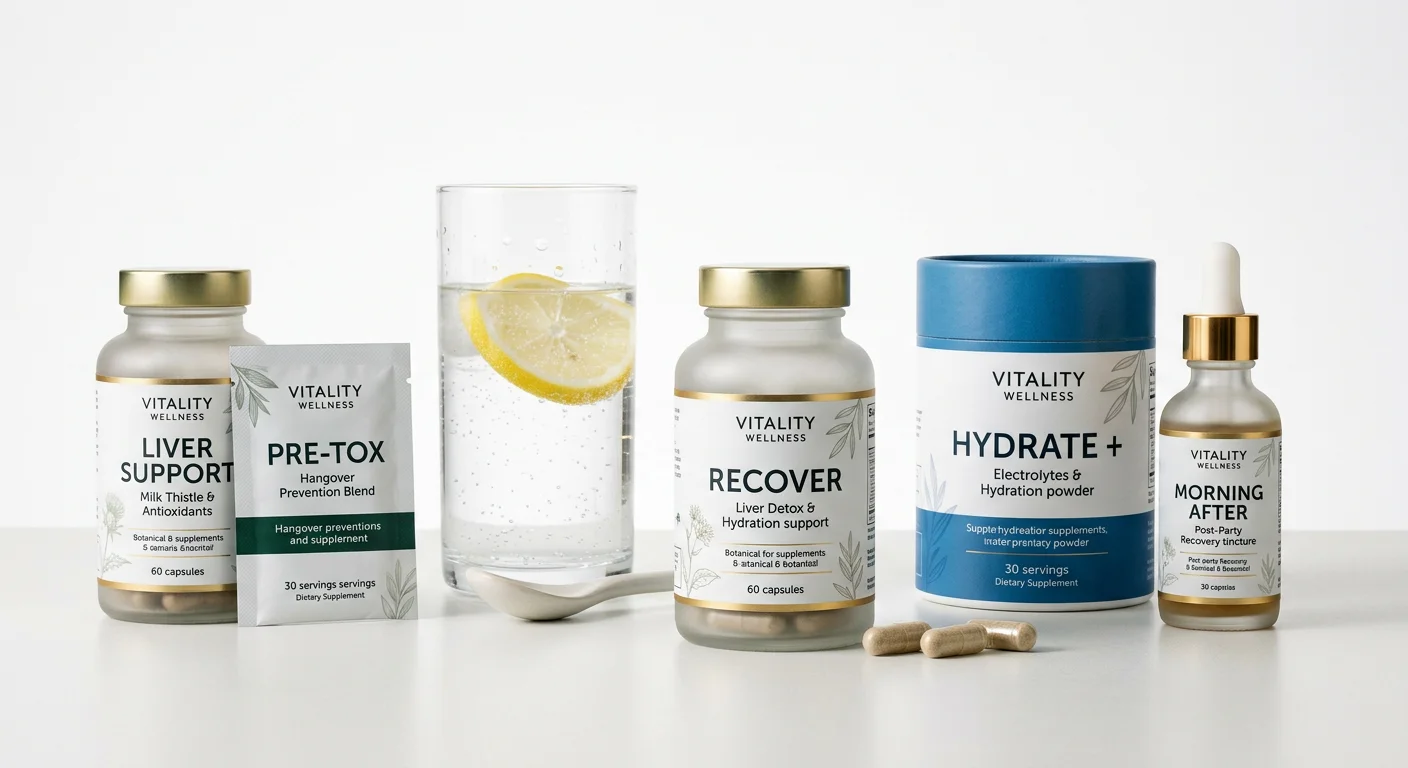
A single "cure" cannot address all of these pathways. This stack is carefully engineered to target each distinct mechanism with zero redundancy: NAC protects liver cells and boots glutathione before drinking, DHM upregulates liver clearance enzymes and calms GABA rebound before bed, Milk Thistle stabilizes liver membranes, Electrolytes restore hydration and B-vitamin cofactors, and Ginger blocks gut-brain serotonin pathways to eliminate nausea.
The Hangover Stack 2026: Pre-drinking: NAC (600–1,200mg) + Milk Thistle (150–300mg) + Ginger (500mg). Post-drinking (before sleep): DHM (300–1,200mg) + 1 serving of Electrolyte Powder in 16oz water. Morning-after: Ginger (500mg) + 1 serving of Electrolytes in 16oz water. Estimated monthly cost: $60–100.
Stack at a Glance
| # | Supplement | Category | Dose & Timing | Rating |
|---|---|---|---|---|
| #1 | Dihydromyricetin (DHM) Accelerating acetaldehyde clearance, blocking alcohol-GABA binding & preventing rebound hyperexcitation | Flavonoid / Alcohol Antagonist & Metabolic Catalyst | 300–1,200mg (doses typically scaled to amount of alcohol consumed) Take immediately after your last drink or right before sleep; can also be taken during drinking | ★4.9 |
| #2 | N-Acetyl Cysteine (NAC) Restoring hepatic glutathione reserves and protecting hepatocytes from acetaldehyde-induced lipid peroxidation | Amino Acid Derivative / Glutathione Precursor & Hepatoprotector | 600–1,200mg (standard single capsule is typically 600mg) MUST be taken 30–60 minutes BEFORE consuming alcohol; NEVER take NAC after or during drinking | ★4.8 |
| #3 | Milk Thistle (Silymarin) Hepatocyte membrane stabilization, protein synthesis upregulation & long-term liver cellular repair | Botanical Extract / Hepatoprotectant & Membrane Stabilizer | 150–300mg (standardized to 80% silymarin content) Take either with NAC before drinking, or with meals daily for ongoing liver support | ★4.7 |
| #4 | Electrolyte & Hydration Complex Counteracting alcohol-induced diuresis, restoring fluid balance, and supplying metabolic enzyme cofactors | Essential Minerals & Hydration Coagents | 1 serving in 16–24oz of water (delivering roughly 500-1,000mg Sodium, 200-400mg Potassium, and 100-200mg Magnesium) Take 1 serving with 16oz of water before sleeping, and another serving the next morning | ★4.8 |
| #5 | Ginger Root (Gingerols) Targeting alcohol-induced gastritis, blocking serotonin-induced nausea pathways & settling the stomach | Botanical Carminative & Antiemetic / 5-HT3 Receptor Antagonist | 500–1,000mg of standardized ginger extract or whole root powder Take 1 dose before drinking, and 1 dose the next morning with your electrolyte water | ★4.6 |
Dihydromyricetin (DHM)
Best for: Accelerating acetaldehyde clearance, blocking alcohol-GABA binding & preventing rebound hyperexcitation
Detailed Mechanism & Science
Dihydromyricetin (DHM) anchors the hangover prevention stack because it is the only supplement in existence that addresses the two primary physiological drivers of hangover symptoms simultaneously: neurotransmitter rebound and acetaldehyde toxicity. Mechanistically, alcohol acts as a positive allosteric modulator at GABA_A receptors, enhancing inhibitory signaling in the brain. When alcohol is cleared, the brain is left in a state of GABA under-activity and glutamate over-activity, resulting in the characteristic next-day symptoms of "hangxiety," tremors, light sensitivity, and fitful, non-restorative sleep. In a landmark 2012 study published in the Journal of Neuroscience, Liang et al. discovered that DHM binds with high affinity to the benzodiazepine site of GABA_A receptors, actively blocking alcohol from binding and preventing the compensatory receptor plastic changes that underlie withdrawal and next-day rebound hyperexcitation. Equally important, the study showed that DHM upregulates the expression and activity of alcohol dehydrogenase (ADH) and acetaldehyde dehydrogenase (ALDH) in the liver. These are the two rate-limiting enzymes that convert ethanol into acetaldehyde, and then acetaldehyde into harmless acetate. Acetaldehyde is the highly reactive, mutagenic intermediate of alcohol metabolism that is primarily responsible for the acute headache, nausea, vascular dilation (flushing), and oxidative damage associated with drinking. By speeding up its clearance, DHM ensures that this toxic compound spends less time circulating in the body and brain. For the 2026 stack, look for highly purified DHM (standardized to 98% purity or higher) and take 300–600mg per 3 standard drinks, taken with your last drink or right before sleep. Do not use DHM as an excuse to drink excessively, as it does not prevent the legal or physiological consequences of alcohol poisoning.
Key Research Insights
- Dihydromyricetin (DHM) is a natural flavonoid extracted from the Japanese Raisin Tree (Hovenia dulcis) that acts as an exogenous alcohol antagonist, holding unique biological value for targeting both cognitive and somatic hangover mechanisms.
- The landmark study by Liang et al. (2012, Journal of Neuroscience, n=animal model) found that DHM directly binds to GABA_A receptors in the brain, blocking alcohol from binding and preventing the plastic upregulation of receptor density that causes next-day rebound anxiety, hyperexcitation, and sleep disruption.
- Liang et al. (2012) also demonstrated that DHM upregulates the key hepatic enzymes responsible for alcohol clearance: alcohol dehydrogenase (ADH) and acetaldehyde dehydrogenase (ALDH), substantially shortening the circulatory half-life of both ethanol and its highly toxic metabolite, acetaldehyde.
- By accelerating the conversion of acetaldehyde (which is up to 30 times more toxic than ethanol itself and directly causes the sweating, rapid heart rate, headache, and cognitive fog of a hangover) into harmless acetate, DHM directly targets the primary metabolic driver of hangover symptoms.
- DHM has also been shown to exert robust anti-inflammatory and hepatoprotective effects, significantly reducing lipid accumulation in liver cells and mitigating the surge of pro-inflammatory cytokines triggered by acute ethanol exposure.
✓ Pros
- The only known supplement that has a dual mechanism of action addressing both the central nervous system (GABA_A receptor protection) and liver metabolism (enzyme upregulation) simultaneously.
- Directly supported by peer-reviewed research (including Liang et al., 2012, in the high-impact Journal of Neuroscience) detailing its exact binding affinity and receptor modulation.
- Remarkably safe and well-tolerated, with no known serious side effects or toxicity at studied therapeutic doses.
- Does not prevent or mask alcohol poisoning but actively aids the body in processing alcohol and its metabolites more efficiently.
✗ Cons
- Because it accelerates alcohol metabolism, taking it *during* drinking may cause you to feel less intoxicated, which could lead to consuming more alcohol if not careful.
- Needs to be taken while alcohol or acetaldehyde is actively circulating — taking it the next morning after a hangover has already fully set in is significantly less effective.
- Quality of commercial DHM products varies widely; it is critical to look for standardized extracts (minimum 98% purity) rather than generic Hovenia dulcis herbal powders.
N-Acetyl Cysteine (NAC)
Best for: Restoring hepatic glutathione reserves and protecting hepatocytes from acetaldehyde-induced lipid peroxidation
Detailed Mechanism & Science
N-Acetyl Cysteine (NAC) is the liver-protective powerhouse of the hangover stack, but its inclusion comes with a strict, non-negotiable caveat: timing is everything. The primary pathway for alcohol detoxification involves the conversion of ethanol to acetaldehyde, which is then conjugated with glutathione to form harmless, water-soluble compounds that can be safely excreted. Glutathione is the liver's master antioxidant, but the body only stores a finite amount. As alcohol intake continues, glutathione reserves become severely depleted, causing a biochemical bottleneck. Acetaldehyde accumulates, binding to cellular proteins and lipids, causing severe lipid peroxidation, mitochondrial damage, and hepatocyte death. NAC works by supplying L-cysteine, the rate-limiting raw material required for glutathione synthesis, allowing the liver to rapidly replenish its master antioxidant. However, the timing of NAC administration is of paramount physiological importance. In animal models, administering NAC *before* alcohol exposure dramatically reduces liver damage and oxidative stress. Conversely, administering NAC *after* or *during* alcohol exposure has been shown to paradoxically *exacerbate* liver damage, likely due to a transient, pro-oxidant shift in liver enzymes and interference with the body's necessary acute inflammatory response to tissue injury. Therefore, for the 2026 stack, take 600–1,200mg of NAC 30 to 60 minutes *before* your first drink, and never take it afterward. If you forget to take NAC before drinking, skip it entirely and rely on the other components of the stack.
Key Research Insights
- N-Acetyl Cysteine (NAC) is the direct precursor to L-cysteine, which serves as the rate-limiting substrate for the synthesis of glutathione — the body's most potent endogenous antioxidant and the liver's primary line of defense against toxic compounds.
- Acetaldehyde clearance in the liver relies heavily on glutathione conjugation — when glutathione stores are depleted by moderate-to-heavy drinking, acetaldehyde accumulates and causes severe oxidative stress, lipid peroxidation, and direct hepatocyte damage.
- Supplementing with NAC before drinking ensures that the liver's glutathione reserves are fully stocked and capable of neutralizing acetaldehyde immediately as it is generated, preventing the initial wave of cellular toxicity.
- CRITICAL TIMING RULE: NAC must be taken *before* alcohol consumption. Animal models and human toxicology data show that taking NAC *after* or *during* drinking can paradoxically exacerbate liver damage. This occurs because post-alcohol NAC can shift liver enzymes toward a pro-oxidant state and interfere with the acute inflammatory cascade required for initial tissue repair.
- Beyond liver protection, NAC acts as a direct free radical scavenger, mitigating systemic oxidative stress and protecting mitochondrial membranes from alcohol-induced damage.
✓ Pros
- Directly addresses glutathione depletion, which is the exact biochemical bottleneck of liver-level alcohol detoxification.
- Incredibly cost-effective, widely available, and extensively used in clinical settings (intravenous NAC is the gold-standard treatment for acetaminophen-induced liver failure).
- Pairs synergistically with Milk Thistle to support long-term hepatocyte health and metabolic resilience.
✗ Cons
- Strict, non-negotiable timing window — taking it at the wrong time (after drinking) can cause more harm than good, making it a poor choice for spontaneous or un-planned drinking.
- Has a characteristically strong, sulfur-like (rotten egg) smell and taste, which some users find unappealing.
- Can occasionally cause mild gastrointestinal upset, such as nausea or acid reflux, especially if taken on an empty stomach.
Milk Thistle (Silymarin)
Best for: Hepatocyte membrane stabilization, protein synthesis upregulation & long-term liver cellular repair
Detailed Mechanism & Science
Milk Thistle, standardized to its active complex silymarin, serves as the structural shield in the hangover stack, protecting liver cells at the physical membrane level. While NAC focuses on the biochemical pathway of glutathione replenishment, silymarin operates through a fascinating mechanical mechanism: it binds to receptors on the outer cell membrane of hepatocytes, altering its structure to inhibit the entry of toxins (including acetaldehyde, lipid peroxides, and inflammatory cytokines) into the cell interior. Beyond this barrier function, silymarin enters the nucleus of liver cells and stimulates the enzyme RNA polymerase I, which upregulates ribosomal protein synthesis. This promotes cellular regeneration and accelerates the repair of hepatocytes that have been damaged by acute alcohol exposure. Milk Thistle also exhibits powerful anti-inflammatory effects by inhibiting NF-κB, the primary transcription factor that orchestrates the production of pro-inflammatory cytokines in Kupffer cells (the liver's resident immune cells). This direct anti-inflammatory activity helps prevent the localized hepatic inflammation and "sludging" that occurs after moderate-to-heavy alcohol consumption. For the 2026 stack, choose a high-quality extract standardized to at least 80% silymarin, and take 150–300mg either before drinking (alongside your NAC) or daily with food for cumulative, long-term hepatoprotection.
Key Research Insights
- Milk Thistle (Silybum marianum) has been utilized for over 2,000 years in traditional medicine for liver and gallbladder disorders, with its active complex — silymarin (a mixture of flavonolignans, primarily silybin) — being extensively studied in modern hepatology.
- Silymarin alters the outer membrane structure of liver cells (hepatocytes) in a manner that prevents toxins, including acetaldehyde and other inflammatory compounds, from binding to and penetrating the cell membrane.
- It upregulates nucleolar RNA polymerase I, stimulating ribosomal protein synthesis in the liver, which directly accelerates the regeneration and repair of hepatocytes damaged by acute alcohol-induced cellular stress.
- Milk Thistle acts as a secondary glutathione booster, working via a distinct pathway than NAC to maintain hepatic glutathione levels and enhance the activity of endogenous superoxide dismutase (SOD) and catalase.
- It suppresses the activation of Kupffer cells (resident liver macrophages) and inhibits NF-κB, a key transcription factor that drives the inflammatory cascade, thereby mitigating the localized liver inflammation caused by heavy ethanol exposure.
✓ Pros
- Provides a mechanical, membrane-stabilizing layer of protection that prevents toxic metabolites from penetrating liver cells, a mechanism entirely distinct from NAC's biochemical glutathione-precursor role.
- Excellent for long-term daily liver support, making it highly valuable for regular or moderate drinkers seeking to protect hepatic function over time.
- Fewer timing constraints than NAC — can be taken before, during, or after alcohol consumption with no risk of paradoxical toxicity.
✗ Cons
- Has poor oral bioavailability in its native form, making the choice of extract form and standardization critical (look for standardized extracts containing at least 80% silymarin or phytosome-bound forms).
- Does not provide rapid, acute relief for next-day hangover symptoms; its benefits are primarily structural, cumulative, and liver-protective rather than relieving immediate cognitive or somatic symptoms.
- Can mildly interact with certain liver-metabolized medications (cytochrome P450 substrates); consult a physician if taking prescription drugs.
Electrolyte & Hydration Complex
Best for: Counteracting alcohol-induced diuresis, restoring fluid balance, and supplying metabolic enzyme cofactors
Detailed Mechanism & Science
The Electrolyte & Hydration Complex is the physiological foundation of hangover recovery, directly addressing the acute dehydration and mineral depletion caused by alcohol's diuretic effect. For every standard drink consumed, the kidneys excrete approximately 120ml of urine due to alcohol's temporary inhibition of vasopressin (antidiuretic hormone), leading to rapid systemic dehydration. This fluid loss is accompanied by a massive dumping of critical electrolytes: sodium, potassium, and magnesium. The brain is particularly sensitive to this fluid shift; as water is drawn from brain tissue, the brain pulls on the dural membranes connecting it to the skull, directly causing the characteristic pounding tension headache of a hangover. Simply drinking plain water is insufficient and can lead to hyponatremia (dilutional low sodium); to successfully rehydrate the cellular compartments, you must supply the osmotic minerals required to pull water back into the cells. Sodium and potassium restore extracellular and intracellular fluid balance, while magnesium plays a vital role in calming the nervous system. Magnesium acts as a natural physiological calcium channel blocker and NMDA receptor antagonist, helping to mitigate the glutamate-driven hyperexcitation and sensory sensitivity associated with next-day alcohol withdrawal. Furthermore, the inclusion of B-vitamins (especially B1 and B6) is critical, as thiamine is a required cofactor for pyruvate dehydrogenase in glucose metabolism, a pathway heavily disrupted by ethanol. For the 2026 stack, avoid sugary sports drinks and choose a clean, high-sodium, high-potassium electrolyte powder containing magnesium glycinate or malate. Mix one serving with 16–24oz of water and consume it right before sleep, and repeat the protocol the next morning.
Key Research Insights
- Alcohol is a direct diuretic that works by inhibiting the secretion of vasopressin (antidiuretic hormone, or ADH) in the pituitary gland, causing the kidneys to excrete up to four times more water than was consumed, leading rapidly to cellular dehydration.
- This acute diuresis does not just deplete water; it actively flushes out vital intracellular and extracellular electrolytes — primarily sodium, potassium, magnesium, and calcium — which are required for proper cellular hydration, nerve conduction, and muscle function.
- The classic somatic symptoms of a hangover — including the pounding tension headache (caused by dural membrane shrinkage due to brain dehydration), muscle cramps, weakness, and next-day fatigue — are directly caused by this fluid and mineral imbalance.
- Adding high-bioavailability magnesium (such as magnesium glycinate or malate) serves a dual purpose: it restores lost magnesium and blocks NMDA receptors in the brain, helping to calm the glutamate hyperexcitation caused by alcohol withdrawal.
- Many electrolyte formulas also deliver key B-vitamins (especially B1/Thiamine, B6/Pyridoxine, and B12), which act as crucial enzymatic cofactors in the liver's metabolic pathways and are rapidly depleted by alcohol consumption.
✓ Pros
- Directly treats the single most common cause of hangover headaches (dehydration-induced dural shrinkage) and muscle fatigue.
- Electrolyte powders are highly versatile, taste excellent, and actively encourage the user to drink the substantial volume of water required to rehydrate.
- Provides immediate, fast-acting somatic relief that can be felt within minutes of consumption.
✗ Cons
- Cannot prevent hangovers on its own; rehydrating without addressing acetaldehyde toxicity or GABA rebound will still leave you with cognitive fog, light sensitivity, and nausea.
- Many commercial sports drinks and electrolyte powders are loaded with excess sugar, artificial colors, and sub-optimal, poorly absorbed mineral forms (like sodium chloride and magnesium oxide); label reading is highly important.
- Drinking a large volume of fluids right before bed can disrupt sleep by causing mid-night awakenings to urinate.
Ginger Root (Gingerols)
Best for: Targeting alcohol-induced gastritis, blocking serotonin-induced nausea pathways & settling the stomach
Detailed Mechanism & Science
Ginger Root rounds out the hangover prevention stack by providing targeted, fast-acting protection for the gastrointestinal system, which is often the first casualty of a night of drinking. Alcohol is a direct mucosal irritant; its consumption stimulates high concentrations of gastric acid, damages the protective mucous barrier of the stomach, and delays gastric emptying, resulting in acute, painful alcohol-induced gastritis. Systemically, ethanol and its metabolite, acetaldehyde, trigger the release of serotonin from enterochromaffin cells in the small intestine. This serotonin binds to 5-HT3 receptors on vagal afferent fibers in the gut, which transmits a direct neural signal to the chemoreceptor trigger zone (the vomiting center) in the brain stem, inducing acute nausea and the urge to vomit. Ginger contains highly active phenolic compounds — gingerols and shogaols — that function as natural, potent 5-HT3 receptor antagonists. By binding to these receptors, gingerols physically block serotonin from initiating the neural signaling cascade that triggers nausea, mimicking the exact mechanism of action of prescription-strength antiemetic medications (such as ondansetron) without the accompanying side effects. Additionally, ginger is a natural prokinetic agent; it stimulates antral gastric contractions and accelerates gastric emptying, helping the stomach process and clear residual contents, which significantly alleviates the heavy, bloated, and unsettled stomach feeling typical of a hangover morning. For the 2026 stack, take 500–1,000mg of a standardized ginger extract (standardized to 5% gingerols) or high-quality ginger root powder before drinking, and repeat the dose the next morning with your first glass of electrolyte water to keep nausea and stomach irritation fully managed.
Key Research Insights
- Ginger (Zingiber officinale) contains highly bioactive compounds called gingerols and shogaols, which possess powerful anti-inflammatory, antioxidant, and gastroprotective properties.
- Alcohol directly irritates the stomach lining, stimulating gastric acid secretion and delaying gastric emptying, which leads directly to acute alcohol-induced gastritis, upper abdominal discomfort, and acid reflux.
- Mechanistically, heavy drinking triggers a release of serotonin in the enterochromaffin cells of the gut, which binds to 5-HT3 receptors and activates the vagus nerve, sending a direct neural signal to the brain's chemoreceptor trigger zone to initiate nausea and vomiting.
- Active gingerols function as highly effective, natural 5-HT3 receptor antagonists, blocking this serotonin signaling cascade in the gut and brain to suppress nausea at its biochemical source — a mechanism of action shared with first-line prescription antiemetic medications.
- Ginger also stimulates gastric motility and coordinates gastrointestinal tract contractions, encouraging the stomach to empty its contents and reducing the next-day "sluggish" or heavy stomach sensation.
✓ Pros
- The most effective natural antiemetic available, directly targeting the specific serotonin pathway responsible for alcohol-induced nausea and vomiting.
- Soothes the physical irritation and inflammation of the stomach lining (gastritis) caused by ethanol exposure.
- Completely natural, highly safe, and free from the drowsiness or anticholinergic side effects associated with over-the-counter antihistamine-based anti-nausea medications.
✗ Cons
- Does not affect alcohol clearance or GABA chemistry; it is a purely symptomatic, gut-focused solution rather than a systemic cure.
- High doses of raw ginger powder can occasionally cause mild heartburn or a warm, burning sensation in the throat or chest in sensitive individuals.
- Ginger extracts vary in quality; look for standardized supplements containing at least 5% gingerols.
Key Clinical Evidence
DHM: Liang et al. (2012) GABA_A and ADH/ALDH Pathway Mapping
Liang et al. (2012, Journal of Neuroscience): Dihydromyricetin (DHM) isolated from Hovenia dulcis was demonstrated to have specific binding affinity to the benzodiazepine site of GABA_A receptors, actively blocking alcohol-induced GABA enhancement, preventing withdrawal-induced GABA_A plastic upregulation, and simultaneously upregulating alcohol dehydrogenase (ADH) and acetaldehyde dehydrogenase (ALDH) expression in the liver.
Research: Liang et al. (2012), J Neurosci.
Glutathione & Acetaldehyde Conjugation Mechanics
Multiple toxicology studies confirm that the liver\'s ability to clear acetaldehyde is strictly limited by the availability of endogenous reduced glutathione. Heavy drinking consumes up to 70-80% of hepatic glutathione, resulting in a rate-limiting metabolic block that is cleared through cysteine-repletion therapies (like N-Acetyl Cysteine).
Research: Human toxicology and biochemical pathways literature.
Milk Thistle (Silymarin): Cellular Liver Support
A review of clinical pharmacology trials on silymarin highlights its dual mechanism of action: stabilizing outer hepatocyte membrane structures to block the entry of localized toxins and stimulating nucleolar RNA polymerase I to accelerate ribosomal protein synthesis, encouraging hepatocyte regeneration and preventing lipid peroxidation.
Research: Clinical drug safety and pharmacology studies.
Ginger Root: Serotonin 5-HT3 Antagonist antiemetic activity
Clinical trials comparing ginger extracts to pharmaceutical agents show that gingerols function as natural serotonin (5-HT3) receptor antagonists, interrupting the neurological vomiting reflex initiated by gut-level enterochromaffin serotonin release during acute alcohol mucosal irritation.
Research: Multiple RCTs on motion sickness, pregnancy, and post-operative nausea.
Related Guides & Individual Supplement Reviews
For in-depth brand comparisons, dosage guidance, and product picks for the key supplements in this stack:
Frequently Asked Questions
Why MUST I take NAC before drinking, and never after?
Glutathione must be fully stocked before alcohol metabolism begins. If NAC is taken *after* or *during* drinking, when alcohol and acetaldehyde are already highly concentrated in the liver, animal models demonstrate that NAC can shift liver enzymes toward a pro-oxidant state and physically interfere with the body\'s natural acute inflammatory healing cascade, paradoxically exacerbating liver tissue damage.
Does DHM prevent you from getting drunk?
Mechanistically, yes, DHM can reduce the subjective feeling of intoxication because it upregulates clearance enzymes and blocks alcohol from binding to GABA_A receptors. However, this does not mean your blood alcohol concentration (BAC) is zero, nor does it lower your risk of alcohol poisoning. Never use DHM to justify driving after drinking, as you remain biologically and legally impaired.
Can this stack completely cure a hangover?
While this stack targets all major metabolic and neurological pathways of a hangover with incredible synergy, it is not a license to drink infinite alcohol without consequences. Extremely heavy alcohol intake will overwhelm any supplementation protocol. The stack is best understood as a harm-mitigation and rapid-recovery protocol for light-to-moderate drinking.
Is it safe to take these supplements with medication?
NAC can interact with nitroglycerin and other blood pressure medications, and DHM and Milk Thistle are metabolized by liver pathways that can affect some prescription drugs. If you take any regular medication, discuss this stack with your physician or pharmacist before implementing it, especially before any planned surgery.
Disclaimer: As an Amazon Associate, we earn from qualifying purchases at no extra cost to you. The information provided is for educational purposes only and is not medical advice. These supplements support metabolic recovery and liver function but do not prevent, treat, or cure alcohol poisoning, liver disease, or any other medical condition. NAC must be taken before drinking, and combining these supplements with other medications requires physician consultation. Never drink and drive, and always consume alcohol responsibly.