Heart Health & Circulation Supplement Stack 2026
The 5 most evidence-backed supplements for cardiovascular support — targeting mitochondrial ATP production, arterial calcium regulation, and nitric-oxide-driven vasodilation with Coenzyme Q10, Aged Garlic Extract, L-Citrulline, Omega-3 Fish Oil, and Vitamin K2 (MK-7) with Vitamin D3
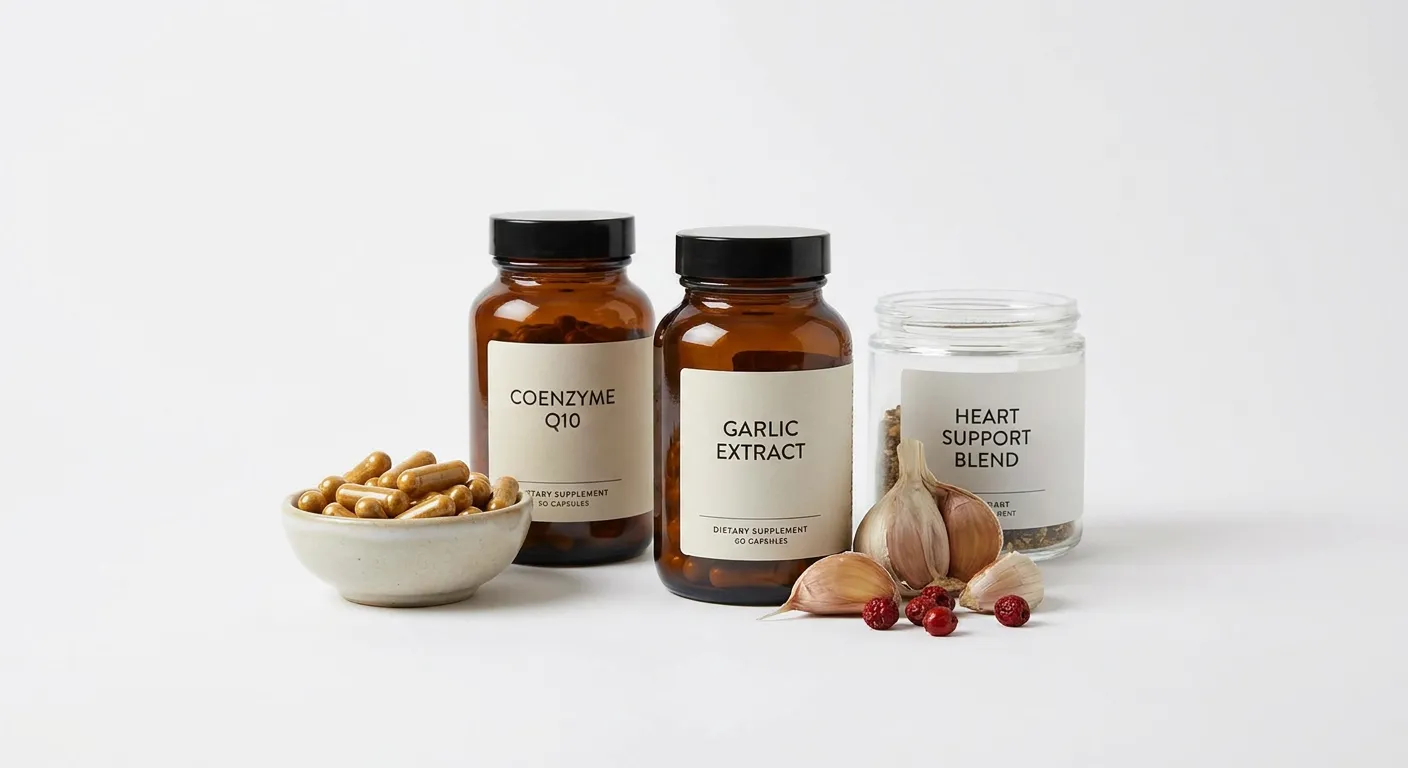
Understanding Cardiovascular Health — Four Distinct Systems, One Stack
Cardiovascular health is not governed by a single mechanism — it depends on the coordinated function of at least four largely independent biological systems: the mitochondrial energy metabolism that powers every heartbeat, the vascular endothelium that regulates blood flow and vessel dilation on a moment-to-moment basis, the lipid and triglyceride handling that determines what circulates in the bloodstream, and the calcium-trafficking system that decides whether calcium strengthens bone or stiffens arteries.
A supplement that only addresses one of these systems — lowering triglycerides, for instance, without supporting endothelial nitric oxide production or arterial calcium regulation — leaves meaningful gaps in overall cardiovascular support. This stack was assembled specifically to cover all four systems with minimal mechanistic overlap: CoQ10 for mitochondrial ATP production in cardiac myocytes, L-citrulline for eNOS-driven nitric oxide vasodilation, aged garlic extract for a complementary hydrogen-sulfide vasodilatory pathway and blood pressure support, omega-3 fish oil for triglyceride reduction and membrane-level cardiac stability, and vitamin K2 with D3 for directing calcium toward bone and away from arterial walls.
Several components in this stack are backed by genuine hard-outcome clinical trial data — not just biomarker changes, but measured reductions in cardiovascular events and mortality — a rare and important evidentiary standard for a nutraceutical stack, most notably the Q-SYMBIO trial for CoQ10 and the REDUCE-IT trial for high-dose EPA.
The Heart Health & Circulation Stack 2026: CoQ10/Ubiquinol (100–200mg) + Aged Garlic Extract (600–1,200mg) + L-Citrulline (3,000–6,000mg) + Omega-3 Fish Oil (2,000–4,000mg EPA+DHA) + Vitamin K2 MK-7 with D3 (90–180mcg K2 / 2,000–5,000 IU D3). Estimated monthly cost: $90–158.
Stack at a Glance
| # | Supplement | Category | Dose & Timing | Rating |
|---|---|---|---|---|
| #1 | Coenzyme Q10 (Ubiquinol Preferred) Myocardial ATP production, statin-depletion replacement & antioxidant protection of LDL | Mitochondrial Cofactor / Antioxidant | 100–200mg (ubiquinol form preferred, especially for adults 40+) With a fat-containing meal, morning or midday | ★4.9 |
| #2 | Aged Garlic Extract (AGE) Blood pressure reduction, arterial stiffness improvement & platelet aggregation modulation | Botanical Extract (Allium sativum) | 600–1,200mg standardized aged garlic extract (e.g., Kyolic-type) With meals, morning and/or evening, consistent daily use | ★4.7 |
| #3 | L-Citrulline (Nitric Oxide Precursor) eNOS-driven vasodilation, flow-mediated dilation & arterial blood flow support | Amino Acid / Nitric Oxide Precursor | 3,000–6,000mg L-citrulline (or citrulline malate at proportionally higher total dose) 30–60 minutes before exercise, or split doses with morning and evening meals for general vascular support | ★4.7 |
| #4 | Omega-3 Fish Oil (EPA/DHA) Triglyceride reduction, membrane fluidity & major cardiovascular event risk reduction | Marine Fatty Acid | 2,000–4,000mg combined EPA+DHA (icosapent ethyl-style high-EPA dosing for triglyceride-focused benefit) With meals, split into two doses (morning and evening) to reduce reflux | ★4.9 |
| #5 | Vitamin K2 (MK-7) with Vitamin D3 Matrix Gla protein activation, arterial calcification prevention & coordinated calcium metabolism | Fat-Soluble Vitamin Pair (Calcium-Directing Cofactors) | 90–180mcg Vitamin K2 (MK-7 form) paired with 2,000–5,000 IU Vitamin D3 With a fat-containing meal, once daily | ★4.8 |
Coenzyme Q10 (Ubiquinol Preferred)
Coenzyme Q10 anchors the heart health stack because its core mechanism — enabling mitochondrial ATP production — is directly relevant to the single most energy-demanding muscle in the body. Cardiac myocytes contract roughly 100,000 times per day and are packed with more mitochondria per cell than almost any other tissue, meaning the heart's contractile function is fundamentally rate-limited by mitochondrial ATP output. CoQ10 sits at the center of this process as an obligatory electron carrier in the electron transport chain, shuttling electrons from Complex I and Complex II to Complex III during oxidative phosphorylation — without adequate CoQ10, ATP synthesis in cardiac tissue becomes measurably less efficient. This mechanistic relevance is backed by one of the strongest hard-outcome trials in the entire supplement literature: the Q-SYMBIO trial, published by Mortensen et al. in 2014 in JACC Heart Failure, randomized 420 patients with chronic heart failure to 100mg CoQ10 three times daily or placebo, and found a statistically significant reduction in major adverse cardiovascular events and all-cause mortality in the CoQ10 group over two years of follow-up — a mortality benefit, not merely a biomarker improvement, which is a rare and clinically meaningful finding for any nutritional supplement. CoQ10 also holds special relevance for the tens of millions of adults on statin therapy: statins work by inhibiting HMG-CoA reductase in the mevalonate pathway, but that same pathway is the body's sole endogenous source of CoQ10, meaning statin therapy measurably depletes circulating CoQ10 levels as a mechanistic side effect of its cholesterol-lowering action. This depletion is proposed as a contributing factor in statin-associated muscle symptoms, making CoQ10 supplementation a biologically rational adjunct for statin users. Beyond energy production, CoQ10 is itself a potent lipid-soluble antioxidant, protecting both the mitochondrial inner membrane (where it is synthesized and embedded) and circulating LDL particles from oxidative damage — oxidized LDL is considerably more atherogenic than native LDL, giving CoQ10 a secondary vascular-protective role alongside its energetic one. For the 2026 stack, choose ubiquinol — the reduced, bioactive form — over ubiquinone, since the body's capacity to convert ubiquinone to ubiquinol declines with age, and take 100–200mg daily with a fat-containing meal to support absorption of this fat-soluble compound.
Key Features
- CoQ10 is an obligatory cofactor in the mitochondrial electron transport chain, shuttling electrons between Complex I/II and Complex III during oxidative phosphorylation — the biochemical process that generates ATP, and cardiac myocytes are among the most mitochondria-dense, energy-hungry cells in the body, making adequate CoQ10 status directly relevant to heart muscle contractile function
- The landmark Q-SYMBIO trial (Mortensen et al., 2014, JACC Heart Failure, n=420, randomized double-blind placebo-controlled) found CoQ10 supplementation (100mg three times daily) in chronic heart failure patients reduced major adverse cardiovascular events and all-cause mortality versus placebo over 2 years — one of the strongest single-supplement cardiovascular mortality findings in the literature
- Statin medications (HMG-CoA reductase inhibitors) block the mevalonate pathway, which produces both cholesterol and endogenous CoQ10 — statin therapy measurably lowers circulating CoQ10 levels, making supplementation a rational replacement strategy for statin users, particularly those experiencing statin-associated muscle symptoms
- Ubiquinol, the reduced (active, electron-carrying) form of CoQ10, demonstrates substantially superior oral bioavailability compared to ubiquinone (the oxidized form found in older/cheaper products) — the body must first reduce ubiquinone to ubiquinol before it becomes bioactive, a conversion step that becomes less efficient with age
- Beyond ATP production, CoQ10 functions as a fat-soluble antioxidant embedded in the mitochondrial inner membrane and in circulating LDL particles, directly protecting both mitochondrial membrane lipids and LDL cholesterol from oxidative damage — oxidized LDL, not native LDL, is the more atherogenic species implicated in plaque formation
Pros & Cons
Pros:
- +The Q-SYMBIO trial provides genuine hard-outcome (mortality, hospitalization) clinical trial evidence — a rarer and more rigorous evidence standard than the biomarker-only studies available for most supplements in this category
- +Directly addresses statin-induced CoQ10 depletion, making it a logical and well-supported addition for the large population of adults on statin therapy, including those reporting statin-associated myalgia
- +Dual mechanism — mitochondrial ATP support for myocardial contractile function plus antioxidant protection of LDL and mitochondrial membranes — gives it relevance across both energy-production and vascular-protection angles of cardiovascular health
Cons:
- -Ubiquinone (oxidized form) found in cheaper, older-formulation products has meaningfully lower bioavailability than ubiquinol — reading the label for "ubiquinol" or "reduced CoQ10" matters more here than with most supplements
- -The Q-SYMBIO dosing protocol (300mg/day, split three times) is meaningfully higher than what many commercial CoQ10 products deliver at their standard serving size — replicating trial-level benefit may require a higher dose than the bottle's default suggestion
Aged Garlic Extract (AGE)
Aged garlic extract (AGE) occupies a distinct niche in the heart health stack: where CoQ10 supports the heart's own energy metabolism and L-citrulline drives acute nitric-oxide-mediated vasodilation, AGE contributes both a blood-pressure-lowering effect and a complementary, hydrogen-sulfide-based vasodilatory mechanism, produced through a specific and important processing method. Unlike raw garlic, whose primary bioactive compound allicin is unstable, pungent, and responsible for much of raw garlic's GI irritation, aged garlic extract is produced by aging fresh garlic in an alcohol-water solution for up to 20 months, a natural process that converts the unstable allicin into stable, well-absorbed organosulfur compounds — most notably S-allylcysteine (SAC), the most extensively studied bioactive marker compound in aged garlic research. This aging process is not a marketing distinction but a genuine chemical transformation that produces a materially different, and better-tolerated, supplement than raw garlic or minimally processed garlic powder. The clinical evidence for blood pressure specifically is meaningful: Ried et al.'s 2016 randomized, double-blind, placebo-controlled trial in Integrated Blood Pressure Control, studying 79 patients with uncontrolled hypertension over 12 weeks, found aged garlic extract supplementation produced statistically significant reductions in both systolic and diastolic blood pressure compared to placebo — with an effect size in the range of some first-line antihypertensive medications, a notable finding for a botanical supplement. Mechanistically, S-allylcysteine and related organosulfur compounds stimulate the production of hydrogen sulfide (H2S) in vascular smooth muscle tissue; H2S functions as a gasotransmitter, similar in concept to nitric oxide, and promotes vasodilation through a complementary — not redundant — signaling pathway. This pairs mechanistically well with L-citrulline's more direct nitric-oxide-synthase-driven vasodilation elsewhere in this stack, giving the combined protocol two distinct gasotransmitter routes to support healthy vascular tone. Beyond acute blood pressure effects, longer-term observational and imaging-based research has associated aged garlic extract with reduced progression of coronary artery calcification and plaque on CT angiography, and AGE contributes a mild antiplatelet effect via reduced thromboxane production — generally gentler and more consistent than the variable antiplatelet activity of raw garlic. For the 2026 stack, take 600–1,200mg of a standardized aged garlic extract (look explicitly for "aged" or "fermented" garlic, such as Kyolic-type formulations, rather than raw garlic powder) daily with meals, understanding that the 12-week trial timeline is the appropriate window for assessing blood pressure effect.
Key Features
- Aged garlic extract is produced through a months-long natural aging/fermentation process that converts unstable, pungent allicin into stable, bioavailable organosulfur compounds — primarily S-allylcysteine (SAC) — which are the active constituents responsible for AGE's cardiovascular effects and are largely absent from raw garlic or short-processed garlic supplements
- A 2016 randomized, double-blind, placebo-controlled trial by Ried et al. in Integrated Blood Pressure Control (n=79, uncontrolled hypertensive patients) found aged garlic extract supplementation over 12 weeks significantly reduced both systolic and diastolic blood pressure compared to placebo, with effects comparable in magnitude to some first-line antihypertensive monotherapy
- S-allylcysteine and related organosulfur compounds stimulate hydrogen sulfide (H2S) production in vascular smooth muscle — H2S is a gasotransmitter that works alongside nitric oxide to promote vasodilation, giving AGE a nitric-oxide-complementary vasodilatory mechanism distinct from L-citrulline's more direct eNOS pathway
- A separate line of research (including CT angiography sub-studies) has found aged garlic extract associated with reduced coronary artery plaque progression and improved arterial flexibility over time, suggesting a structural vascular benefit beyond acute blood pressure lowering
- AGE also modestly inhibits platelet aggregation via reduced thromboxane production, contributing a mild antiplatelet effect that is generally gentler and better-tolerated than raw garlic's more variable and GI-irritating allicin-driven effects
Pros & Cons
Pros:
- +Ried et al. (2016) provides genuine RCT-level blood pressure evidence with an effect size clinically comparable to what would meaningfully move a borderline-hypertensive reading, a rare standard of evidence for a botanical extract
- +The aging process specifically eliminates the strong odor and much of the GI irritation associated with raw garlic, making AGE substantially more tolerable for daily long-term use than garlic powder or garlic oil supplements
- +Complementary vasodilatory mechanism (hydrogen sulfide-mediated) alongside L-citrulline's nitric-oxide mechanism gives the stack two distinct gasotransmitter pathways supporting vascular tone rather than redundant coverage of the same pathway
Cons:
- -Not all "garlic" supplements are aged garlic extract — raw garlic powder, garlic oil, and short-macerated garlic products deliver a different (and less-studied for these specific outcomes) chemical profile than true multi-month aged/fermented AGE; label specificity matters considerably here
- -Blood pressure effects require consistent daily use over the full 12-week trial timeline to reach the magnitude observed in RCTs — this is not a fast-acting or as-needed intervention
L-Citrulline (Nitric Oxide Precursor)
L-citrulline supplies the substrate-level foundation for one of the most well-characterized vascular signaling pathways in cardiovascular physiology: the endothelial nitric oxide synthase (eNOS) pathway. Every blood vessel in the body is lined with a single layer of endothelial cells, and these cells continuously produce nitric oxide (NO) via eNOS as a moment-to-moment regulator of vascular tone — when NO production is robust, blood vessels dilate appropriately in response to increased blood flow demand (a phenomenon called flow-mediated dilation, or FMD, which is directly measured via brachial artery ultrasound in cardiovascular endothelial function research); when NO production is impaired, as occurs progressively with aging, hypertension, and atherosclerotic risk factors, vessels lose this flexibility and vascular resistance rises. L-citrulline directly supports this pathway by serving as the precursor that the kidneys convert into L-arginine, the amino acid substrate eNOS requires to synthesize nitric oxide. The choice of citrulline over arginine itself is a deliberate pharmacokinetic decision: oral L-arginine undergoes extensive first-pass metabolism by arginase enzymes in the intestines and liver before it ever reaches systemic circulation, substantially limiting how much administered arginine actually becomes available to eNOS; L-citrulline, by contrast, largely bypasses this degradation and is converted to arginine downstream in the kidneys, making it the more metabolically efficient oral route to elevated circulating arginine and, ultimately, nitric oxide production. Once produced, nitric oxide diffuses from the endothelium into the adjacent vascular smooth muscle layer, activates the enzyme guanylate cyclase, and raises intracellular cyclic GMP — the second-messenger signal that triggers smooth muscle relaxation and the resulting vasodilation. This mechanism is supported by multiple randomized controlled trials and meta-analyses demonstrating that L-citrulline supplementation significantly reduces both systolic and diastolic blood pressure, with the clearest benefit observed in individuals who have some degree of elevated baseline blood pressure or endothelial dysfunction rather than in already-optimal healthy endothelium — a pattern consistent with citrulline correcting a rate-limiting substrate deficiency rather than artificially forcing vasodilation beyond physiological need. Because this eNOS/nitric-oxide pathway is mechanistically distinct from both CoQ10's mitochondrial ATP-production role and aged garlic extract's hydrogen-sulfide-mediated vasodilation, L-citrulline rounds out the stack's vascular coverage with a third, complementary signaling mechanism. For the 2026 stack, 3,000–6,000mg of L-citrulline daily — most practically taken as an unflavored powder given the gram-level dosing required — supports resting vascular blood flow, with timing 30–60 minutes before exercise providing additional benefit for those using it around physical activity.
Key Features
- L-citrulline is converted in the kidneys to L-arginine, the direct substrate for endothelial nitric oxide synthase (eNOS) — the enzyme responsible for producing nitric oxide (NO) in the vascular endothelium, the single layer of cells lining every blood vessel that governs vasodilation and blood flow regulation
- Counterintuitively, oral L-citrulline raises circulating and tissue arginine levels more effectively than oral L-arginine itself, because arginine taken orally undergoes extensive first-pass metabolism by arginase enzymes in the gut and liver, while citrulline largely bypasses this degradation and is converted to arginine downstream in the kidneys — making citrulline the more bioavailable route to elevated NO substrate
- Nitric oxide produced via this pathway diffuses into vascular smooth muscle, activates guanylate cyclase, and raises cyclic GMP — the second messenger that triggers smooth muscle relaxation and vasodilation — directly underlying the physiological phenomenon of flow-mediated dilation (FMD), a clinically validated marker of endothelial health measured via brachial artery ultrasound in cardiovascular research
- Multiple RCTs and meta-analyses in both healthy and hypertensive populations have found L-citrulline supplementation significantly reduces both systolic and diastolic blood pressure, with effects generally more pronounced in individuals with elevated baseline blood pressure — a pattern consistent with citrulline correcting, rather than overriding, endothelial NO deficiency
- Beyond cardiovascular blood flow, improved endothelial nitric oxide production has documented benefit for exercise performance and reduced muscle soreness, reflecting the same vasodilatory mechanism applied to skeletal muscle blood flow during physical activity
Pros & Cons
Pros:
- +Directly targets the eNOS/nitric oxide pathway, the central signaling axis of vascular endothelial function, complementing rather than duplicating CoQ10's mitochondrial and AGE's hydrogen-sulfide mechanisms — together the stack addresses three distinct vasoactive and energetic pathways
- +Superior oral bioavailability route to elevated arginine/NO substrate compared to supplementing arginine directly, avoiding the first-pass gut and liver metabolism that limits arginine's effectiveness at achievable oral doses
- +Dual relevance for both resting cardiovascular blood flow support and exercise performance/recovery, giving it utility beyond a narrowly cardiovascular-only supplement
Cons:
- -Effective doses (3,000–6,000mg) are substantially higher by weight than most other supplements in this stack, making powder form significantly more practical and cost-effective than capsules, which would require swallowing a large number of pills to hit clinical dosing
- -Effects on blood pressure and vasodilation are most pronounced in individuals with some degree of existing endothelial dysfunction or elevated blood pressure — healthy, normotensive individuals may notice more modest measurable change
Omega-3 Fish Oil (EPA/DHA)
Omega-3 fish oil carries the single strongest hard-outcome cardiovascular evidence of any component in this stack, anchored by the REDUCE-IT trial — Bhatt et al.'s 2019 randomized controlled trial published in the New England Journal of Medicine, which enrolled 8,179 statin-treated patients with elevated triglycerides and either established cardiovascular disease or diabetes plus additional risk factors, and found that high-dose purified EPA (icosapent ethyl, 4 grams daily) reduced the composite endpoint of cardiovascular death, myocardial infarction, stroke, and related major adverse cardiovascular events by approximately 25% relative to placebo. This is a genuinely rare standard of evidence in cardiovascular supplementation: not a biomarker improvement, but a directly measured reduction in heart attacks, strokes, and cardiovascular death in a large, rigorously randomized, multi-year trial. Mechanistically, EPA and DHA operate through several complementary pathways relevant to the rest of this stack: in the liver, they reduce VLDL (very-low-density lipoprotein) synthesis and enhance triglyceride clearance from circulation, directly lowering triglycerides — a cardiovascular risk factor that remains a common gap even in patients whose LDL is well-controlled on statin therapy (the exact population REDUCE-IT studied). At the cellular membrane level, EPA and DHA incorporate into the phospholipid bilayer of cardiac myocytes and vascular endothelial cells, increasing membrane fluidity in a manner linked, in earlier trials such as GISSI-Prevenzione, to improved cardiac electrical stability and reduced risk of fatal ventricular arrhythmia — a mechanism entirely distinct from CoQ10's mitochondrial ATP role, even though both act within the same cardiac myocyte. Omega-3s additionally exert a mild antithrombotic effect through reduced thromboxane A2 production and modulated platelet aggregation, and contribute modest but measurable reductions in blood pressure and improvements in arterial compliance — reinforcing, from a membrane-mechanical angle, the vasodilatory work being done by L-citrulline's nitric oxide pathway and aged garlic extract's hydrogen-sulfide pathway elsewhere in the stack. It is important to calibrate expectations to the evidence: REDUCE-IT studied a specific, highly purified, prescription-strength EPA formulation at a specific high dose, and general over-the-counter fish oil supplements — while supported by decades of separate cardiovascular biomarker and cohort research — have not been directly shown to replicate that exact 25% event-reduction figure at typical commercial doses. For the 2026 stack, 2,000–4,000mg combined EPA+DHA daily from a triglyceride-form, third-party-tested product provides broad cardiovascular membrane and lipid support, with individuals who have clinically elevated triglycerides encouraged to discuss prescription-strength icosapent ethyl with their physician to specifically approximate the REDUCE-IT protocol.
Key Features
- The landmark REDUCE-IT trial (Bhatt et al., 2019, New England Journal of Medicine, n=8,179, statin-treated patients with elevated triglycerides and either established cardiovascular disease or diabetes with risk factors) found high-dose purified EPA (icosapent ethyl, 4g/day) reduced major adverse cardiovascular events — including cardiovascular death, myocardial infarction, and stroke — by approximately 25% relative risk versus placebo, one of the largest and most rigorously controlled cardiovascular outcome trials for any lipid-modifying therapy, natural or pharmaceutical
- EPA and DHA reduce hepatic VLDL (very-low-density lipoprotein) synthesis and enhance triglyceride clearance, producing dose-dependent reductions in circulating triglycerides — an independent cardiovascular risk factor distinct from LDL cholesterol, particularly relevant for the millions of adults with elevated triglycerides despite well-controlled LDL on statin therapy
- Incorporation of EPA/DHA into cell membrane phospholipids — including cardiac myocyte and vascular endothelial membranes — increases membrane fluidity, which has been linked to improved electrical stability in cardiac tissue and a documented reduction in risk of fatal ventricular arrhythmia in earlier observational and RCT data (GISSI-Prevenzione)
- Omega-3s exert a mild but consistent antithrombotic effect by modulating platelet aggregation and reducing thromboxane A2 production, complementing (with additive caution) the antiplatelet activity of aged garlic extract elsewhere in this stack
- Beyond REDUCE-IT's hard-outcome data, omega-3 fatty acids also produce modest but measurable blood pressure reductions and improvements in arterial compliance, reinforcing the vasodilatory and blood-pressure-focused mechanisms of L-citrulline and aged garlic extract from a distinct, membrane-level angle
Pros & Cons
Pros:
- +REDUCE-IT stands among the most robust hard-cardiovascular-outcome trials in the supplement/nutraceutical space — a 25% relative risk reduction in major adverse cardiovascular events is a substantially stronger evidence standard than the biomarker-only data available for most heart-health ingredients
- +Directly addresses triglycerides, a cardiovascular risk factor that remains elevated in a large proportion of statin-treated patients even when LDL is well-controlled, filling a specific and common gap in standard lipid management
- +Broadest mechanistic footprint in the stack, spanning triglyceride reduction, membrane-level electrical stability, mild antiplatelet activity, and modest blood pressure/arterial compliance benefit — touching more distinct cardiovascular risk pathways than any single other component here
Cons:
- -REDUCE-IT specifically studied icosapent ethyl, a prescription-strength, highly purified EPA-only formulation at 4g/day — general over-the-counter fish oil, particularly lower-dose or mixed EPA/DHA products, has not been shown to replicate this exact magnitude of cardiovascular event reduction, and expectations should be calibrated accordingly
- -Doses at the higher end of the cardiovascular-protective range (above 3g/day) may mildly increase bleeding time; combined with aged garlic extract's antiplatelet activity in this same stack, cumulative bleeding risk warrants physician awareness for those on anticoagulant or antiplatelet medication
Vitamin K2 (MK-7) with Vitamin D3
Vitamin K2, paired with vitamin D3, closes the heart health stack with a mechanism unlike any other component here: rather than acting on blood flow, lipid metabolism, or mitochondrial energy production, this pair governs where the body directs calcium — specifically, whether calcium is actively kept out of arterial walls or allowed to accumulate as arterial calcification, a structural process that stiffens vessels and is itself an independent, imaging-visible marker of cardiovascular risk. The central mechanism runs through matrix Gla protein (MGP), a protein synthesized by vascular smooth muscle cells with the specific biological job of inhibiting calcium deposition within the arterial wall. MGP requires a carboxylation reaction — the addition of a carboxyl group to specific glutamate residues — to become functionally active, and vitamin K2 is the obligatory cofactor for the enzyme (gamma-glutamyl carboxylase) that performs this reaction. Without adequate K2, MGP remains in its uncarboxylated, inactive form and cannot perform its calcium-inhibiting function, regardless of how much MGP protein is actually present. This mechanism is supported by one of the more influential population studies in cardiovascular nutrition: the Rotterdam Study, a large prospective cohort published in the Journal of Nutrition in 2004, which found that higher dietary intake of vitamin K2 specifically (menaquinones, as distinct from the K1/phylloquinone form found in leafy greens) was associated with significantly lower coronary artery calcification, reduced aortic atherosclerosis, and lower all-cause mortality over more than seven years of follow-up — while K1 intake showed no comparable protective association, underscoring that the K2 (menaquinone) forms specifically, not vitamin K broadly, are what matters for this arterial mechanism. The pairing with vitamin D3 is a deliberate and mechanistically coordinated design choice rather than an arbitrary combination: D3 increases intestinal calcium absorption and raises the pool of circulating calcium available to the body — a process essential for bone mineralization, but one that, without sufficient K2-activated MGP directing that calcium appropriately, creates a theoretical pathway by which D3 supplementation alone could increase calcium availability for inappropriate soft-tissue and arterial deposition. K2 and D3 together, rather than either alone, more completely address both halves of this calcium-trafficking system — D3 mobilizes the calcium, K2-activated MGP (and, for bone, K2-activated osteocalcin) directs where it goes. For the 2026 stack, select a combined formula delivering 90–180mcg of MK-7 (the long-half-life menaquinone form supporting sustained once-daily activity, as opposed to short-half-life MK-4) alongside 2,000–5,000 IU of D3, taken together with a fat-containing meal since both are fat-soluble nutrients requiring dietary fat for optimal absorption. Anyone taking warfarin or another vitamin K antagonist must consult their physician before adding K2, as it directly interacts with that medication's mechanism of action.
Key Features
- Vitamin K2 is the essential cofactor for the enzyme that carboxylates (activates) matrix Gla protein (MGP), a protein produced by vascular smooth muscle cells specifically to inhibit calcium deposition within arterial walls — uncarboxylated (inactive) MGP cannot perform this function, making K2 status a direct determinant of whether calcium is actively kept out of arterial tissue
- The Rotterdam Study (2004, published in the Journal of Nutrition, a large prospective population cohort) found that higher dietary intake of vitamin K2 (specifically menaquinones, not K1/phylloquinone) was associated with significantly lower coronary artery calcification, reduced aortic atherosclerosis, and lower all-cause mortality over a mean follow-up of more than 7 years — one of the foundational epidemiological findings linking K2 status to arterial calcification risk
- Vitamin D3 increases intestinal calcium absorption and raises circulating calcium availability — a necessary process for bone health, but one that, without adequate K2-activated MGP directing that calcium toward bone rather than soft tissue, creates a theoretical mechanism by which D3 supplementation alone (without K2) could increase the pool of circulating calcium available for inappropriate arterial deposition
- MK-7 (menaquinone-7), the long-chain form of K2 found in fermented foods like natto, has a substantially longer biological half-life than MK-4 (menaquinone-4) or K1, allowing once-daily dosing to maintain more stable, sustained carboxylation activity of MGP and osteocalcin (the analogous bone-directing K2-dependent protein) throughout a 24-hour period
- The K2/D3 pairing represents a clear example of coordinated cofactor supplementation — D3 mobilizes calcium into the bloodstream, and K2 activates the specific proteins (MGP for arteries, osteocalcin for bone) that direct where that calcium is deposited, meaning the two nutrients work most safely and effectively as a paired mechanism rather than as independent, unrelated supplements
Pros & Cons
Pros:
- +Uniquely mechanistic role among heart-health supplements: rather than affecting blood flow, lipids, or mitochondrial energy, K2 addresses the specific calcium-trafficking mechanism implicated in arterial wall calcification — a distinct and complementary structural angle absent from every other component in this stack
- +The Rotterdam Study's combination of reduced coronary calcification, reduced atherosclerosis, and reduced all-cause mortality across a long population follow-up gives K2 unusually broad epidemiological support for a single fat-soluble vitamin
- +Pairing with D3 closes a legitimate mechanistic gap in D3-only supplementation, addressing a nutrient-coordination consideration that is often overlooked in standalone vitamin D products, particularly at the higher D3 doses increasingly common in general supplementation
Cons:
- -The Rotterdam Study and most K2/arterial calcification research is epidemiological/observational in nature rather than a large placebo-controlled interventional RCT with hard cardiovascular endpoints — the mechanistic and associative evidence is strong, but it is a different evidentiary standard than REDUCE-IT's randomized outcome data for omega-3
- -MK-4 and MK-7 are not interchangeable at equivalent doses — MK-4 has a short half-life requiring much higher and more frequent dosing to sustain MGP carboxylation, while MK-7 achieves sustained effect at far lower doses; confirm the label specifies MK-7 for once-daily dosing convenience
Morning vs. Evening: The Complete Daily Protocol
All five supplements are best taken with food — CoQ10, omega-3, and K2/D3 are fat-soluble and absorb more efficiently alongside a meal containing dietary fat, while aged garlic extract and L-citrulline are simply better tolerated with food in the stomach. L-citrulline is the one component worth timing intentionally around exercise if that is a priority use case.
| Time | Supplement | Dose | Notes |
|---|---|---|---|
| Morning (with breakfast) | CoQ10 (Ubiquinol) | 100mg | Take with a fat-containing meal for absorption. |
| Aged Garlic Extract | 300–600mg | With breakfast for consistent daily coverage. | |
| L-Citrulline | 1,500–3,000mg | 30–60 min pre-workout if training in the morning. | |
| Omega-3 Fish Oil | 1,000–2,000mg EPA+DHA | Split daily total across morning/evening to reduce reflux. | |
| Vitamin K2 (MK-7) + D3 | 90–180mcg K2 / 2,000–5,000 IU D3 | Once daily is sufficient given MK-7's long half-life. | |
| Evening (with dinner) | CoQ10 (Ubiquinol) | 100mg | Second dose for those using the higher 200mg range. |
| Aged Garlic Extract | 300–600mg | With dinner; consistency matters more than exact timing. | |
| Omega-3 Fish Oil | 1,000–2,000mg EPA+DHA | With dinner; triglyceride form preferred for absorption. |
Give the full stack 8–12 weeks of consistent daily use before assessing effect on blood pressure and lipid markers — aged garlic extract and omega-3's triglyceride effects follow roughly the trial timelines cited throughout this guide, while L-citrulline's vasodilatory effect on blood flow can be noticeable within days to weeks.
The Physiology of Cardiovascular Health: Five Mechanisms This Stack Addresses
1. Mitochondrial ATP Production in Cardiac Myocytes (CoQ10)
The heart contracts roughly 100,000 times per day and depends on continuous, high-volume ATP production from densely packed mitochondria within cardiac myocytes. CoQ10 is an obligatory electron carrier in the mitochondrial electron transport chain — without adequate CoQ10, particularly in statin users whose endogenous synthesis is pharmacologically reduced, myocardial energy production becomes measurably less efficient, directly relevant to the mortality benefit observed in the Q-SYMBIO trial.
2. eNOS-Driven Vasodilation & Flow-Mediated Dilation (L-Citrulline)
Endothelial nitric oxide synthase (eNOS) converts L-arginine into nitric oxide, which diffuses into vascular smooth muscle and triggers relaxation via the cyclic GMP pathway — the physiological basis of flow-mediated dilation. L-citrulline raises circulating arginine substrate more effectively than oral arginine itself, directly supporting this moment-to-moment vasodilatory signaling system.
3. Matrix Gla Protein Activation & Arterial Calcium Regulation (Vitamin K2)
Matrix Gla protein (MGP), produced by vascular smooth muscle cells, actively inhibits calcium deposition in arterial walls — but only once carboxylated (activated) by a vitamin K2-dependent enzyme. Vitamin K2 (MK-7), paired with D3's calcium-mobilizing effect, directs the resulting calcium pool toward bone and away from arterial tissue, the mechanism underlying the Rotterdam Study's findings on coronary calcification.
4. Complementary Gasotransmitter Signaling (Aged Garlic Extract)
Alongside nitric oxide, hydrogen sulfide (H2S) functions as a second gasotransmitter promoting vascular smooth muscle relaxation. Aged garlic extract's S-allylcysteine stimulates endogenous H2S production, giving the stack a vasodilatory pathway distinct from — but complementary to — L-citrulline's nitric oxide mechanism, alongside AGE's independently documented blood-pressure-lowering effect.
5. Triglyceride Clearance & Membrane-Level Cardiac Stability (Omega-3)
EPA and DHA reduce hepatic VLDL synthesis and enhance triglyceride clearance, addressing an independent cardiovascular risk factor distinct from LDL cholesterol. Incorporated into cardiac myocyte and endothelial cell membranes, omega-3 fatty acids also increase membrane fluidity in ways linked to improved cardiac electrical stability — the mechanistic backdrop for REDUCE-IT's major cardiovascular event reduction.
Dietary Synergies & Lifestyle Factors
Supplements amplify a heart-healthy diet and lifestyle — they do not replace one. A Mediterranean-style dietary pattern rich in extra-virgin olive oil, fatty fish (a direct dietary source of EPA/DHA alongside supplemental omega-3), leafy greens and fermented foods (dietary vitamin K sources, including natto — one of the richest natural sources of MK-7), nuts, and legumes, while minimizing refined carbohydrates, excess sodium, and processed meats, directly reinforces the triglyceride, blood pressure, and vascular mechanisms this stack targets.
Beyond diet, several lifestyle factors independently drive cardiovascular risk or protect against it: regular aerobic exercise is itself one of the most potent stimulators of endothelial nitric oxide production, directly reinforcing L-citrulline's mechanism through repeated flow-mediated dilation; chronic sleep restriction and unmanaged psychological stress both elevate sympathetic nervous system activation and blood pressure independent of diet; and smoking directly damages the vascular endothelium in a manner that measurably impairs nitric-oxide-mediated vasodilation, undermining the core mechanism this stack is designed to support.
None of the five supplements in this stack can fully compensate for uncontrolled blood pressure, an unmanaged lipid disorder, or smoking — they are most effective, and the clinical trial evidence cited throughout this guide is most applicable, when layered onto a baseline of sound dietary and lifestyle fundamentals and appropriate medical management rather than used as a substitute for either.
Key Clinical Evidence
CoQ10: Q-SYMBIO Mortality & Major Adverse Cardiovascular Events
Mortensen et al. (2014, JACC Heart Failure, RCT, n=420, chronic heart failure): CoQ10 supplementation (100mg three times daily) significantly reduced major adverse cardiovascular events and all-cause mortality versus placebo over 2 years of follow-up.
Research: Mortensen et al. (2014), JACC Heart Failure (Q-SYMBIO trial).
Aged Garlic Extract: Blood Pressure Reduction
Ried et al. (2016, Integrated Blood Pressure Control, RCT, n=79, uncontrolled hypertensive patients): aged garlic extract supplementation over 12 weeks significantly reduced both systolic and diastolic blood pressure compared to placebo.
Research: Ried et al. (2016), Integrated Blood Pressure Control.
L-Citrulline: Blood Pressure & Endothelial Function
Multiple RCTs and meta-analyses have found L-citrulline supplementation significantly reduces systolic and diastolic blood pressure via increased nitric oxide substrate availability, with effects most pronounced in individuals with elevated baseline blood pressure or endothelial dysfunction.
Research: Multiple RCTs and meta-analyses, nitric oxide/eNOS pathway literature.
Omega-3: REDUCE-IT Major Adverse Cardiovascular Events
Bhatt et al. (2019, New England Journal of Medicine, RCT, n=8,179, statin-treated patients with elevated triglycerides): high-dose purified EPA (icosapent ethyl, 4g/day) reduced major adverse cardiovascular events by approximately 25% relative risk versus placebo.
Research: Bhatt et al. (2019), N Engl J Med (REDUCE-IT trial).
Vitamin K2: Rotterdam Study on Coronary Calcification
Rotterdam Study (2004, Journal of Nutrition, prospective population cohort): higher dietary intake of vitamin K2 (menaquinones) was associated with significantly lower coronary artery calcification, reduced aortic atherosclerosis, and lower all-cause mortality over a mean follow-up of more than 7 years.
Research: Rotterdam Study (2004), J Nutrition.
Related Guides & Individual Supplement Reviews
For in-depth brand comparisons, dosage guidance, and product picks for the key supplements in this stack:
Frequently Asked Questions
Can this stack replace my blood pressure or cholesterol medication?
No. This stack is designed as an evidence-based adjunct to, not a replacement for, prescribed cardiovascular medication. Several components (aged garlic extract, L-citrulline, high-dose EPA) have RCT-level evidence for meaningful but generally more modest effects than pharmaceutical therapy. Never discontinue or adjust prescribed blood pressure, statin, or anticoagulant medication without direct physician guidance.
How long does this stack take to work?
Days to a few weeks: L-citrulline's vasodilatory effect on blood flow can be noticeable relatively quickly. 8–12 weeks: Aged garlic extract's blood pressure effect and omega-3's triglyceride reduction generally require the full trial timeline cited in this guide to reach their studied magnitude. Months to years: CoQ10's mortality benefit in Q-SYMBIO and vitamin K2's arterial calcification effects in the Rotterdam Study reflect sustained, long-term daily use rather than a short-term intervention.
Do I need all five supplements, or can I start with fewer?
Omega-3 fish oil and CoQ10 have the strongest hard-outcome clinical trial evidence (REDUCE-IT and Q-SYMBIO respectively) and are the strongest starting point, particularly for statin users. L-citrulline and aged garlic extract add complementary blood-pressure and blood-flow support; vitamin K2 with D3 is especially relevant for anyone already supplementing D3 alone or with a family history of arterial calcification.
Is it safe to combine this stack with blood thinners or blood pressure medication?
Several components (aged garlic extract, omega-3, and to a lesser extent L-citrulline) have mild additive blood-thinning or blood-pressure-lowering activity, and vitamin K2 directly interacts with warfarin and other vitamin K antagonists. If you take anticoagulant, antiplatelet, or antihypertensive medication, discuss this stack with your physician or pharmacist before starting, particularly before any planned surgery.
Why pair vitamin K2 with vitamin D3 specifically?
Vitamin D3 increases calcium absorption and circulating calcium availability, while vitamin K2 activates the specific proteins (matrix Gla protein for arteries, osteocalcin for bone) that direct where that calcium is deposited. Taking D3 without adequate K2 addresses only half of this coordinated calcium-trafficking mechanism — the pairing is a deliberate design choice, not an arbitrary bundling of two unrelated vitamins.
Disclaimer: As an Amazon Associate, we earn from qualifying purchases at no extra cost to you. The information provided is for educational purposes only and is not medical advice. These supplements support normal cardiovascular function and healthy circulation but do not prevent, treat, or cure heart disease, hypertension, or any other medical condition. Aged garlic extract, omega-3, and L-citrulline have blood-pressure-lowering and/or mild blood-thinning activity, and vitamin K2 directly interacts with warfarin and other vitamin K antagonist medications — consult a physician before combining this stack with cardiovascular medications or before surgery. Consult a qualified healthcare provider before starting any supplement regimen, especially if pregnant, breastfeeding, or managing a diagnosed cardiovascular condition.