The Optimal Timing for Supplements
When to take what — and why — for maximum absorption and real results. Covers multivitamins, creatine, protein, pre-workouts, magnesium, zinc, fish oil, and more.
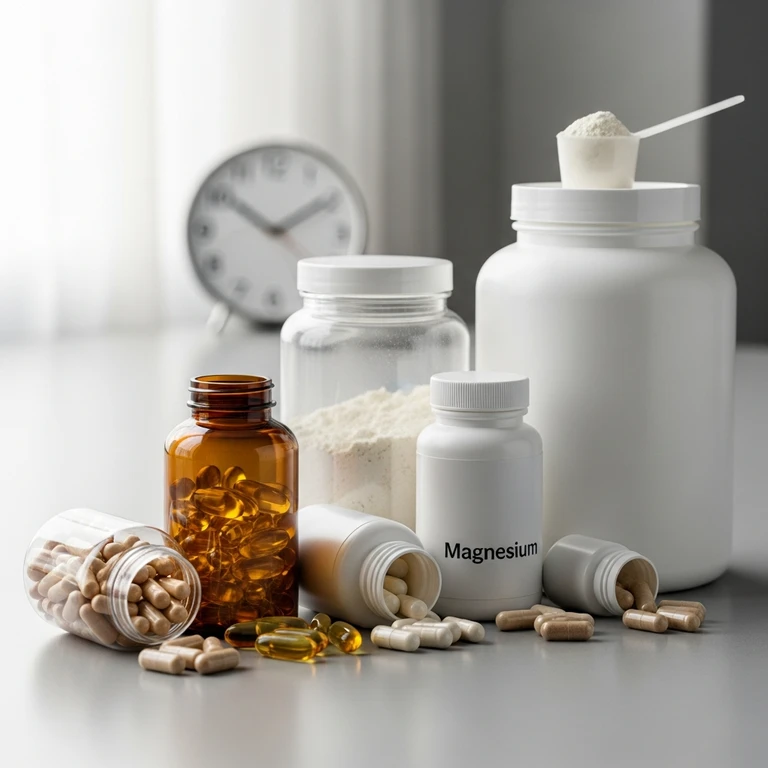
Why Timing Matters More Than Most People Realize
Most people take their supplements in a single morning handful, or whenever they remember. It feels efficient — but it silently undermines the investment. Supplement timing is not a fringe detail. It governs bioavailability, absorption competition between minerals, alignment with the body's hormonal rhythms, and whether a compound gets used for its intended purpose or simply excreted.
The practical upside: you do not need to restructure your entire day. Optimized supplement timing usually means splitting your stack across two to three anchor points — a morning dose with breakfast, a workout window, and an evening dose. Small adjustments with meaningful returns.
This guide covers the most common supplements — multivitamins, creatine, protein, pre-workouts, magnesium, zinc, and fish oil — with specific timing recommendations, the research behind them, and practical notes on what to take together versus what to separate.
Core Timing Principles:
- • Fat-soluble vitamins (A, D, E, K) — require dietary fat for absorption; always take with a meal
- • Minerals compete — calcium, iron, and zinc share intestinal transporters; spread them across the day
- • Energizing vs. calming — stimulating compounds in the morning; relaxants (magnesium, ashwagandha) in the evening
- • Exercise window — protein, creatine, and pre-workout each have a distinct optimal exercise-relative timing
- • Consistency beats perfection — a suboptimal time taken daily outperforms the perfect time taken inconsistently
Multivitamins
Best Time: With Breakfast (Fat-Containing Meal)
A standard multivitamin contains both fat-soluble vitamins (A, D, E, K) and water-soluble vitamins (C and B-complex). The fat-soluble fraction requires dietary fat for intestinal absorption via chylomicron packaging and lymphatic transport — taking a multi on an empty stomach means the fat-soluble vitamins largely pass through unabsorbed. A 2010 study in the Journal of Bone and Mineral Research found vitamin D absorption increased by 56% when taken with a fat-containing meal versus fasting, confirming how significant this effect is.
Morning is preferred over evening because B vitamins in most multis are energizing compounds — B2, B6, and B12 are involved in energy metabolism and can be mildly stimulating if taken close to bedtime, particularly at higher doses. Taking your multi with breakfast locks in the habit, ensures fat from the meal aids fat-soluble absorption, and aligns B-vitamin energy effects with the day rather than night.
Fish Oil (Omega-3 EPA+DHA)
Best Time: With Your Largest, Fattiest Meal
Omega-3 fatty acids are fat-soluble — their bioavailability is directly proportional to the fat content of the meal they are taken with. A 2012 study in the European Journal of Clinical Nutrition found that taking fish oil with a high-fat meal increased EPA and DHA bioavailability by 70% compared to a low-fat meal, and by approximately 3× compared to fasting. This is not a minor effect — it can mean the difference between therapeutic tissue levels and minimal systemic uptake.
Most people eat their largest, most fat-rich meal at dinner. Taking fish oil with dinner is therefore both practical and optimal for most people. If you eat a larger lunch, that works just as well. The only timing consideration to keep in mind: if you train in the morning or early afternoon, some research suggests omega-3s taken around the training window may enhance the muscle protein synthesis response — so peri-workout supplementation is also a valid option if your schedule allows.
Form matters: Triglyceride-form fish oil absorbs approximately 70% better than the ethyl ester form (which is cheaper and more common). Look for "natural triglyceride form" or re-esterified triglyceride on the label.
Zinc
Best Time: With Lunch (Midday Meal, Away from Calcium)
Zinc on an empty stomach is reliably nausea-inducing — zinc ions in direct contact with gastric mucosa trigger the irritation. Taking it with a light-to-moderate meal eliminates this issue. The reason midday is preferred over breakfast: zinc and calcium compete for the same intestinal ZIP4 transporter. Breakfast often includes calcium-rich foods — dairy in coffee, yogurt, milk, fortified cereal — and co-ingesting zinc with calcium can reduce zinc absorption by 25–50% at high calcium doses.
Additionally, zinc competes with iron for the same DMT1 transporter. If you take a multivitamin containing iron at breakfast, taking zinc at a different meal avoids this competition. The practical rule: zinc at lunch, away from calcium-heavy meals and coffee (which also mildly reduces zinc absorption via its polyphenol content).
High-phytate foods (whole grains, legumes, nuts, seeds) chelate zinc and reduce absorption by up to 40%. If your lunch is phytate-rich, taking zinc with a smaller protein-focused meal produces better absorption. Zinc bisglycinate is the gentlest form on the stomach regardless of timing.
Pre-Workout Supplements
Best Time: 30–60 Minutes Before Training
Pre-workout timing depends on the specific active ingredients. Caffeine — the core of most pre-workouts — reaches peak plasma concentration 45–60 minutes after ingestion, making 45 minutes pre-workout the sweet spot for most formulas. Beta-alanine (which produces the tingling sensation) has a slower, longer-lived mechanism and is more dependent on cumulative tissue carnosine loading than acute timing. Citrulline malate for nitric oxide production also peaks around 60 minutes post-ingestion.
Take pre-workout with water, not immediately after a large meal. A full stomach slows gastric emptying and delays absorption of all active ingredients. Ideally, your last meal is 60–90 minutes before your pre-workout so gastric emptying is largely complete. If you train fasted, take your pre-workout as usual — though some people experience nausea from high-stimulant pre-workouts on a completely empty stomach. A small, fast-digesting snack (banana, rice cake) can resolve this.
Avoid evening pre-workouts if you train within 6 hours of your target bedtime. Caffeine has a half-life of approximately 5–6 hours in most people, meaning a 200mg dose at 6pm still leaves 100mg circulating at midnight. If evening training is unavoidable, use stimulant-free pre-workout formulas (citrulline, beta-alanine, creatine, betaine) that deliver pump and endurance support without the sleep disruption.
Creatine
Best Time: Post-Workout (or Any Consistent Daily Time)
The creatine timing debate has been largely resolved by a 2013 randomized controlled trial by Antonio and Ciccone published in the Journal of the International Society of Sports Nutrition. In this 4-week resistance training study, participants taking creatine immediately post-workout gained significantly more lean mass and strength than those taking it pre-workout. The leading mechanism: post-exercise GLUT4 upregulation in muscle tissue creates heightened insulin sensitivity and preferential nutrient uptake, allowing more creatine to be sequestered into muscle cells when combined with a carbohydrate source.
That said, the effect size of timing is modest. The most important factor is daily consistency — creatine works by saturationof the phosphocreatine pool over 3–4 weeks of consistent dosing. Missing doses matters far more than hitting the perfect post-workout window. On rest days, take creatine with any meal at a consistent time.
With carbohydrates: Insulin spikes from carbohydrates increase creatine transporter activity in muscle. Taking creatine with a post-workout shake that contains fast-carbohydrates (dextrose, fruit, white rice) or with a protein-carbohydrate meal produces measurably better muscle uptake than creatine alone with water.
Protein Powder (Whey & Casein)
Whey Protein: Post-Workout (Within 2 Hours)
The anabolic window after exercise is real — but wider than the old 30-minute gospel. A comprehensive meta-analysis in the Journal of the International Society of Sports Nutrition (Aragon & Schoenfeld, 2013) found total daily protein intake (1.6–2.2g/kg bodyweight) matters more than precise peri-workout timing for muscle hypertrophy over time. That said, 20–40g of fast-digesting whey isolate within 2 hours post-workout reliably elevates muscle protein synthesis (MPS) and provides leucine — the key amino acid that triggers the mTOR signaling cascade for muscle repair.
If you trained in a fasted state, the post-workout protein window becomes more important — the muscle is in a catabolic state and fast protein delivery limits net protein breakdown. If you trained 2–3 hours after a protein-containing meal, the anabolic window extends considerably and a protein shake within 2 hours is still beneficial but less urgent.
Casein Protein: Before Bed for Overnight Muscle Repair
Micellar casein is a slow-digesting protein that forms a gel in the stomach, releasing amino acids over 5–7 hours rather than the rapid 1–2 hour spike from whey. A landmark study by Res et al. (2012, Medicine & Science in Sports & Exercise) found that 40g casein ingested 30 minutes before sleep significantly increased overnight muscle protein synthesis and whole-body protein balance compared to placebo. This is mechanistically compelling: growth hormone peaks during deep sleep (Stage 3 NREM), and overnight amino acid availability from casein provides the substrate for this anabolic hormonal environment to operate.
Casein before bed is particularly beneficial in the 24–48 hours after a training session when muscle repair is active overnight, and for older adults where protein synthesis rates are lower and require larger amino acid availability to fully stimulate MPS.
Magnesium
Best Time: 30–60 Minutes Before Bed
Magnesium is arguably the most important evening supplement for most adults in the modern world. Approximately 50–68% of American adults consume less than the recommended daily magnesium, a deficiency that manifests as poor sleep quality, muscle cramps, elevated cortisol, and anxiety. Magnesium functions as a natural GABA-A receptor co-agonist — it binds to the same receptor complex as the brain's primary inhibitory neurotransmitter (GABA) and promotes neurological calm. It also directly inhibits NMDA glutamate receptors, dampening excitatory neural activity that would otherwise resist sleep onset.
A 2012 double-blind randomized controlled trial in the Journal of Research in Medical Sciences (Abbasi et al., n=46 elderly adults with insomnia) found magnesium supplementation significantly improved sleep onset latency, sleep efficiency, early morning awakening, and serum melatonin levels versus placebo. Evening timing capitalizes on the natural nighttime cortisol decline — magnesium's cortisol-reducing mechanism works synergistically with the body's own circadian drop in cortisol that begins in the early evening.
Form is critical: Magnesium oxide (the cheapest, most common form) has approximately 4% bioavailability and causes loose stools. Magnesium glycinate (bound to glycine, itself a calming amino acid) has 80%+ bioavailability and excellent GI tolerance. Magnesium malate is also well-tolerated and provides malic acid which supports ATP synthesis — useful if you exercise in the evening.
Quick Reference: All Supplements at a Glance
The complete timing summary for all supplements covered in this guide, plus additional common ones:
| Supplement | Best Time | With Food? | Key Note |
|---|---|---|---|
| Multivitamin | Breakfast | Yes — fat required | Fat-solubles (A,D,E,K) need dietary fat |
| Fish Oil (Omega-3) | Largest meal (usually dinner) | Yes — fat required | Triglyceride form absorbs 70% better |
| Zinc | Lunch | Yes (prevents nausea) | Separate 2h from calcium and iron |
| Pre-Workout | 30–60 min before training | Light/empty stomach | Avoid caffeine within 6–8h of bedtime |
| Creatine | Post-workout | With carbs preferred | Any consistent daily time works; daily consistency is the priority |
| Whey Protein | Within 2h post-workout | Optional | 20–40g with leucine-rich intake |
| Casein Protein | 30–60 min before bed | Optional | Overnight slow-release amino acid support |
| Magnesium (glycinate) | 30–60 min before bed | Optional | Avoid magnesium oxide — 4% bioavailability |
| Vitamin D3 | Breakfast | Yes — fat required | Avoid evening — may suppress melatonin |
| Vitamin K2 | With Vitamin D3 at breakfast | Yes — fat required | Always take with D3 |
| Probiotics | 30 min before breakfast | No — empty stomach | Acid levels lowest before eating |
| B-Complex | Breakfast | Yes (prevents nausea) | Avoid evening — energizing, may disrupt sleep |
| Iron | Mid-morning, empty stomach | With Vitamin C only | Separate 2h from calcium, tea, coffee |
| Calcium | With dinner | Yes | Split if >500mg; separate from iron and zinc |
| Ashwagandha | Evening or with dinner | Yes | Cortisol reduction supports sleep transition |
| Melatonin | 30–60 min before bed | Optional | Use low dose (0.5–1mg); higher = more grogginess |
Critical Pairs: What Not to Take Together
Some of the most common supplement combinations silently undermine each other through shared intestinal transporters, pH effects, or chelation. These are not theoretical concerns — in many cases the absorption reduction is 40–60%.
Calcium + Iron
Both compete at the DMT1 intestinal transporter; calcium is present in far greater quantity and effectively blocks iron absorption.
↓ 50–60% iron absorption
Fix: Take iron mid-morning on an empty stomach (with Vitamin C); take calcium with dinner.
Zinc + Calcium (high dose)
Both compete at ZIP4 transporters. Dairy-heavy breakfast + zinc supplement is a common culprit.
↓ 25–50% zinc absorption
Fix: Take zinc at lunch, at least 2 hours away from calcium-rich foods.
Iron + Coffee or Black Tea
Polyphenols (tannins) form insoluble complexes with Fe3+ that cannot be absorbed.
↓ 39–64% iron absorption
Fix: Wait at least 1–2 hours after coffee before taking iron, or take iron mid-afternoon.
Fat-Soluble Vitamins (A, D, E, K) + No Fat
These vitamins require dietary fat for chylomicron packaging and lymphatic absorption into circulation.
↓ 50–70% absorption
Fix: Always take fat-solubles with a meal containing at least 10–15g fat.
Magnesium + Zinc (high doses, same time)
Both are divalent cations competing for intestinal absorption at high supplemental doses.
Minor at typical doses; relevant only above 25mg zinc and 400mg Mg simultaneously
Fix: Take zinc at lunch, magnesium at bedtime — this naturally separates them.
Synergistic Pairs — Take These Together:
- • Vitamin D3 + K2 — K2 directs calcium deposited by D3 to bones rather than arteries
- • Iron + Vitamin C — Vitamin C converts Fe3+ to absorbable Fe2+ and forms a soluble chelate
- • Creatine + Carbohydrates — Insulin spike enhances muscle creatine uptake via transporter upregulation
- • Curcumin + Black Pepper (Piperine) — Piperine inhibits curcumin metabolism, increasing bioavailability by 20×
- • Omega-3 + Fat-Containing Meal — Dietary fat is required for EPA/DHA absorption
- • Casein + Evening Magnesium — Both support recovery and sleep quality overnight; safe to take together
A Practical Daily Supplement Schedule
This is a practical template integrating all the timing principles above. Adjust based on your specific stack — not everyone needs every supplement listed. The key is anchoring your routine to three daily moments: breakfast, workout window, and bedtime.
(with breakfast)
Multivitamin · Vitamin D3+K2 · B-Complex · Probiotic (30 min before, fasted)
Take with a meal containing fat. Probiotic 30 minutes before eating.
(with lunch)
Zinc (15–25mg) · Iron (if prescribed — take with Vitamin C, 2h from calcium)
Separate from any calcium-rich breakfast foods by at least 2 hours.
(30–60 min before)
Pre-Workout formula · Caffeine + L-Theanine (if not in formula) · Beta-Alanine
On a light or empty stomach. Avoid if training within 6–8h of bedtime (use stimulant-free formula instead).
(within 2 hours)
Whey Protein (20–40g) · Creatine (3–5g, with carbs) · Electrolytes (if heavy sweating)
Mix creatine into your protein shake with a carbohydrate source for optimal muscle uptake.
(largest meal)
Fish Oil (2–3g EPA+DHA) · CoQ10 (100–200mg, with fat) · Vitamin C (second split dose)
Fish oil and CoQ10 require dietary fat — dinner is naturally the best timing for most people.
(30–60 min)
Magnesium Glycinate (300–400mg) · Casein Protein (30–40g, if muscle-building phase) · Melatonin (0.5–1mg, if needed)
Casein protein before bed supports overnight muscle repair; safe to take with magnesium.
Frequently Asked Questions
Can I just take all my supplements at once in the morning?
For a basic stack (multivitamin + fish oil + magnesium), taking everything with breakfast is fine and better than taking nothing correctly. The main exceptions worth honoring: magnesium is better in the evening (it has calming properties and supports sleep); pre-workout must be timed relative to exercise; and creatine is marginally better post-workout. Zinc should be separated from calcium-rich breakfasts. For therapeutic doses of competing minerals (high-dose calcium + iron + zinc), spacing matters significantly.
Does it matter if I take creatine before or after my workout?
The research (Antonio & Ciccone, 2013) shows post-workout is slightly superior, likely due to exercise-induced GLUT4 upregulation improving creatine uptake into muscle when combined with carbohydrates. However, this advantage is modest — daily consistency matters far more than precise timing. Take creatine at whichever time you will remember to take it reliably every day. On rest days, any consistent time works.
Why does magnesium need to be taken at night?
Magnesium activates GABA receptors and suppresses NMDA glutamate receptors, producing neurological calming effects. Taking magnesium at night aligns this calming mechanism with the body's natural nighttime cortisol decline and melatonin rise, amplifying sleep quality improvements. Taking it in the morning is not harmful, but you lose the sleep-support benefit and may feel slightly more relaxed during the day when alertness is desired. Magnesium glycinate is the preferred form — it contains glycine, which independently improves sleep quality.
Can I take fish oil and a multivitamin together?
Yes — these are one of the safest and most complementary combinations to take together. Both benefit from co-ingestion with fat (which is provided by the other supplement in part, and ideally supplemented by the meal). There are no known absorption conflicts between these two.
How long does it take to see results from optimizing supplement timing?
Sleep improvements from evening magnesium are often noticed within the first week. Pre-workout timing changes are immediate. Creatine requires 3–4 weeks of daily dosing to saturate muscle phosphocreatine stores regardless of timing optimization. Fat-soluble vitamin levels improve measurably over 4–8 weeks when consistently taken with fat-containing meals. The cumulative benefit of optimized timing is most apparent over 2–3 months of consistent supplementation with the correct protocol.
Related Supplement Guides
Supplement Timing Guide 2026 (Deep Dive)
Expanded evidence-based timing reference covering 20+ supplements in detail
Supplement Stacking Guide
Which supplements to combine for synergistic effects
Best Magnesium Supplements 2025
Glycinate vs. citrate vs. malate — which form is right for you
Best Creatine Supplements 2025
Monohydrate vs. HCl — dosing and timing for performance
Best Protein Powders 2025
Whey, casein, and plant-based protein reviews
Energy & Focus Optimization Stack 2026
L-Tyrosine, Rhodiola, Creatine, Alpha-GPC & B-Complex
Best Pre-Workout Supplements 2025
Reviewed for energy, pump, and endurance
Best Omega-3 Fish Oil 2025
Purity, EPA/DHA content, and form comparisons
Medical Disclaimer
This guide is for educational purposes only and does not constitute medical advice. Supplement needs vary based on individual health status, medications, diet, and genetics. Consult a qualified healthcare provider before beginning a new supplement regimen, particularly if you are pregnant, breastfeeding, taking prescription medications, or managing a chronic health condition. Some links on this page are affiliate links; SupliCore may earn a commission on qualifying purchases at no additional cost to you.